
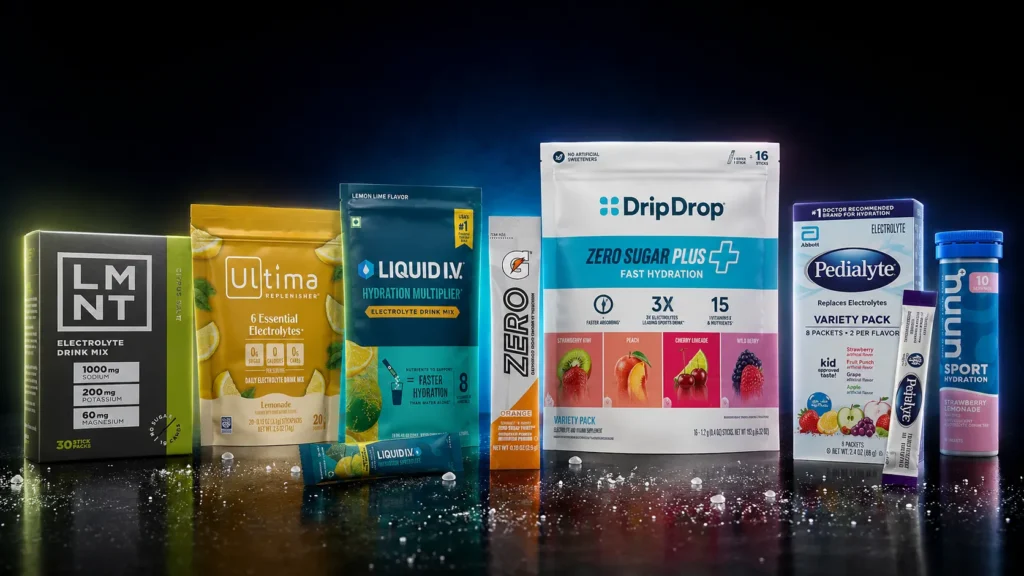
Electrolytes for leg cramps at night may help when cramps are connected to fluid or mineral loss, but dehydration is only one possible cause. Muscle fatigue, medications, pregnancy, circulation problems, nerve conditions, and other factors can also contribute. This guide compares seven products by their labels without claiming that any drink reliably prevents nocturnal cramps.
Table of Contents
The best electrolytes for leg cramps at night are not necessarily the most popular or the most expensive. They are the ones that deliver the right minerals, in bioavailable forms, at doses that actually move the needle for nocturnal muscle cramps.
This guide ranks the top 7 Best Electrolytes For Leg Cramps at Night specifically evaluated for nighttime leg cramp relief – not just general hydration. Each pick is assessed on magnesium content and form, potassium delivery, overall electrolyte completeness, sugar load, and suitability for taking in the evening without disrupting sleep.
Why Do Leg Cramps Happen at Night?

Nocturnal leg cramps (NLC) are involuntary, painful contractions of the calf or foot that occur during rest – most commonly in the hours between midnight and early morning. They affect roughly 60% of adults and become more frequent with age.
The leading theory behind nocturnal leg cramp onset involves two overlapping mechanisms: electrolyte imbalance and neuromuscular misfiring. Here is how electrolytes connect directly.
Muscles contract when calcium floods into muscle cells and relax when magnesium pushes it back out. When magnesium levels are low, calcium can stay elevated in the muscle cell – keeping the muscle partially “switched on” even during rest. This is why magnesium for leg cramps at night is so consistently discussed in clinical settings.
Potassium controls electrical signals across the nerve-muscle junction. When potassium drops – through sweating, diuretic use, low dietary intake, or alcohol – the nerve-to-muscle signal can misfire, triggering an involuntary contraction.
Sodium regulates fluid inside and outside cells. When sodium is too low, the fluid balance around muscle fibers becomes unstable, which can contribute to cramping during prolonged rest.
The practical takeaway: if you are experiencing nocturnal leg cramp electrolyte deficiency patterns – regular calf or foot cramps during sleep – looking at magnesium, potassium, and sodium as a trio is more effective than addressing any one mineral in isolation.
What to Look for in an Electrolyte for Nighttime Cramps
Before the list, a quick guide to what separates useful products from generic ones for this specific use case:
- Magnesium content and form: Look for magnesium malate, citrate, or glycinate – all well-absorbed forms. Magnesium oxide is common and cheap but has low bioavailability. For nighttime cramps, magnesium glycinate is particularly useful because it has calming properties that support sleep quality alongside cramp relief.
- Potassium delivery: 250–400 mg per serving is a meaningful contribution toward the daily 2,600–3,400 mg target. Potassium and magnesium for cramps work best together – deficiency in either mineral independently increases cramp risk.
- No stimulants: Some electrolyte products add caffeine for energy. For a nighttime-adjacent product, this is counterproductive. Caffeine also acts as a mild diuretic, which can worsen electrolyte depletion.
- Low or zero sugar: High sugar before bed can disrupt sleep quality and spike insulin. For nighttime use, zero sugar or very low sugar formulas are preferable.
- Electrolyte completeness: A product with sodium, potassium, and magnesium covers the three most common cramp-related deficiencies. Adding calcium and chloride provides broader coverage.
The 7 Best Electrolytes for Leg Cramps at Night – Ranked
#1 – LMNT Electrolyte Drink Mix
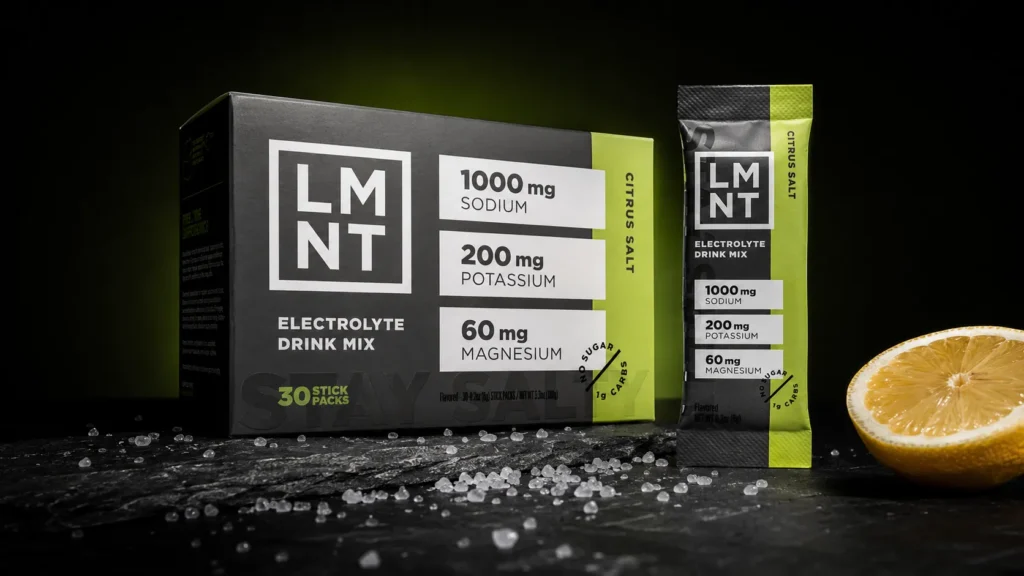
Best For: Athletes, keto dieters, heavy sweaters with nighttime leg cramps
- Magnesium: 60 mg magnesium malate per packet
- Potassium: 200 mg | Sodium: 1,000 mg
- Sugar: 0 g | Caffeine: None
- Price: ~$1.50/serving
LMNT earns the top spot for one specific reason: it is the only mainstream electrolyte drink mix that delivers all three cramp-critical minerals – sodium, potassium, and magnesium – in a zero-sugar, zero-caffeine formula that is genuinely suitable for evening use.
The magnesium malate form is particularly relevant here. Malate is a well-absorbed form with strong evidence for reducing muscle pain and fatigue. At 60 mg per packet, it is not a complete magnesium supplement on its own – but combined with dietary magnesium from food, it contributes meaningfully toward the daily 320–420 mg target for adults.
The high sodium (1,000 mg) may seem counterintuitive for nighttime use, but for anyone who trains hard or follows a low-carb diet and experiences cramps from sodium loss, that replenishment before or during the evening can prevent the overnight depletion that triggers 2 AM cramps.
LMNT’s Chocolate Salt flavor dissolves in warm water, making it one of the few electrolyte products that feels intentionally nighttime-compatible – more of a warm evening drink than a workout shot.
Note: For sedentary users without significant sodium loss, 1,000 mg of sodium per evening packet may push daily sodium totals higher than needed. Consider half-packet dosing or alternate products from this list if you are sodium-sensitive.
#2 – Ultima Replenisher

Best For: Daily users, sodium-sensitive individuals, older adults with recurring cramps
- Magnesium: 100 mg magnesium citrate per packet
- Potassium: 250 mg | Sodium: 55 mg | Calcium: 65 mg
- Sugar: 0 g | Caffeine: None
- Price: ~$0.47–$1.05/serving
Ultima delivers the highest magnesium content of any product on this list at 100 mg per packet – and in a well-tolerated citrate form. For anyone whose nighttime leg cramps are primarily magnesium-driven (the most common root cause), Ultima’s formula addresses that deficiency more directly than most competitors.
The six-electrolyte profile – sodium, potassium, magnesium, calcium, phosphorus, and chloride – also provides the most comprehensive mineral replacement of any product on this list. Calcium is directly involved in muscle contraction; its inclusion alongside magnesium means both sides of the contraction-relaxation cycle are addressed in a single serving.
At only 55 mg of sodium per packet, Ultima is the gentlest option on this list for anyone managing blood pressure or already hitting sodium targets through diet. It is also one of the most affordable quality electrolyte options available – particularly in canister format – making it a practical daily habit for long-term cramp prevention rather than just situational relief.
Zero sugar and zero caffeine make it fully appropriate for evening use.
#3 – Liquid IV Hydration Multiplier
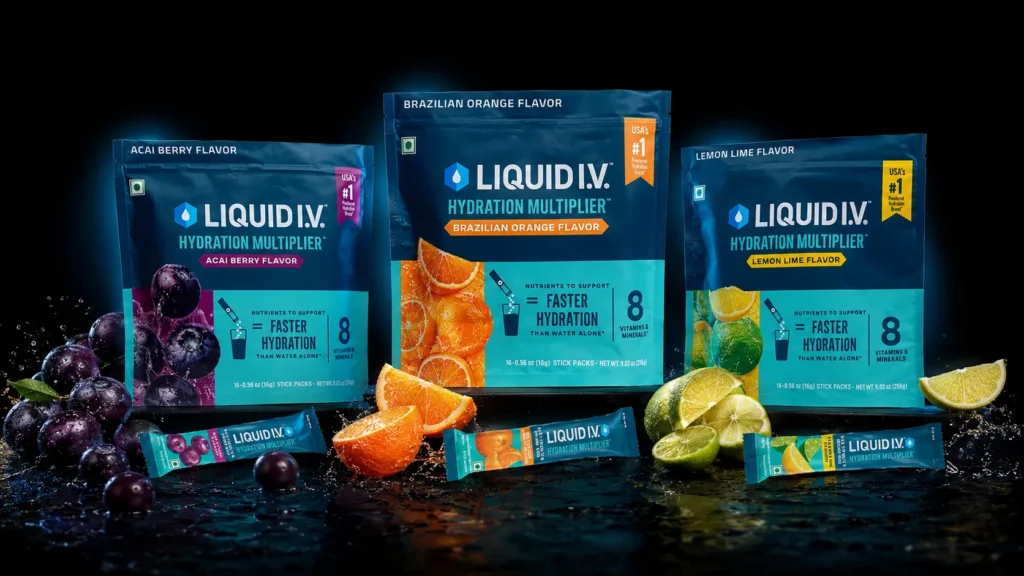
Best For: General dehydration-driven cramps, travelers, those wanting vitamin support
- Potassium: 370 mg | Sodium: 500–560 mg
- Magnesium: 0 mg (not in original formula)
- B Vitamins: B3, B5, B6, B12 | Vitamin C: 70% DV
- Sugar: 11 g | Price: ~$1.47–$1.56/serving
Liquid IV lands third on this list because it is an excellent best electrolyte drink for muscle cramps driven by dehydration and sodium-potassium imbalance – but it has a notable gap: the original formula contains no magnesium. For cramps that are primarily magnesium-deficiency-related (which covers a significant proportion of nocturnal cases), Liquid IV on its own will not solve the problem.
Where Liquid IV earns its ranking is sodium-potassium delivery. At 500–560 mg sodium and 370 mg potassium per packet, it is the strongest combined sodium-potassium product on this list. If your leg cramps are triggered by inadequate fluid replacement during the day – common in people who barely drink water until evening – Liquid IV’s Cellular Transport Technology-driven absorption may help replenish what you lost faster than passive drinking.
The B-vitamin stack (B12 at 240% DV, B5 at 190% DV) adds indirect muscle and nerve function support. B12 deficiency is associated with neurological symptoms including muscle weakness and cramping, particularly in older adults and plant-based eaters.
The 11 g of sugar per packet is worth noting for evening use. It is not disqualifying – the glucose serves a functional absorption role – but for strict nighttime use before bed, the Sugar-Free Liquid IV version is the better choice.
#4 – Gatorlyte (Powder Stick Format)
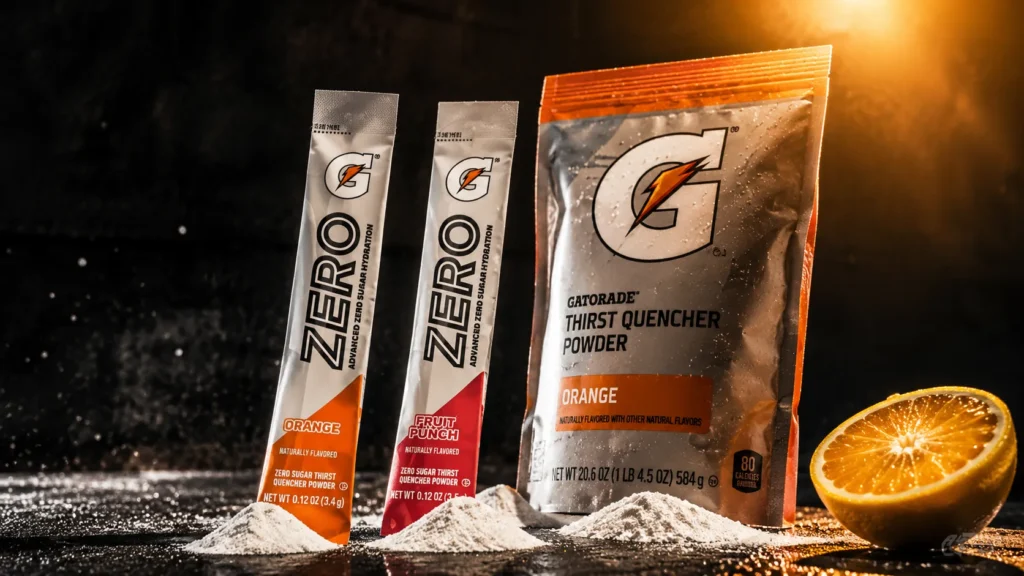
Best For: Post-workout cramps, athletes with heavy sweat loss, 5-electrolyte coverage seekers
- Sodium: 490 mg | Potassium: 350 mg | Chloride: 1,040 mg
- Magnesium: 105 mg | Calcium: 120 mg
- Sugar: 10 g | Caffeine: None
- Price: ~$1.00/serving (powder format)
Gatorlyte is the best option on this list for athletes whose nighttime cramps follow hard training sessions. The five-electrolyte blend – including 105 mg of magnesium and 1,040 mg of chloride per serving – replaces the broadest spectrum of what sweat removes from the body. Chloride is the most volume-lost electrolyte during exercise and is often overlooked in premium electrolyte powders.
The magnesium content at 105 mg per serving is meaningful – higher than LMNT’s 60 mg and only slightly higher than Ultima’s 100 mg. However, Gatorlyte uses magnesium oxide in its formula. Magnesium oxide has lower bioavailability compared to citrate or malate forms – so despite the higher listed milligram amount, less of it may be absorbed and utilized.
With 10 g of sugar per serving, Gatorlyte is less ideal for strict evening-before-bed consumption than zero-sugar options. The better strategy: use it in the afternoon after training as a cramp-prevention measure, then use a zero-sugar option before sleep. No caffeine, no artificial sweeteners.
The ready-to-drink bottle format is available at virtually every convenience store, making Gatorlyte uniquely accessible for same-day restocking.
#5 – DripDrop ORS
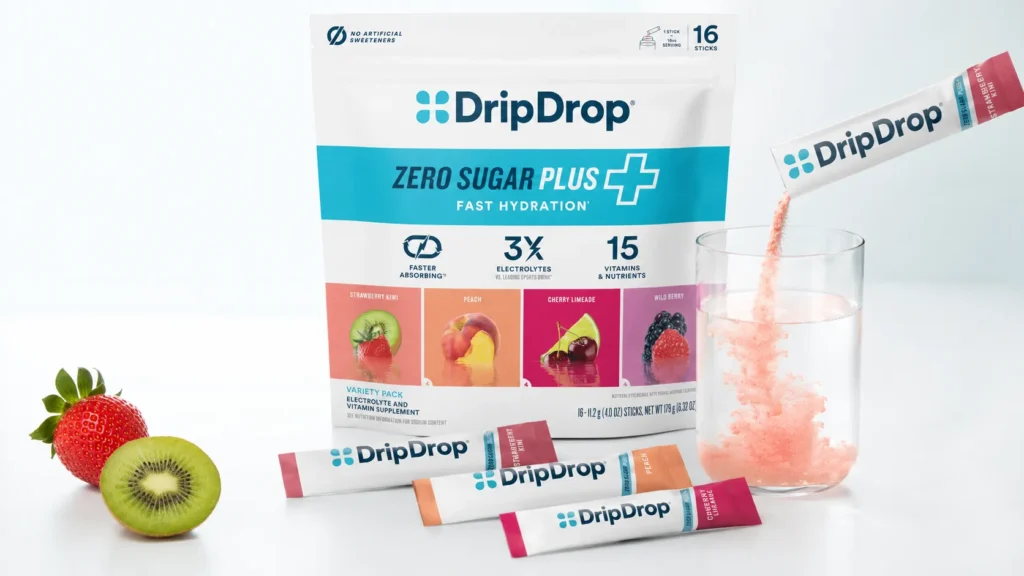
Best For: Illness-related or dehydration-driven nighttime cramps, adults recovering from fluid loss
- Sodium: 330 mg | Potassium: 180 mg | Magnesium: 40 mg
- Zinc: 10% DV | Vitamin C: included
- Sugar: 7 g | Caffeine: None
- Price: ~$1.00–$1.15/serving
DripDrop makes this list because it handles a specific cramp scenario well: cramps that develop after illness, food poisoning, travel-related dehydration, or any situation where fluid loss has been significant and rapid. Its ORS-grade formula accelerates fluid absorption using the sodium-glucose cotransport mechanism – getting electrolytes into the bloodstream faster than a standard powder.
The magnesium content (40 mg magnesium citrate) is lower than LMNT and Ultima, making DripDrop less ideal if magnesium deficiency is your primary cramp driver. But the combination of sodium, potassium, magnesium, zinc, and Vitamin C in a single packet provides broader recovery support than many competitors.
DripDrop Zero eliminates the 7 g of sugar from the original formula and is the better version for evening use. Natural coloring only – no FD&C dyes – which sets it apart from several Pedialyte and Gatorlyte formulations.
#6 – Pedialyte Electrolyte Powder Packs

Best For: Older adults, illness recovery, mild to moderate dehydration-related cramps
- Sodium: ~370 mg | Potassium: ~280 mg
- Zinc: included | Magnesium: added in Powder Pack version
- Sugar: 0 g (Powder Pack) | Caffeine: None
- Price: ~$3.00–$3.25/serving (powder packs)
Pedialyte is the most trusted oral rehydration brand in clinical settings and brings decades of evidence behind its formulation. The Powder Pack (zero-sugar) version is the right format for this context – the standard Classic liquid contains sugar and is primarily calibrated for gastrointestinal illness dehydration rather than athletic or general cramp prevention.
Potassium at 280 mg per serving is one of the stronger potassium deliveries on this list. Sodium at 370 mg is moderate and appropriate for a broad range of adults, including those not doing intense exercise.
The magnesium gap in Pedialyte Classic remains a limitation. The newer Powder Pack formulations have partially addressed this, but Pedialyte is still not the first choice if magnesium-driven nocturnal cramps are your primary issue. Pair it with a separate magnesium glycinate supplement for more complete coverage at night.
Pedialyte’s key advantage: it is available at every pharmacy, 24-hour Walgreens, CVS, and grocery store. If leg cramps are waking you up and you need to restock tonight, Pedialyte is the most accessible clinical-grade option you can grab in person.
#7 – Nuun Sport Electrolyte Tablets

Best For: Light exercisers, travelers, sodium-conscious users wanting convenience
- Sodium: 300 mg | Potassium: 150 mg | Magnesium: 25 mg
- Calcium: 13 mg | Vitamin C: included
- Sugar: 1 g | Caffeine: None (Sport version)
- Price: ~$0.60–$0.70/serving
Nuun Sport earns its place on this list through format convenience and budget accessibility rather than outright electrolyte strength. The effervescent tablet drops into water, dissolves in under two minutes, and requires no mixing or measuring. For someone who wants a simple, low-commitment evening ritual before bed, Nuun is the easiest entry point.
The 25 mg of magnesium per tablet is low – the most limiting factor in Nuun’s cramp-prevention profile. Potassium at 150 mg per tablet is similarly modest. For light exercisers or office workers experiencing occasional cramps from general dehydration, Nuun Sport provides a meaningful mineral boost at a very affordable price. For athletes with significant sweat loss or confirmed magnesium deficiency, the numbers are too low to address the root cause on their own.
Nuun Immunity and Nuun Rest lines offer different mineral profiles and are worth considering – particularly Nuun Rest, which includes magnesium and L-theanine for sleep support, making it a more purpose-built choice for nighttime cramp prevention. No caffeine in the Sport version.
Which Electrolyte Mineral Matters Most for Nighttime Cramps?
If you could only fix one deficiency, the research points most consistently to magnesium.
A 2025 systematic review and meta-analysis of five randomized controlled trials (n=266) on magnesium for nocturnal leg cramps found a trend toward reduced cramp frequency with supplementation of four weeks or longer, particularly at doses below 1,000 mg/day. While results across studies were not statistically significant due to heterogeneity, consistent positive trends were noted in the subgroup analysis.
An earlier clinical reference study found that magnesium supplementation produced a 43% decrease in nocturnal leg cramp frequency within seven days – a frequently cited result in clinical cramp management.
Potassium and magnesium for cramps work most effectively in combination. A diet low in both minerals – common in processed-food-heavy diets – compounds cramping risk. Addressing both through an electrolyte product or dietary adjustment is more effective than targeting either alone.
For magnesium form: glycinate and malate show the strongest absorption and muscle-specific relevance. Citrate is a solid second choice. Oxide is the least efficient form and should be avoided if cramp relief is the specific goal.
How and When to Take Electrolytes for Nighttime Cramp Prevention
Timing matters as much as the product itself.
Taking electrolytes for nighttime leg cramps in the afternoon or early evening – two to four hours before bed – gives your body time to absorb and distribute the minerals before your muscles go into overnight rest. Waiting until a cramp wakes you up means you are reacting rather than preventing.
A practical routine: one serving of a zero-sugar electrolyte drink in the late afternoon or with dinner, prioritizing products with at least 60-100 mg of magnesium and 200-370 mg of potassium. If cramps persist, consider a separate magnesium glycinate supplement (200-300 mg of elemental magnesium) taken with the evening meal.
Stay well hydrated throughout the day. Cramps that develop at night often reflect a full day of inadequate fluid intake catching up with you after midnight – not something that started when you went to bed. Nocturnal leg cramp electrolyte deficiency is almost always a daytime accumulation problem, not a sleep problem.
Note: If leg cramps are severe, frequent, and not responding to electrolyte adjustment, they may have an underlying cause unrelated to hydration – including medication side effects (particularly diuretics and statins), nerve compression, or circulatory issues. Always consult a healthcare provider if cramps are significantly disrupting your sleep or daily life.
Final Verdict: Which Is the Best Electrolyte for Leg Cramps at Night?
For most people, the right answer depends on their specific cramp profile:
- Highest magnesium for cramp relief: Ultima Replenisher (100 mg magnesium citrate, six electrolytes, zero sugar, affordable daily use)
- Best for athletes with sodium loss-related cramps: LMNT (1,000 mg sodium, 60 mg magnesium malate, zero sugar, evening-friendly Chocolate Salt flavor)
- Best all-rounder for dehydration-driven cramps: Liquid IV (highest sodium-potassium delivery, B vitamins, fast absorption – use Sugar-Free version at night)
- Best for post-workout cramps: Gatorlyte powder (five-electrolyte coverage including 105 mg magnesium and 1,040 mg chloride, $1.00/serving)
- Most accessible for same-day purchase: Pedialyte Powder Pack (zero sugar, widely available at pharmacies, solid potassium)
- Best budget daily option for light cases: Nuun Sport (convenient tablet format, $0.60–$0.70/serving, low magnesium so best for mild cases)
If you are unsure where your cramps are coming from, start with Ultima Replenisher – the six-electrolyte, high-magnesium, zero-sugar, affordable formula is the most broadly appropriate starting point for the widest range of nighttime cramp presentations.
Frequently Asked Questions
Q1. What electrolyte is most important for leg cramps at night??
Magnesium is the most commonly cited electrolyte deficiency linked to nocturnal leg cramps. It regulates calcium flow in muscle cells – without enough magnesium, muscles can stay contracted involuntarily. Potassium is the second most important, followed by sodium. Addressing all three is more effective than supplementing any one mineral in isolation.
Q2. Does drinking an electrolyte drink before bed help leg cramps?
Yes, for cramps driven by electrolyte depletion. The key is timing – taking electrolytes two to four hours before bed is more effective than drinking them immediately before sleep. Choose a zero-sugar, no-caffeine formula for evening use to avoid sleep disruption.
Q3. How much magnesium do I need to stop leg cramps at night?
The NIH recommends 320–420 mg of elemental magnesium per day for adults depending on age and sex. Most people get around 250 mg through diet. A 60–100 mg contribution from an electrolyte drink, combined with dietary sources (leafy greens, nuts, seeds), can help close the gap. For confirmed deficiency, a separate magnesium glycinate supplement of 200–300 mg is often more effective than relying on electrolyte drinks alone.
Q4. Can low potassium cause nighttime leg cramps?
Yes. Potassium plays a direct role in the nerve-to-muscle electrical signal that controls contraction and relaxation. Low potassium – from inadequate dietary intake, excess sweating, diuretic use, or alcohol – can cause the nerve signal to misfire, resulting in involuntary cramps. Electrolyte drinks with 200–370 mg of potassium per serving contribute meaningfully to daily potassium needs alongside dietary sources.
Q5. Are electrolyte drinks safe to take every night? IV?
Most zero-sugar electrolyte drinks are safe for daily use in healthy adults. The key consideration is sodium: if you are consuming a high-sodium electrolyte product (like LMNT at 1,000 mg) every evening on top of regular dietary sodium, monitor your total daily intake. For users with hypertension, kidney conditions, or heart disease, consult a healthcare provider before adding daily electrolyte supplementation.
Q6. Can certain medications cause nighttime leg cramps even if electrolyte intake is adequate?
Yes – and this is one of the most overlooked reasons why cramps persist despite good hydration and electrolyte supplementation. Several common medications interfere directly with electrolyte balance or nerve-muscle signalling in ways that no drink can fully compensate for. Diuretics (prescribed for blood pressure or fluid retention) increase urinary excretion of potassium, magnesium, and sodium – essentially accelerating the same deficits that electrolyte drinks are trying to correct, creating a constant catch-up situation.
This article contains affiliate links. If you purchase through our links, we may earn a commission at no extra cost to you. We only recommend products we genuinely believe in. Read our Affiliate Disclaimer for full details.