

Yes, lemonade made with real lemon juice contains small amounts of electrolytes, including potassium and magnesium. Ordinary lemonade usually provides little sodium unless the recipe or manufacturer adds it. It can contribute to hydration because it supplies water, but it is not automatically a replacement for an electrolyte drink. The amount of lemon juice, added minerals, sugar, and serving size all matter.
Table of Contents
Does Lemonade Have Electrolytes Naturally?
The electrolytes in homemade lemonade come mainly from its ingredients. Lemon juice contributes minerals, water may supply some depending on its source, and added salt contributes sodium and chloride. Table sugar provides sweetness and carbohydrate; it is not an electrolyte.
According to MedlinePlus, electrolytes are minerals that carry an electrical charge in body fluids. They help regulate fluid balance and support nerve and muscle function. You get them from both food and drinks, so every beverage does not need to supply all of them.
Potassium and Magnesium From Lemon Juice
USDA’s archived nutrient tables list about 251 mg of potassium and 15 mg of magnesium in one cup of raw lemon juice. That is undiluted juice, not a cup of lemonade.
Once a small portion of juice is mixed into a larger drink, the mineral concentration is much lower. Adding water changes the concentration, but it does not remove the minerals already in the juice.
Sodium Depends on the Recipe
The same USDA reference tables list only about 2 mg of sodium per cup of raw lemon juice. A small amount of juice therefore contributes very little sodium to homemade lemonade.
Store-bought versions can contain more sodium from their other ingredients. Lemonade with added salt also has a different mineral profile. Statements such as “lemonade has no sodium” are too broad without identifying the exact recipe or product.
How Much Potassium Is in Homemade Lemonade?

There is no single number for every glass. A useful estimate starts with how much actual lemon juice goes into the serving.
The examples below use the USDA reference value of 251 mg of potassium per cup of raw lemon juice. Each portion is diluted with water to make one finished 8-fluid-ounce serving. Sugar, if used, is not included in the potassium calculation.
| Lemon juice in the finished serving | Estimated potassium from the juice |
| 1 tablespoon | About 16 mg |
| 2 tablespoons | About 31 mg |
| ¼ cup or 4 tablespoons | About 63 mg |
These are calculated illustrations, not laboratory results or a claim about a typical commercial lemonade. Fresh fruit varies, and additional ingredients can change the total. For example, 2 tablespoons equal one-eighth of a cup: 251 ÷ 8 gives about 31 mg.
For context, the FDA’s potassium Daily Value is 4,700 mg. The 31 mg example supplies less than 1% of that reference amount. Daily Value is a nutrition-label benchmark, not a target for replacing sweat losses during a workout.
What Do Store-Bought Lemonade Labels Show?
Two familiar U.S. products illustrate why the label matters more than the word “lemonade.” The figures below come from the official Coca-Cola product pages checked on October 14, 2026, and use the same 8-fluid-ounce serving size.
| Per 8 fl oz or 240 mL | Simply Lemonade regular | Minute Maid Lemonade regular |
| Sodium | 20 mg | 35 mg |
| Total sugar | 27 g | 27 g |
| Added sugar | 27 g | 27 g |
| Calories | 110 | 100 |
| Potassium | Not a significant source per label | Not a significant source per label |
“Not a significant source” does not mean the beverage contains absolutely zero potassium. It means the label does not present it as a significant source. Check the bottle you buy because formulations and labeling can change.
The sugar also deserves attention. One 8-ounce serving in these examples provides 27 g of added sugar, or 54% of the FDA’s 50 g Daily Value. A 16-ounce portion would double that to 54 g. That calculation concerns sugar intake; it does not mean a glass of lemonade automatically causes dehydration.
Is Lemonade Good for Hydration?
Lemonade supplies fluid and can contribute to your total intake. A drink does not have to contain a large electrolyte dose to hydrate you. The practical question is whether you also need to replace substantial mineral losses.
Everyday Drinking and Short Activities
For many healthy people doing ordinary daily activities, water and regular meals can meet fluid and electrolyte needs. Lemonade can be an occasional beverage, especially if you enjoy its flavor, but sweetened versions add sugar that plain water does not.
You can use less sugar in homemade lemonade or compare lower-sugar options. Removing sugar does not automatically add minerals, and “zero sugar” is not another way of saying “electrolyte replacement.”
Prolonged Sweating and Hot Weather
Ordinary lemonade’s small sodium contribution makes it a poor choice to assume will replace substantial sweat losses on its own. Drinking fluids and replacing electrolytes are related tasks, but they are not identical.
CDC/NIOSH workplace guidance emphasizes water for shorter periods of moderate work in heat and drinks containing balanced electrolytes when sweating lasts several hours. It also advises avoiding high-sugar drinks. Those recommendations concern hot working conditions, not a universal requirement to drink electrolytes every day.
For long runs, extended outdoor work, or heavy sweating, consider the sodium listed in your drink, your food intake, and your individual needs. More sodium is not automatically better, and a larger electrolyte count does not establish better hydration.
Lemonade vs Lemonade-Flavored Electrolyte Drinks
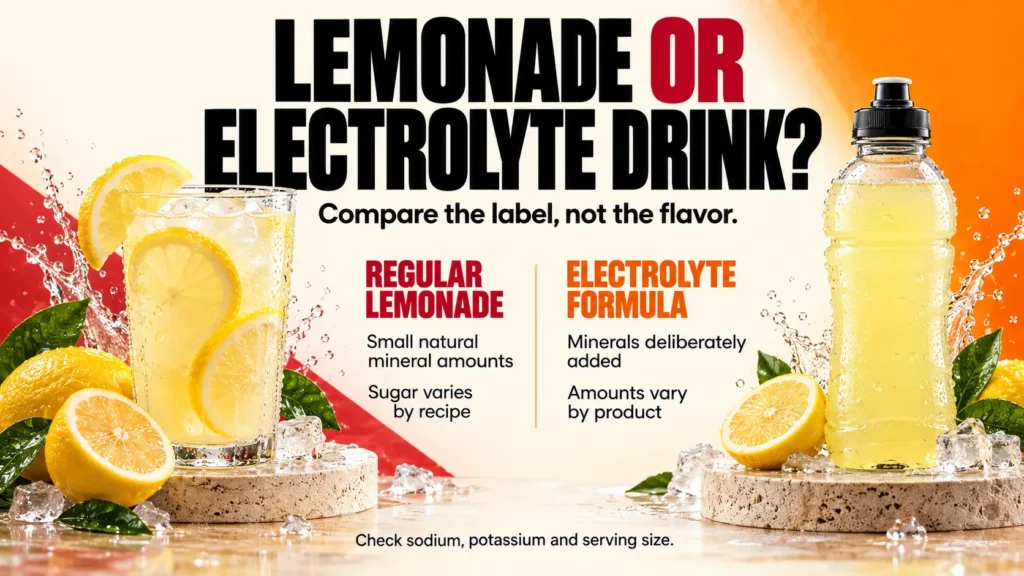
Regular lemonade and a lemonade-flavored electrolyte powder can taste similar while supplying very different mineral amounts.
Ordinary lemonade is generally a mixture of water, lemon juice or flavoring, and sweetener. An electrolyte formula deliberately adds minerals, often as salts. Its label should tell you what you actually receive per serving.
Compare sodium and potassium amounts, sugar, calories, and the recommended water volume. Check magnesium or other minerals if they matter to your decision. Do not judge a product by its citrus flavor, the number of minerals advertised, or the size of its bottle.
For examples of how different formulas compare, see our BODYARMOR vs Gatorade and Liquid I.V. vs Waterboy guides. Use the current label on the exact product you are considering rather than transferring values between product lines.
Can You Add Electrolytes to Lemonade?
Yes. Adding salt supplies sodium and chloride; adding an electrolyte mix supplies the minerals listed in that mix. However, a casual “pinch” of salt does not give you a reliably measured dose.
If you choose a commercial mix or drops, follow the manufacturer’s serving and dilution instructions and account for the lemonade’s existing sugar and sodium. A full serving mixed into too little liquid creates a different concentration from the one intended. You can also choose a lemon-flavored formula and prepare it with water as directed.
For everyday lemonade, extra salt is not automatically necessary. People with prescribed sodium, potassium, or fluid restrictions should get individualized advice before adding minerals. Avoid improvising with potassium supplements or salt substitutes to create a hydration treatment.
Lemonade Is Not an Oral Rehydration Solution
Lemonade with sugar and salt should not be assumed equivalent to a medically formulated oral rehydration solution. For vomiting or diarrhea, NIDDK guidance discusses replacing fluids and electrolytes and using oral rehydration solutions where appropriate, particularly for children and higher-risk adults.
Seek medical help for serious dehydration symptoms such as confusion, fainting, or very little urination, or when fluids cannot be kept down. A homemade drink is not a substitute for care.
Frequently Asked Questions
Does Lemon Water Have Electrolytes Too?
Lemon water made with real juice contains the minerals in that juice, even without sugar. A slice used mainly for flavor does not establish a meaningful electrolyte dose. The amount of juice matters more than whether the drink is sweetened.
Is Pink Lemonade Higher in Electrolytes?
Not automatically. Its color may come from juice or coloring, and neither tells you the mineral amount. Compare the exact product’s Nutrition Facts rather than assuming pink lemonade provides more electrolytes.
Does Powdered Lemonade Mix Contain Electrolytes?
Some mixes contain small amounts from their ingredients, while others deliberately add minerals. A lemonade drink mix and a lemonade-flavored electrolyte mix are different categories. Look for the actual sodium and potassium amounts per prepared serving.
Does Vitamin C Count as an Electrolyte?
No. Vitamin C is a vitamin. A lemonade advertised as providing vitamin C does not necessarily supply meaningful sodium, potassium, or other electrolytes.
Does Sugar-Free Lemonade Have More Electrolytes?
There is no automatic connection. Sugar-free describes the sugar content. Mineral amounts depend on the juice and other ingredients, so compare the labels separately.
What to Remember
Does lemonade have electrolytes? Yes, when its ingredients supply them, but ordinary lemonade usually contributes only small amounts. It can add fluid to your day without providing substantial electrolyte replacement. Enjoy it as a beverage, check sugar and serving size, and choose a clearly labeled formula when you specifically need to replace minerals.
This article contains affiliate links. If you purchase through our links, we may earn a commission at no extra cost to you. We only recommend products we genuinely believe in. Read our Affiliate Disclaimer for full details.