
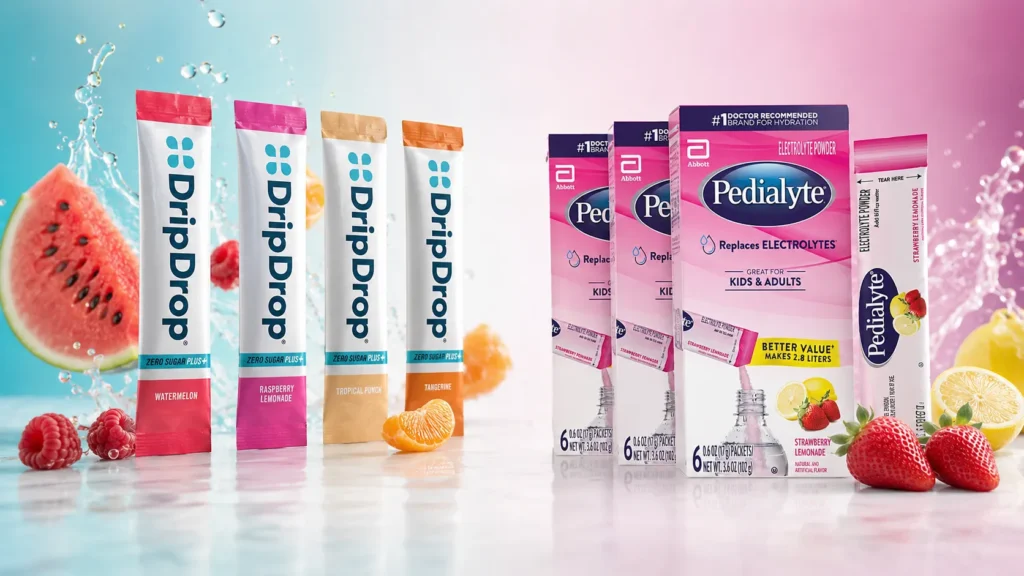
DripDrop vs Pedialyte compares two products positioned for more than ordinary flavored hydration. Their sodium, sugar, additional nutrients, prepared volume, and product formats differ, and values can change across variants. Pedialyte has several ready-to-drink and powder formulas, so the fairest comparison begins by identifying the exact Pedialyte product being measured against Original DripDrop.
Table of Contents
Both are oral rehydration solutions (ORS). Both use the same foundational science. And both have earned genuine credibility – one in emergency humanitarian relief, the other in pediatric medicine.
But they are not the same product. They have different sodium levels, different sugar content, different use cases, and very different price points. This article breaks down every meaningful difference between DripDrop vs Pedialyte so you can pick the right one – not just the one you happened to grab off the shelf.
What Is DripDrop?
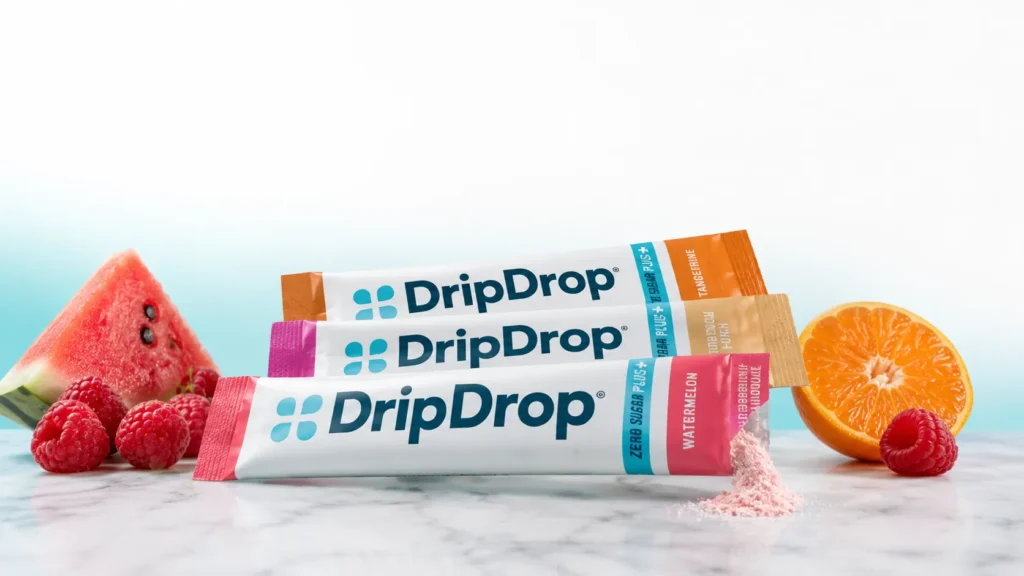
DripDrop was created by Dr. Eduardo Dolhun, a physician and humanitarian who noticed a recurring problem during disaster relief missions: IV therapy was not always available, and most oral rehydration products either tasted terrible or did not work fast enough. He formulated DripDrop as a palatable, medically effective alternative.
The product uses ORS science – specifically the sodium-glucose cotransport mechanism (SGLT1) – to accelerate fluid absorption in the small intestine. When sodium and glucose enter the gut together, they activate a transport protein that actively pulls water into the bloodstream. This is meaningfully faster than passive water absorption.
DripDrop is now used by the U.S. Military, Stanford University Medical Center, and the Mayo Clinic. It holds NSF Content Certification and NSF Sport Certification for its 16 oz stick packs, and it is manufactured under GMP standards.
Each standard DripDrop packet (mixed into 8 oz water) contains:
- Sodium: 330 mg
- Potassium: 180 mg
- Magnesium: 40 mg
- Zinc: 10% DV
- Vitamin C: included
- Sugar: 7 g | Calories: ~35
DripDrop also offers a Zero Sugar version sweetened with sucralose and acesulfame potassium, with added B vitamins (B3, B5, B6, B12). The original formula uses a combination of sugar, fructose, and dextrose – all of which serve a functional purpose in activating glucose-sodium co-transport.
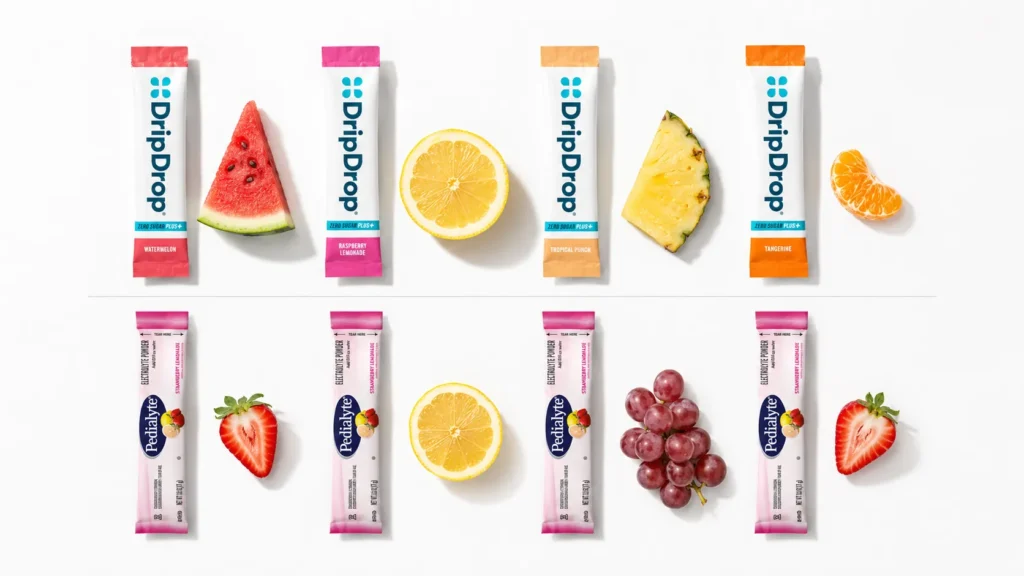
It comes in 18 flavors, is non-GMO, gluten-free, vegan, soy-free, dairy-free, and Kosher. No FD&C artificial colors – natural coloring only.
What Is Pedialyte?
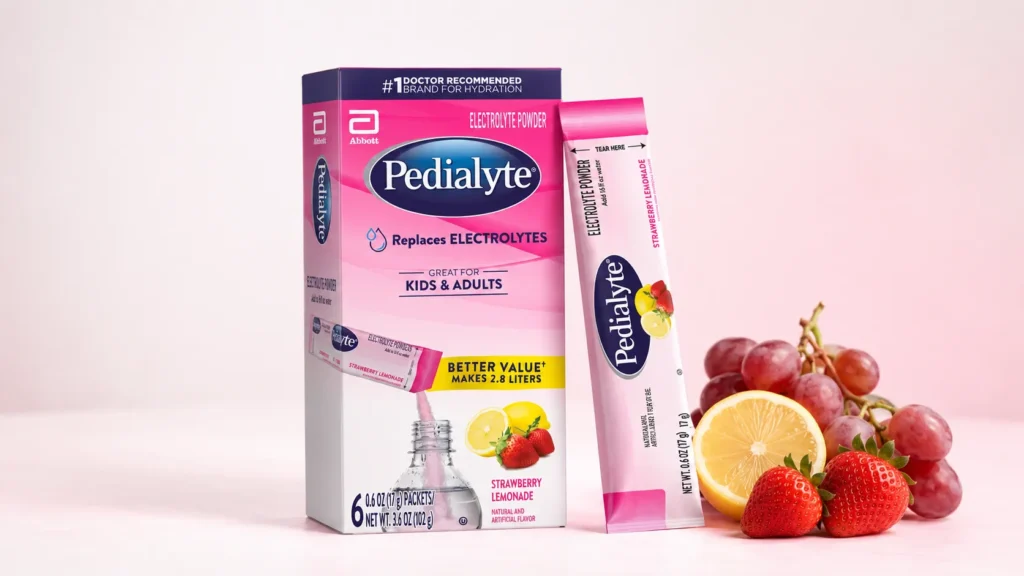
Pedialyte is made by Abbott Nutrition and has been on pharmacy shelves since 1966. It was originally designed for children dealing with dehydration from vomiting and diarrhea, but it has become widely used by adults as well – particularly for post-illness recovery, travel fatigue, heat exhaustion, and, let’s be honest, morning-after hangover recovery.
Like DripDrop, Pedialyte is built on ORS principles – the same glucose-sodium co-transport mechanism drives faster fluid absorption versus water alone. Abbott markets it as the number one doctor and pharmacist recommended brand for hydration, which is a claim built on decades of clinical use in pediatric care.
Pedialyte comes in several product lines: Classic (liquid liter), Powder Packs, Sport, AdvancedCare Plus, and Electrolyte Water. The formulas vary.
Standard Pedialyte Classic (per 12 oz serving) contains:
- Sodium: ~370 mg
- Potassium: ~280 mg
- Chloride: ~440 mg
- Zinc: included
- Sugar: ~9 g | Calories: ~45
The Powder Pack version is zero sugar and uses sucralose and acesulfame potassium as sweeteners, with magnesium and zinc added. The Sport line has higher sodium – around 490 mg – and targets athletic dehydration specifically. The Advanced Care Plus line adds PreActiv Prebiotics for digestive support.
DripDrop vs Pedialyte: Head-to-Head Comparison
1. Sodium – DripDrop Is Higher
DripDrop’s original formula contains 330 mg of sodium per packet mixed into 8 oz. Pedialyte Classic contains around 370 mg per 12 oz serving – but that is a larger liquid volume.
When you adjust for concentration, DripDrop actually delivers more sodium per ounce of fluid, which makes it more effective for rapid rehydration when you are actively depleted. Pedialyte Sport bumps up to approximately 490 mg sodium, which puts it closer to DripDrop territory for athletic use cases.
For everyday mild dehydration, both products deliver appropriate sodium. For heavy sweat loss, illness-related fluid loss, or moderate to severe dehydration, DripDrop’s higher sodium concentration per unit of water gives it an edge.
Note: Vitalyte’s electrolyte comparison data categorizes both DripDrop and Pedialyte as true isotonic formulas – formulated around 270–300 mOsm/L for optimal absorption, unlike hypertonic options like LMNT.
2. Sugar Content – Pedialyte Is Lower Overall
DripDrop original has 7 grams of added sugar per 8 oz packet. Pedialyte Classic has around 9 grams per 12 oz serving. On a per-ounce basis, they’re in a similar range – but DripDrop’s zero-sugar version is the cleaner option if you want to avoid sugar entirely.
Both products include glucose/dextrose to drive the SGLT1 transport mechanism. It is not random filler – it is functional. Without it, the ORS absorption benefit largely disappears. So when people complain about sugar in these products, the honest answer is: that sugar is doing a job.
If you want zero sugar, both brands offer it. DripDrop Zero and Pedialyte Electrolyte Drink Mix (powder) are both sugar-free. Pedialyte Unflavored Classic is also a low-sugar option.
3. Magnesium – DripDrop Wins
DripDrop includes 40 mg of magnesium citrate per packet. Pedialyte’s classic liquid formula does not include magnesium, though the Powder Pack and some newer product lines do.
Magnesium citrate is a well-absorbed form that supports muscle function and nerve signaling. For anyone dealing with exercise-related cramps or post-illness recovery, the inclusion of magnesium in DripDrop is a meaningful advantage over Pedialyte Classic.
4. Zinc and Vitamin C – Comparable
Both products include zinc for immune support. DripDrop also includes Vitamin C in its original formula. Pedialyte includes zinc gluconate across most product lines.
DripDrop Zero adds a full B-vitamin stack (B3, B5, B6, B12), which gives it an edge for anyone wanting broader micronutrient support alongside hydration.
5. Ingredient Cleanliness – DripDrop Is Cleaner
DripDrop uses no FD&C artificial dyes – colors come from natural sources like fruit and vegetable juice, turmeric, beta carotene, and spirulina extract.
Pedialyte’s Classic flavored line has historically included FD&C artificial colors in some flavors (Red 40, Yellow 5, Blue 1), though Pedialyte Unflavored contains none. If you are buying flavored Pedialyte Classic and artificial dyes are a concern, check the specific label.
DripDrop’s ingredient list is also somewhat shorter. The use of sucralose alongside natural sugar in DripDrop may be a minor drawback for those avoiding artificial sweeteners.
Price Comparison: How Do They Stack Up?
This is where Pedialyte wins without much contest.
- DripDrop: A 32-pack typically runs $32–$36, roughly $1.00–$1.15 per serving.
- Pedialyte Powder Packs: An 8-pack typically runs $24–$26, which works out to $3.00–$3.25 per serving – more expensive per packet, but you get a larger serving of fluid.
- Pedialyte Classic (liter): Usually $8–$10 per liter in stores like Target, Walmart, and CVS – inexpensive and ready to drink.
If you are buying Pedialyte Classic in liter bottles rather than powder packs, it is significantly cheaper per ounce than DripDrop. The powder vs liquid format also affects convenience – DripDrop packets are more portable, while Pedialyte Classic liters are heavier but require no mixing.
For retail access, Pedialyte has a major advantage. It is available at virtually every pharmacy, grocery store, and warehouse club in the US. DripDrop is widely available at Target, Walmart, Amazon, and Costco, but Pedialyte simply has more shelf presence everywhere.
Who Should Use DripDrop?
DripDrop is a better fit for:
Athletes, outdoor workers, and anyone experiencing heavy sweat-related fluid loss. The higher sodium concentration per fluid ounce makes it more effective when electrolyte depletion is significant.
Adults dealing with moderate dehydration from travel, heat, or illness who want a clean, portable packet they can carry anywhere. DripDrop’s form factor is purpose-built for on-the-go use.
People who care about ingredient transparency – no FD&C dyes, natural coloring, and a formula developed with medical-grade ORS science.
Anyone who wants magnesium and zinc included without a separate supplement. The original formula covers sodium, potassium, magnesium, zinc, and Vitamin C in one packet.
Users on keto or low-sugar diets who want the DripDrop Zero version – it provides ORS-level hydration without glucose, using amino acids and electrolytes to support fluid absorption through an alternative pathway.
Who Should Use Pedialyte?
Pedialyte makes more sense for:
Children and families. Pedialyte remains the gold standard in pediatric oral rehydration. Pediatricians have recommended it for decades. If you have a sick child at home, Pedialyte Classic is the appropriate choice – not a workout-targeted electrolyte powder.
Adults recovering from gastrointestinal illness – vomiting, diarrhea, food poisoning. Pedialyte Classic’s formula is clinically proven for mild to moderate dehydration in these contexts and widely recommended in medical settings.
Budget-conscious users. A liter of Pedialyte Classic from a grocery store costs less than three DripDrop packets, and it is ready to drink immediately.
People who prefer liquid formats over powders. Not everyone wants to mix things. Pedialyte Classic liters remove that step entirely.
Anyone who needs Pedialyte Sport for fitness use – it has a higher sodium content (around 490 mg) and is specifically marketed for exercise-driven dehydration.
Taste: Which One Is More Drinkable?
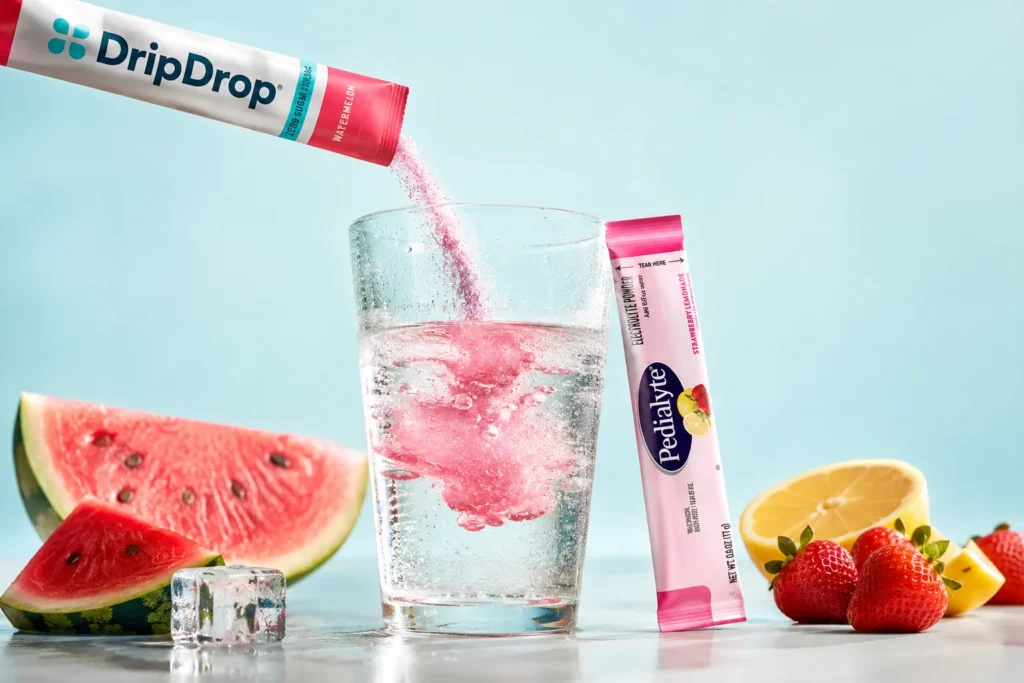
DripDrop has worked hard on its flavor profile and it shows. Flavors like Watermelon, Lemon, Berry, and Fruit Punch are well-balanced – not too sweet, not too salty. The sodium is noticeable but not overwhelming. Most adults find it genuinely pleasant to drink, even when they are not dehydrated.
Pedialyte Classic, particularly the unflavored version, has a very clinical taste that is hard to love. It is mild and slightly saline – functional, but not enjoyable. The flavored versions are better, but still tend to taste medicinal compared to DripDrop.
Pedialyte Sport tastes closer to a standard sports drink, which helps. Pedialyte AdvancedCare Plus is also more palatable than Classic.
If you have ever tried giving a sick child a glass of unflavored Pedialyte and watched them gag, this part probably tracks.
For taste across the board, DripDrop is the more enjoyable product for adult daily use. Pedialyte is functional, trusted, and effective – but taste has never been its main selling point.
DripDrop vs Pedialyte: Final Verdict
Both products are legitimate ORS-based rehydration solutions built on the same foundational science. Neither is a gimmick. But they serve different situations.
- Choose DripDrop if: You are an active adult dealing with exercise, travel, or heat-related dehydration. You want a portable powder, clean ingredients, natural coloring, and a product that tastes good enough to drink when you feel well.
- Choose Pedialyte if: You are rehydrating a child, recovering from GI illness, need a ready-to-drink option, or want the most cost-effective liter format available at any pharmacy.
The practical hierarchy: for clinical or pediatric dehydration – Pedialyte. For adult performance or everyday hydration needs – DripDrop. If budget is the primary factor – Pedialyte Classic by a wide margin.
The science behind both is sound. What changes is the use case, the form factor, and how much you enjoy actually drinking it.
Frequently Asked Questions
Q1. Is DripDrop better than Pedialyte for adults?
For adult hydration needs related to exercise, travel, or heat, DripDrop generally offers a more suitable formula – higher sodium concentration, better taste, and cleaner ingredients. For illness-related or clinical dehydration, Pedialyte’s track record in medical settings makes it the safer default.
Q2. Can adults drink Pedialyte every day?
Yes, in moderate amounts. Pedialyte is safe for adults, though it is formulated around clinical dehydration scenarios rather than everyday maintenance. For regular daily hydration, a lower-sodium option may be more appropriate.
Q3. Does DripDrop have more sodium than Pedialyte?
On a per-fluid-ounce basis, DripDrop delivers more sodium than Pedialyte Classic. Pedialyte Sport (around 490 mg sodium) narrows the gap considerably for athletic use.
Q4. Is DripDrop good for stomach bugs?
Yes. DripDrop uses ORS science designed specifically for fluid replacement during illness. It is a clinically appropriate option for mild to moderate dehydration from vomiting or diarrhea in adults. For young children, Pedialyte remains the standard clinical recommendation.
Q5. Which is cheaper – DripDrop or Pedialyte?
Pedialyte Classic liters are significantly cheaper per ounce than DripDrop packets. On a per-serving powder pack basis, prices are more comparable – though DripDrop powder packs typically cost slightly less than Pedialyte Powder Packs.
Q6. Which is better for kids – DripDrop or Pedialyte?
Pedialyte is the stronger choice for children. It has been the clinical standard in pediatric oral rehydration for over five decades, carries decades of pediatrician endorsement, and comes in ready-to-drink liter format that requires no mixing – practical when a sick child needs fluid immediately. DripDrop is formulated and marketed primarily for adults, and its powder packet format adds an unnecessary preparation step when dealing with a young child. For adults in the same household dealing with the same illness, DripDrop is a reasonable parallel choice – but for the child specifically, Pedialyte Classic remains the appropriate default.
This article contains affiliate links. If you purchase through our links, we may earn a commission at no extra cost to you. We only recommend products we genuinely believe in. Read our Affiliate Disclaimer for full details.