
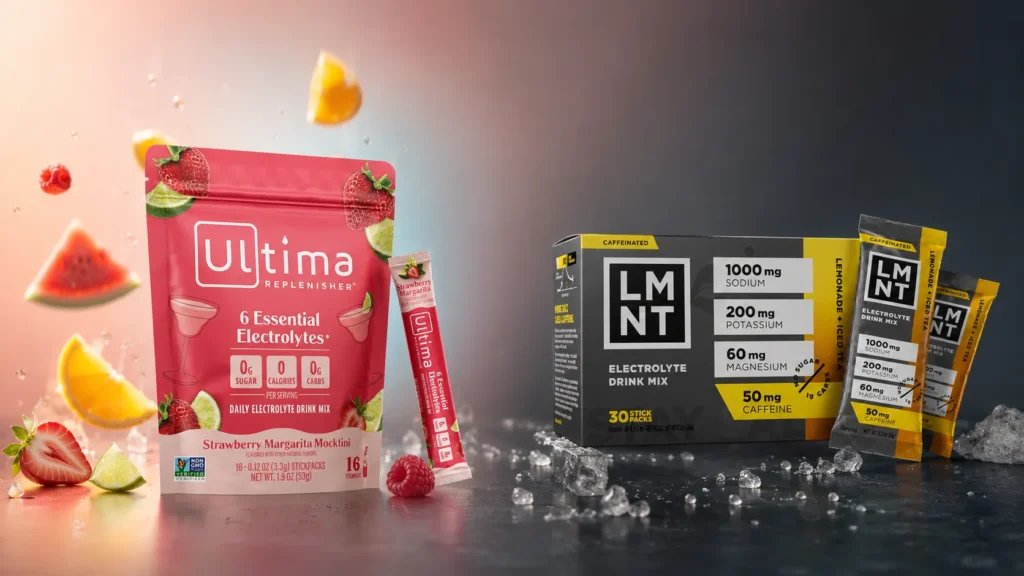
Ultima vs LMNT is mainly a low-sodium versus high-sodium decision. Both powders are sugar-free, but LMNT supplies 1,000 mg of sodium per stick, while Ultima Replenisher has a broader mineral profile and substantially less sodium per serving. Activity level, sweat losses, diet, medical considerations, flavor, and cost should guide the choice.
Table of Contents
One product is built for gentle, daily hydration that fits neatly into your morning routine. The other is built for people who sweat hard, eat low-carb, or need serious sodium replacement after intense physical effort. Both are genuinely good products. But picking the wrong one – and a lot of people do – means either drinking salty water when you don’t need it, or sipping something that barely moves the needle when your body is screaming for electrolytes.
This comparison of Ultima vs LMNT covers everything that matters: ingredients, sodium, potassium, price, taste, and who each product is actually designed for. No filler, no fluff.
What Is Ultima Replenisher?
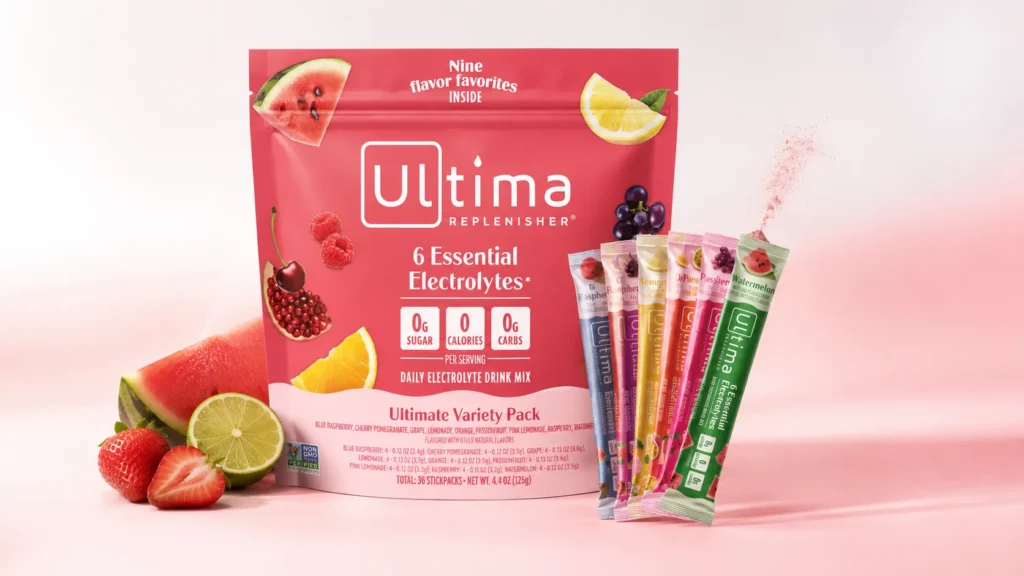
Ultima Replenisher has been around since 1996 – long before the current electrolyte powder boom made every fitness brand release a hydration mix. Founded with a focus on clean, low-sodium daily hydration, the brand built its formula around a broad mineral profile rather than a high-sodium punch.
The philosophy behind Ultima is straightforward: your body uses electrolytes around the clock – not just during workouts – and most people are mildly deficient in multiple minerals at once. Rather than flooding the system with sodium and calling it a day, Ultima delivers all six key electrolytes in moderate amounts.
Each Ultima Replenisher serving (1 scoop / 1 stick pack into 16 oz water) contains:
- Sodium: 55 mg
- Potassium: 250 mg
- Magnesium: 100 mg
- Calcium: 65 mg
- Phosphorus: 70 mg
- Chloride: trace amounts
- Zinc: trace amounts
- Vitamin C: 100 mg (110% DV)
- Sugar: 0 g | Calories: 0
The product is zero calorie, zero sugar, zero carbs. It uses organic stevia leaf extract (Rebaudioside A) as its only sweetener – no sucralose, no artificial sweeteners. Colors come entirely from plant sources: beet juice, annatto extract, carrot concentrate, hibiscus, and beta carotene depending on the flavor.
Ultima is certified non-GMO, vegan, gluten-free, keto-friendly, and paleo-friendly. It comes in 17 flavors ranging from classics like Lemonade and Grape to more adventurous options like Peach Bellini Mocktini and Mango Dragon Fruit Green Tea. Available in 20-count stick packs and 30- or 90-serving canisters.
What Is LMNT?
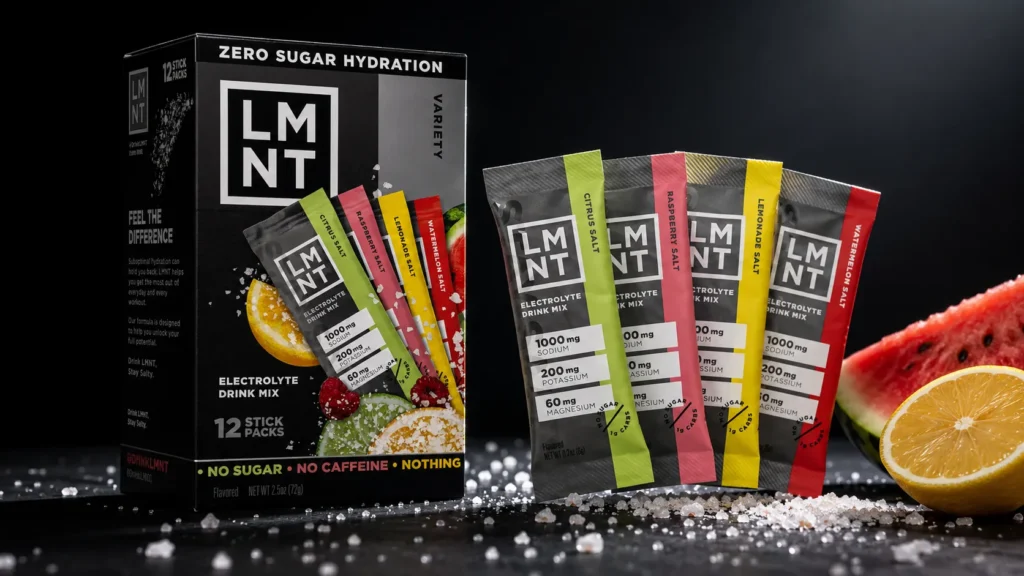
LMNT (pronounced “element”) was co-created by Robb Wolf – biochemist, paleo advocate, and two-time New York Times bestselling author – and launched on a single provocative idea: the conventional wisdom about sodium being dangerous is wrong for active people, and most electrolyte products are woefully under-salted.
The formula was designed specifically for people on ketogenic or low-carb diets (who lose more sodium as the kidneys excrete it when carbohydrate intake drops), endurance athletes, heavy sweaters, and anyone doing extended physical activity in heat. LMNT is not trying to be a daily vitamin drink. It is trying to solve a specific physiological problem – sodium depletion – as efficiently as possible.
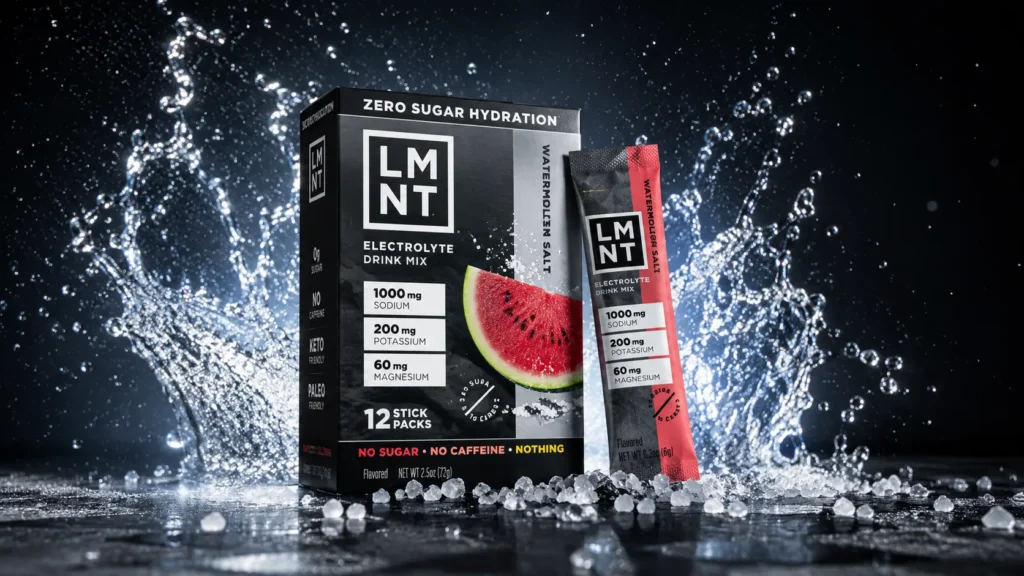
Each LMNT packet (into 16–32 oz water) contains:
- Sodium: 1,000 mg
- Potassium: 200 mg
- Magnesium: 60 mg (as magnesium malate)
- Calcium: 0 mg
- Phosphorus: 0 mg
- Sugar: 0 g | Calories: 5–10
That is it. Three electrolytes, intentionally. The simplicity is deliberate – no vitamins, no extras, no calcium, no phosphorus. LMNT’s position is that most people get adequate calcium and phosphorus through food, and that diluting a formula with low-dose trace minerals distracts from the main event: sodium replacement.
LMNT is third-party tested, GMP-certified, and sweetened only with stevia. It comes in over 10 flavors including Citrus Salt, Watermelon Salt, Raspberry Salt, and Mango Chili.
Ultima vs LMNT: Head-to-Head Breakdown
1. Sodium – The Biggest Gap in Any Electrolyte Comparison
This is where Ultima and LMNT diverge so dramatically that it essentially defines the entire debate.
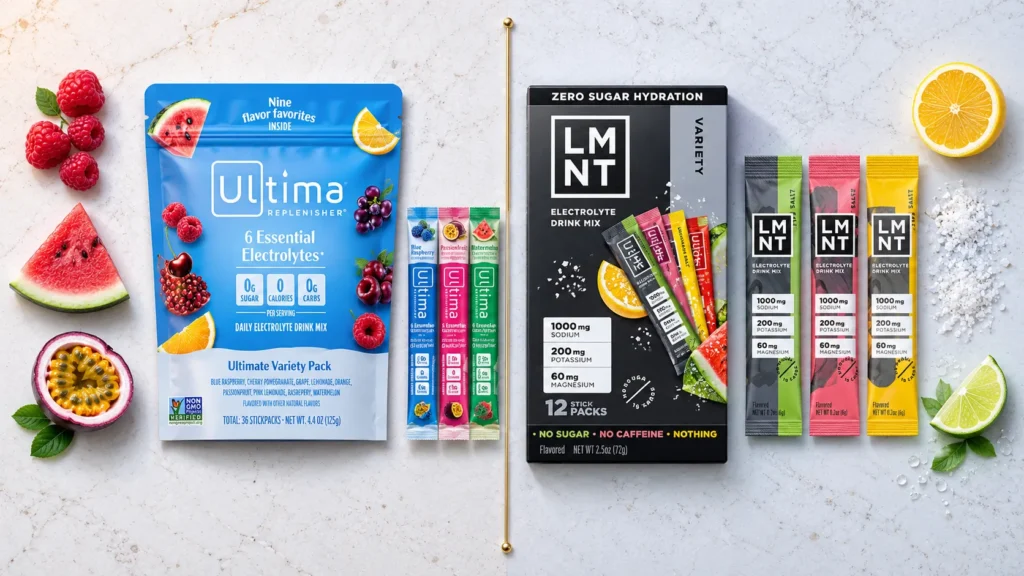
LMNT contains 1,000 mg of sodium per serving. Ultima contains 55 mg. That is an 18x difference. According to Treeline Review’s 2026 tested electrolyte ranking, LMNT has the highest sodium of any electrolyte they tested – double the next highest option.
Sodium is the primary electrolyte lost in sweat. During intense exercise, the body can lose 700–1,000 mg of sodium per hour or more depending on sweat rate and conditions. For someone running a half marathon in summer heat, one LMNT packet replaces roughly what they lost. One Ultima serving barely scratches the surface.
On the flip side, 55 mg of sodium per serving is entirely appropriate for someone sitting at a desk all day who simply wants to support baseline hydration without spiking their daily sodium intake. The American Heart Association recommends a cap of 2,300 mg of sodium daily for most adults – one LMNT packet covers 43% of that in a single drink.
The sodium question is really a use-case question: How much are you actually sweating, and what does your diet look like? Those two factors determine which product’s sodium level makes sense for your body.
2. Potassium – Ultima Has the Edge
Ultima delivers 250 mg of potassium per serving. LMNT delivers 200 mg.
The difference is modest, but Ultima’s potassium-to-sodium ratio is dramatically different. Ultima runs roughly a 4.5:1 potassium-to-sodium ratio. LMNT runs a 1:5 sodium-to-potassium ratio. These are almost mirror opposites in terms of mineral emphasis.
For general wellness and cardiovascular health, a higher potassium intake relative to sodium is generally favorable. For someone sweating heavily, the emphasis flips – sodium loss is far greater than potassium loss during exercise, so LMNT’s sodium-forward approach makes physiological sense in that context.
3. Magnesium – Ultima Wins on Quantity
Ultima contains 100 mg of magnesium per serving (as magnesium citrate). LMNT contains 60 mg (as magnesium malate).
Both forms are well-absorbed. Magnesium malate (LMNT’s choice) is often considered gentler on digestion. Magnesium citrate (Ultima’s choice) has a longer track record and solid bioavailability data. For people dealing with muscle cramps, poor sleep, or general fatigue, Ultima’s higher magnesium dose is a meaningful advantage.
Note: Higher magnesium doses in some individuals can cause digestive discomfort. The 100 mg in Ultima is within normal tolerance for most people, but it is worth tracking if you experience any GI issues.
4. Mineral Breadth – Ultima Covers More Ground
This is where the two products reflect genuinely different philosophies.
Ultima includes six electrolytes: sodium, potassium, magnesium, calcium, phosphorus, and chloride. Plus zinc and Vitamin C. LMNT includes three: sodium, potassium, and magnesium. Nothing else.
Ultima’s broader mineral profile is better suited for someone who wants their electrolyte drink to contribute to overall daily mineral intake – not just replace what was lost in sweat. LMNT’s minimal approach prioritizes intensity over breadth.
Which is better? It depends entirely on what your body is missing. For people who eat varied, whole-food diets and have adequate calcium and phosphorus already, LMNT’s stripped-down formula is not a disadvantage. For people with less varied diets or who want a broader daily supplement, Ultima’s wider net is more useful.
5. Sugar and Sweeteners – Both Zero Sugar, Different Stevia Approach
Both Ultima and LMNT are zero sugar. Both use stevia as their sweetener. But there is a difference in how they use it.
Ultima uses only organic stevia leaf extract (Rebaudioside A) – no other sweeteners. LMNT uses stevia but some users report its flavors have a slightly more robust sweetness profile. Both brands avoid sucralose, aspartame, and acesulfame potassium.
Stevia-sensitive individuals sometimes report a faint aftertaste with both products. This is a consistent trait of stevia-sweetened drinks and is unlikely to be resolved by switching between these two brands – though the flavor delivery varies enough that one may suit your palate better than the other.
Price Comparison: Ultima and LMNT
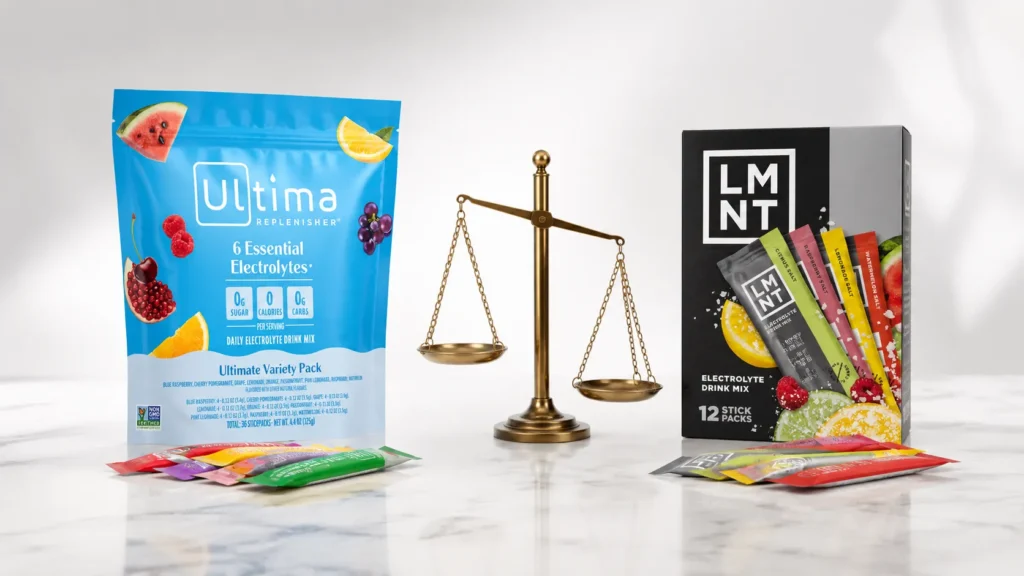
This is one of the clearest wins in the entire Ultima vs LMNT comparison – and it goes decisively to Ultima.
- Ultima Replenisher: 20-count stick packs cost ~$20.99 ($1.05/serving). The 90-serving canister drops to $44.99 ($0.50/serving), and with a subscription, as low as $0.44/serving.
- LMNT: 30-count pack costs $45 (~$1.50/serving). With subscription, roughly $1.30/serving.
If you are doing the math: at full canister pricing, Ultima costs roughly one-third the price of LMNT per serving. For daily users, that difference compounds fast. Over 30 days, Ultima at canister pricing costs around $13–15. LMNT at full price costs $45.
LMNT’s stick pack format is more convenient for on-the-go use, and the travel-ready packet design is genuinely useful. But if you primarily use your electrolytes at home, the canister makes Ultima one of the most cost-effective clean electrolyte options on the market.
For retail availability, both brands are accessible. LMNT is sold on its website, Amazon, and through some specialty retailers. Ultima is sold on its own site, Amazon, Vitacost, and health food stores. Neither has the mass retail footprint of Liquid IV or Pedialyte, but availability for both is generally good for online buyers.
Who Should Use Ultima?

Ultima is the better choice for:
- Anyone looking for a zero-sugar, zero-calorie electrolyte drink they can use every day without worrying about excessive sodium or calorie accumulation. Think: daily desk worker, light exerciser, or someone who just wants a flavored water upgrade.
- People who want a broader mineral profile in one product – calcium, phosphorus, zinc, and Vitamin C alongside the core three electrolytes.
- Keto and low-carb dieters who need to maintain electrolyte balance but are not engaged in intense athletic activity. The broader mineral coverage helps offset dietary gaps common in restrictive eating patterns.
- Budget-conscious buyers. At $0.44–$0.50 per serving in canister form, Ultima is one of the most affordable clean electrolyte powders available without sacrificing ingredient quality.
- People who want a sweeter, lighter-tasting drink that does not feel medicinal or aggressively salty. Ultima has a flavor profile closer to a light sparkling water than a sports drink.
- Anyone managing blood pressure or cardiovascular concerns who has been advised to moderate sodium – Ultima’s 55 mg per serving is about as low as electrolyte products get without becoming plain water. (Always consult your doctor regarding specific sodium restrictions.)
Who Should Use LMNT?
LMNT makes the most sense for:
- Endurance athletes, high-intensity trainers, and heavy sweaters. If you are losing significant sodium through sweat during long runs, bike rides, CrossFit sessions, or hot-weather training, LMNT’s 1,000 mg sodium delivers real, measurable replacement.
- People following strict ketogenic or very low-carb diets. When carbohydrate intake drops sharply, insulin levels fall, causing the kidneys to excrete more sodium. The resulting sodium deficiency can cause fatigue, brain fog, and muscle cramps – a cluster of symptoms sometimes called the “keto flu.” LMNT was partly designed to address this directly.
- Individuals managing POTS (Postural Orthostatic Tachycardia Syndrome) or other conditions where higher sodium intake is medically indicated. (Always follow your physician’s specific guidance.)
- People who want the absolute cleanest, shortest ingredient list possible. Three electrolytes, stevia, natural flavors, and citric acid. That is the entire formula. For ingredient minimalists, it does not get simpler.
- Anyone who dislikes the idea of adding calcium or phosphorus through a drink because they already get adequate amounts through food and prefer targeted supplementation.
Taste: Salty vs. Sweet – A Real Difference
Taste is where these two products feel most different in daily use.
LMNT is noticeably salty. First-time users are sometimes caught off guard by the intensity, especially in flavors like Citrus Salt or Watermelon Salt. The saltiness is intentional – it is what 1,000 mg of sodium per packet actually tastes like. Most regular users adapt quickly and come to appreciate it. For someone dehydrated after a hard workout, that salty hit can feel genuinely satisfying.
Ultima is light, sweet, and mild. It tastes closer to a lightly flavored still water than a sports drink. Flavors like Lemonade, Cherry Pomegranate, and Raspberry are pleasant without being overpowering. The stevia sweetness is present but not cloying. It is the kind of drink you could sip throughout the day without thinking much about it – which is exactly the point for a daily hydration product.
For people who want something enjoyable enough to drink on a regular, non-workout basis – Ultima wins on taste versatility. For people who want something that tastes like it is doing something serious – LMNT delivers that experience.
Ultima vs LMNT: Final Verdict
These two products are so different in their sodium philosophy that calling this comparison close would be misleading. The real question is not which one is better – it is which is better for you.
- You can Choose Ultima if: You want daily, low-sodium hydration support with a broad mineral profile, zero sugar, and a budget-friendly price. You exercise moderately, want to sip something all day, or are watching your sodium intake.
- You can Choose LMNT if: You sweat heavily, follow keto or paleo, do endurance sports, or have a specific high-sodium need. You want a no-nonsense, three-ingredient formula and you don’t mind paying a premium for it.
One useful frame from the Treeline Review 2026 testing: if you are not sure which category you fall into, start with Ultima. It is gentler, cheaper, and provides a useful baseline. If you consistently feel like it is not enough after hard efforts, that is your signal to move to LMNT.
Some people keep both. Ultima at their desk for daily hydration, LMNT in their gym bag for hard training days. That is not a bad system at all.
Frequently Asked Questions
Q1. Is Ultima or LMNT better for keto?
Both are keto-friendly. LMNT is specifically built around the needs of keto dieters – particularly the sodium loss that comes with cutting carbohydrates. If you are strictly keto and active, LMNT is the more targeted fit. If you are keto but sedentary or lightly active, Ultima’s broader mineral profile is a reasonable and more affordable option.
Q2. Why does LMNT have so much more sodium than Ultima?
LMNT was designed for people who sweat heavily and lose significant sodium through physical activity or dietary factors like carbohydrate restriction. Ultima was designed for everyday, all-day hydration where high sodium is unnecessary and potentially counterproductive. The difference is philosophical, not accidental.
Q3. Can I drink Ultima every day?
Yes. Ultima is formulated specifically for daily use. At zero calories and zero sugar, with only 55 mg of sodium per serving, it is appropriate for regular consumption without concern about sodium accumulation. Even two servings a day adds only 110 mg of sodium from the drink itself.
Q4. Is LMNT safe for people with high blood pressure?
People with hypertension, kidney disease, or heart conditions should consult a doctor before using high-sodium products like LMNT. At 1,000 mg of sodium per packet, daily use adds substantially to dietary sodium intake, which can be relevant for people managing blood pressure. Ultima’s 55 mg sodium is a far safer choice for those with sodium restrictions.
Q5. Which has better value – Ultima or LMNT?
Ultima in canister form costs roughly $0.44–$0.50 per serving. LMNT costs $1.30–$1.50 per serving. For daily users, Ultima is approximately three times cheaper. The value calculation favors Ultima for regular, everyday hydration use.
Q6. Can I use both Ultima and LMNT together, or is that too much of a good thing?
Using both in the same day is a practical strategy that a number of active people already follow – and it is not excessive if your output justifies it. The most sensible approach is using Ultima during the day for baseline hydration and mineral maintenance, then switching to LMNT around or after a hard training session when sodium replacement is the priority.
This article contains affiliate links. If you purchase through our links, we may earn a commission at no extra cost to you. We only recommend products we genuinely believe in. Read our Affiliate Disclaimer for full details.