

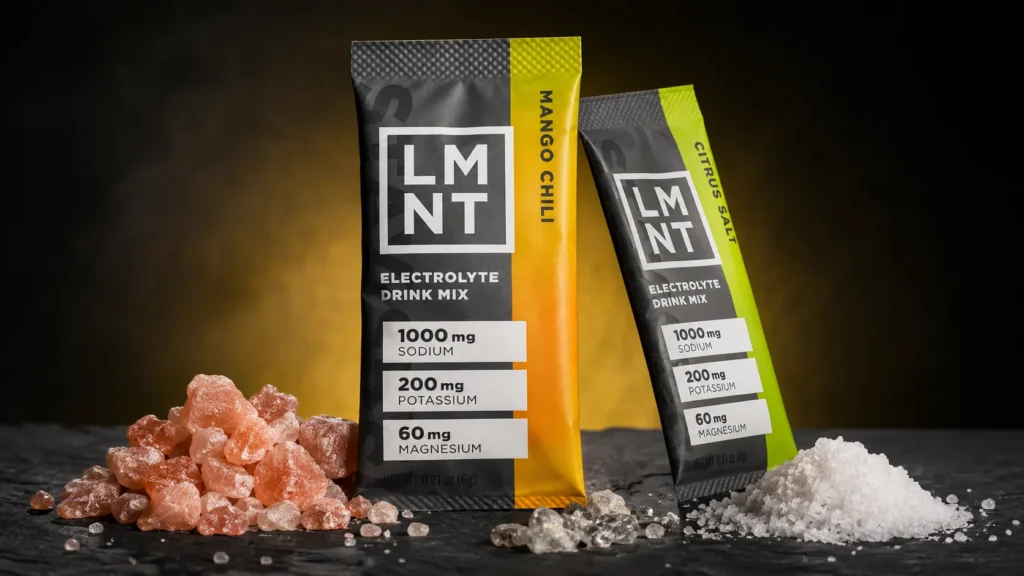
How much sodium is in LMNT? One standard stick contains 1,000 mg of sodium, along with 200 mg of potassium and 60 mg of magnesium, according to the current label. That is a sodium-forward formula compared with many electrolyte powders. Whether it suits you depends on sweat losses, diet, serving frequency, and any medically directed sodium limit.
Table of Contents
Each LMNT packet contains exactly 1,000 mg of sodium. That is 43% of the standard daily recommended limit for most adults in a single serving. It is approximately six times more sodium than a standard Gatorade serving, and roughly double what you find in Liquid IV. That number is intentional, science-backed, and built for a specific type of person – not for everyone.
This article breaks down exactly how much sodium LMNT contains, what kind of sodium it uses, how much potassium LMNT delivers alongside it, why the formula is built the way it is, and who should actually be cautious about using it. No vague reassurances, no unnecessary alarm – just the facts straight from the source.
How Much Sodium in LMNT: The Exact Numbers
LMNT’s formula is identical across all flavours. Whether you are drinking Watermelon Salt, Citrus Salt, Mango Chili, or the Raw Unflavoured version, the electrolyte content never changes. Only the flavouring ingredients differ.
LMNT Full Electrolyte Profile (per packet):
Sodium: 1,000 mg (43% Daily Value) Potassium: 200 mg (4% Daily Value) Magnesium: 60 mg (15% Daily Value) Sugar: 0 g Calories: 0–10 (depending on flavour) Sweetener: Stevia leaf extract only
The 1,000 mg of sodium per packet is the number that defines LMNT’s identity in the electrolyte market. It is the highest sodium content of any mainstream consumer electrolyte product available without a prescription. To put it in perspective:
- Gatorade (standard, 12 oz): 160 mg of sodium
- Liquid IV Hydration Multiplier: 500–560 mg of sodium
- Nuun Sport tablet: 300 mg of sodium
- Ultima Replenisher: 55 mg of sodium
- DripDrop ORS: 330 mg of sodium
- LMNT: 1,000 mg of sodium – the highest in class
LMNT is intentionally built around the idea that most electrolyte products are significantly under-dosed on sodium – not overdosed. That premise is what shapes every formulation decision the brand makes.
We put LMNT head-to-head against Ultima Replenisher on every key metric in our full Ultima vs LMNT comparison – the contrast in sodium alone (1,000 mg vs 55 mg) tells most of the story.
What Kind of Sodium Is in LMNT?
This is the question people ask second, and it matters more than most realise. Not all sodium compounds are the same in terms of absorption rate, taste, and purity.
The sodium in LMNT comes entirely from sodium chloride – common salt. Every flavour lists “Salt (Sodium Chloride)” as the first ingredient. There are no sodium citrate compounds, no sodium bicarbonate, and no buffered sodium forms. Just pure salt.
What kind of sodium is in LMNT, specifically? Sodium chloride in its food-grade form. The same compound as table salt, but without anti-caking agents or iodine additives. LMNT’s sodium chloride is the primary electrolyte vehicle – it delivers both sodium and chloride simultaneously. Chloride is itself an important electrolyte for fluid balance and gastric acid production, and it is the most volume-lost electrolyte in sweat alongside sodium.
To make 1,000 mg of elemental sodium from sodium chloride requires approximately 2,500 mg of sodium chloride by weight – because sodium makes up about 40% of the sodium chloride molecule by mass. LMNT confirms this on their formulation page: their Raw Unflavoured version uses 2,500 mg of sodium chloride to deliver exactly 1,000 mg of sodium. That is the ratio for anyone looking to replicate the formula at home.
The purity of the sodium chloride in LMNT is food-grade and GMP-manufactured. LMNT does not add iodine to its salt – which is worth noting for anyone who relies on iodized salt as their primary iodine source and uses LMNT as a salt replacement. Maintaining dietary iodine through other sources (seafood, dairy, eggs) matters if LMNT displaces your usual iodized salt intake.
Why Does LMNT Use 1,000 mg of Sodium?
The 1,000 mg figure is not arbitrary. LMNT was co-created by Robb Wolf – a research biochemist and author – alongside a team that includes former Navy SEALs and endurance athletes. Their formulation rationale rests on three specific use cases where standard sodium guidelines genuinely fall short.
1. Low-Carb and Ketogenic Diets
When carbohydrate intake drops significantly, insulin levels fall. Insulin signals the kidneys to retain sodium. When insulin drops on a ketogenic or low-carb diet, the kidneys shift into a state called natriuresis – actively excreting sodium at an accelerated rate. Research consistently shows that low-carb dieters require meaningfully more dietary sodium than standard guidelines recommend to maintain fluid balance, prevent dizziness, and avoid the fatigue that many people call “keto flu.”
We cover the exact mechanism of how sodium loss drives keto flu symptoms in our article on electrolytes for keto flu headache – with specific dosing guidance for each stage of adaptation.
For keto dieters losing 1,000–3,000 mg of additional sodium per day through increased urinary excretion on top of normal losses, a single 1,000 mg LMNT packet covers a meaningful portion of that deficit in one serving.
2. Endurance Exercise and Heavy Sweating
Sweat sodium concentration varies widely between individuals – ranging from approximately 200 mg to 2,000 mg per litre of sweat. During an hour of intense exercise in heat, a heavy sweater can lose 500–1,500 mg of sodium. Elite athletes in longer training sessions or hot climates can lose significantly more. Research on athletes supports sodium replacement in the range of 500–1,150 mg per litre of fluid consumed during intense exercise.
For someone completing a two-hour run in summer heat, a single LMNT packet provides targeted replacement that most standard sports drinks – even at larger serving sizes – do not match on sodium.
3. Fasting Protocols
Fasting reduces sodium intake through the simple absence of food. It also reduces insulin, triggering the same natriuresis mechanism as low-carb diets. Intermittent fasters and extended fasters routinely lose sodium at higher rates than their non-fasting counterparts, which is why LMNT has become one of the most popular electrolyte choices in fasting communities.
We cover which LMNT products are safe to use during a fasted window, and which electrolyte products break a fast, in our article on do electrolytes break a fast.
How Much Potassium in LMNT – and Why It’s Lower Than You Might Expect
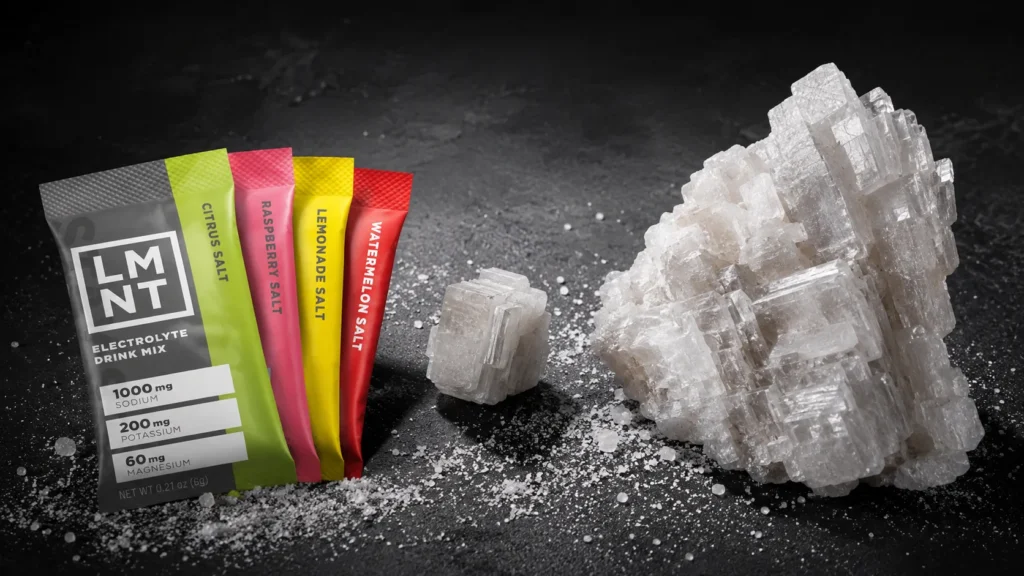
How much potassium in LMNT? Each packet delivers 200 mg of potassium chloride – 4% of the standard daily recommended intake of 4,700 mg.
That seems low compared to the sodium, and it is – deliberately. LMNT’s formulation team chose a 5:1 sodium-to-potassium ratio based on how the sodium-potassium pump functions at the cellular level. The pump requires a 3:2 sodium-to-potassium ratio to move ions across cell membranes. Because the body gets substantially more potassium from whole foods (avocado, spinach, salmon, meat) than it does sodium from a modern processed-food-free diet, the team decided LMNT should compensate for what diet tends to be deficient in – sodium – rather than duplicating what food already provides.
The 200 mg potassium per packet comes from potassium chloride – a clean, well-absorbed form. It contributes a meaningful amount toward daily potassium without pushing intake to levels that could concern people with kidney conditions, for whom high-potassium supplements carry risk.
For people on keto or paleo diets who eat potassium-rich foods (avocado alone provides around 975 mg per fruit), LMNT’s 200 mg is a supplemental addition to an already reasonable dietary baseline. For people eating a processed-food-heavy diet low in potassium-rich whole foods, the 200 mg from LMNT is a helpful but partial contribution – not a complete solution on its own.
If muscle cramps are driving your interest in potassium specifically, our article on the best electrolytes for leg cramps at night breaks down which products deliver the highest potassium and magnesium per serving for cramp management.
Magnesium in LMNT: The Third Mineral
LMNT’s third and final electrolyte is magnesium – 60 mg of magnesium malate per packet, representing 15% of the daily recommended intake for most adults.
Magnesium malate is the form LMNT uses, which is important. Malate is one of the better-absorbed forms of magnesium – significantly more bioavailable than magnesium oxide, which is the most common (and cheapest) form used in budget supplements. Malic acid – the compound that binds the magnesium – is a natural organic acid found in fruit, and it plays a role in the Krebs cycle (cellular energy production). For athletes dealing with muscle fatigue and soreness, magnesium malate specifically has relevance beyond general mineral replacement.
At 60 mg per packet, LMNT’s magnesium contribution is meaningful but not a complete daily solution. The recommended intake for adults is 320–420 mg per day. If you are using LMNT as your primary electrolyte supplement, you will want to ensure dietary magnesium from food – pumpkin seeds (156 mg per oz), almonds, dark leafy greens, and dark chocolate – fills the remaining gap.
LMNT Zero Sugar Electrolytes: What That Actually Means
LMNT markets itself as zero sugar electrolytes – and that claim is accurate. Every flavour delivers zero grams of sugar and zero carbohydrates. The sweetness in flavoured versions comes entirely from stevia leaf extract (specifically rebaudioside A), a naturally derived, zero-calorie sweetener that does not raise blood sugar or insulin levels.
LMNT zero sugar electrolytes also contain no artificial sweeteners, no sucralose, no acesulfame potassium, and no aspartame. For the keto, paleo, carnivore, and fasting communities where artificial ingredient avoidance matters, that distinction is meaningful. The Raw Unflavoured version takes it even further – no stevia, no natural flavours, no citric acid. Just three ingredients: sodium chloride, potassium chloride, and magnesium malate.
The zero-sugar formulation also means LMNT does not use the glucose-sodium cotransport (SGLT1) mechanism that ORS-based products like Liquid IV and DripDrop rely on to accelerate absorption. LMNT argues – and their science page supports – that you do not need glucose to hydrate effectively. Sodium drives water into the bloodstream through osmotic pressure independently of glucose, and their position is that adding sugar primarily serves palatability and marketing rather than meaningful absorption enhancement for non-clinical dehydration scenarios.
Who Should Watch Their Sodium Intake with LMNT

The 1,000 mg sodium figure that makes LMNT ideal for athletes and keto dieters is the same figure that makes it inappropriate – or at least worth scrutinising – for several other groups.
People with high blood pressure (hypertension): The American Heart Association recommends a maximum of 1,500 mg of sodium per day for people with hypertension. A single LMNT packet delivers 1,000 mg – 67% of that limit before a single meal. For people managing blood pressure through sodium restriction, LMNT is very likely too high-sodium for regular use. A lower-sodium alternative like Ultima Replenisher (55 mg per packet) or Nuun Sport (300 mg per packet) is more appropriate.
People with chronic kidney disease (CKD): Impaired kidneys cannot efficiently excrete excess sodium or potassium. High sodium intake in CKD can worsen hypertension, cause fluid retention, and accelerate kidney function decline. People with CKD should not use LMNT without explicit guidance from their nephrologist.
Sedentary adults on processed food diets: The average American already consumes approximately 3,400 mg of sodium per day through food – primarily from processed and restaurant foods. Adding 1,000 mg from LMNT on top of a sodium-heavy diet can push total daily intake to 4,400 mg or more, well above recommended ceilings for general health. If you are not exercising intensely or following a low-carb diet, LMNT’s sodium dose exceeds what your body typically needs to replace.
Anyone taking medications that affect sodium or potassium: ACE inhibitors, ARBs, and potassium-sparing diuretics can affect how the body handles both sodium and potassium. If you take any of these medications, discuss high-sodium electrolyte supplementation with your doctor before adding LMNT to your daily routine.
For people in those categories, LMNT is not the right product – not because it is poorly formulated, but because it is formulated for a specific metabolic context that does not apply to everyone. Choosing an electrolyte product that matches your actual sodium needs is more important than brand loyalty.
LMNT vs Other Electrolyte Drinks: Sodium at a Glance
LMNT: LMNT: 1,000 mg sodium | 200 mg potassium | 60 mg magnesium | 0g sugar | Highest sodium on the market
Liquid IV: LMNT: 500–560 mg sodium | 370 mg potassium | 0 mg magnesium | 11g sugar | Half the sodium, higher potassium
Ultima Replenisher: LMNT: 55 mg sodium | 250 mg potassium | 100 mg magnesium | 0g sugar | Lowest sodium, highest magnesium
Gatorlyte: LMNT: 490 mg sodium | 350 mg potassium | 105 mg magnesium | 10g sugar | 5-electrolyte coverage, moderate sodium
DripDrop ORS: LMNT: 330 mg sodium | 180 mg potassium | 40 mg magnesium | 7g sugar | ORS formula, clinical-grade absorption
Nuun Sport: LMNT: 300 mg sodium | 150 mg potassium | 25 mg magnesium | 1g sugar | Tablet format, budget-friendly
For a detailed head-to-head on how LMNT stacks up against Liquid IV across every metric – not just sodium – our LMNT vs Liquid IV comparison covers the full picture including price, taste, and who each product is actually built for.
Final Verdict: Is 1,000 mg of Sodium in LMNT the Right Amount for You?
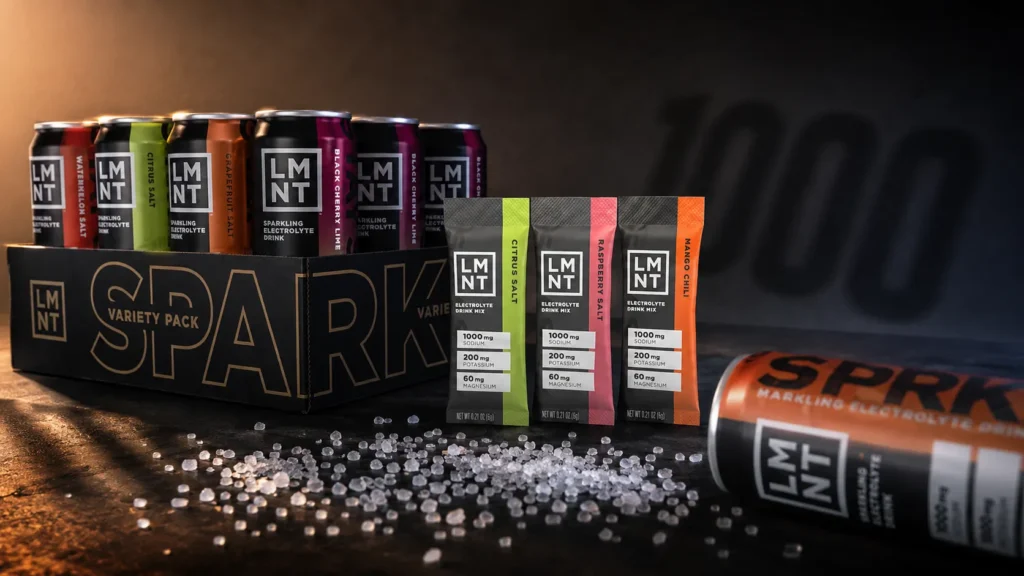
How much sodium in LMNT – 1,000 mg per packet – is the right answer for a clearly defined population: people on ketogenic or low-carb diets losing extra sodium through natriuresis, endurance athletes replacing sweat losses during hard training sessions, intermittent fasters whose sodium intake drops during fasted windows, and heavy sweaters working in heat who need meaningful sodium replacement in a single convenient serving.
It is not the right answer for sedentary adults on sodium-heavy diets, people managing hypertension or heart disease, or anyone whose daily sodium from food already approaches 2,000–3,000 mg. For those people, LMNT’s sodium content adds to an excess rather than filling a deficit.
What kind of sodium is in LMNT – food-grade sodium chloride, identical to salt – means there is nothing unusual or concerning about the compound itself. The question is purely about dose and context. At 1,000 mg per packet, LMNT is a precision tool for people with specific, genuine sodium needs. In the hands of someone without those needs, it delivers more sodium than their body has to deal with.
Frequently Asked Questions
How much sodium is in one LMNT packet?
Each LMNT packet – regardless of flavour – contains exactly 1,000 mg of sodium. This comes from sodium chloride (food-grade salt) and represents 43% of the standard 2,300 mg daily recommended limit set by the FDA. The Raw Unflavoured version contains the same 1,000 mg of sodium with no other additives beyond the three core electrolytes.
Is 1,000 mg of sodium in LMNT too much?
For athletes, keto dieters, fasters, and heavy sweaters – populations that lose extra sodium through sweat or urinary excretion – 1,000 mg per serving is within an appropriate range. For sedentary adults eating a standard processed-food diet, 1,000 mg from LMNT on top of dietary sodium may push total daily intake above recommended thresholds. Context determines whether the dose is appropriate, not the number alone.
How much potassium in LMNT per packet?
Each LMNT packet contains 200 mg of potassium from potassium chloride – 4% of the daily recommended value of 4,700 mg. LMNT intentionally keeps potassium lower than sodium because the brand’s philosophy is that dietary sources (avocado, meat, leafy greens) should supply the majority of daily potassium, with LMNT focusing on the mineral most likely to be deficient in low-carb and fasting contexts: sodium.
What kind of sodium is in LMNT?
LMNT uses food-grade sodium chloride – the same compound as salt, without iodine additives or anti-caking agents. Every flavour lists ‘Salt (Sodium Chloride)’ as the first ingredient. To deliver 1,000 mg of elemental sodium, each packet contains approximately 2,500 mg of sodium chloride by weight. No sodium citrate, no sodium bicarbonate, no buffered forms – just pure salt.
Are LMNT zero sugar electrolytes actually sugar-free?
Yes. LMNT zero sugar electrolytes contain zero grams of sugar and zero carbohydrates across every flavour. Sweetness in the flavoured versions comes only from stevia leaf extract (rebaudioside A), which does not raise blood sugar or insulin. The Raw Unflavoured version contains no sweeteners at all – just the three electrolyte minerals. No sucralose, no aspartame, no artificial sweeteners of any kind.
Can I take LMNT every day?
For the populations LMNT targets – keto dieters, athletes, fasters, heavy sweaters – daily use of one packet is generally appropriate. For people with normal sodium levels from a balanced diet who are not exercising intensely or following a low-carb protocol, daily use may exceed what their sodium balance requires. People with hypertension, kidney disease, or heart conditions should consult a physician before using LMNT daily.
Does LMNT have more sodium than regular sports drinks?
Yes – significantly more. A standard Gatorade serving contains around 160 mg of sodium, Nuun Sport delivers 300 mg, and DripDrop ORS provides 330 mg. LMNT’s 1,000 mg per packet is roughly six times higher than Gatorade and more than three times higher than most mainstream sports drinks. The gap exists by design – LMNT targets athletes and keto dieters with genuine sodium deficits, while most mainstream sports drinks are formulated for casual hydration during moderate activity.
Does the sodium in LMNT cause water retention or bloating?
For people replacing actual sodium losses – through sweat, fasting, or low-carb diets – LMNT’s 1,000 mg tends to support fluid balance rather than cause excess water retention. The body retains sodium primarily when intake chronically exceeds output. If you are sweating heavily, following a keto diet, or fasting, your output is elevated and the sodium is utilized rather than stored. Water retention and bloating are more likely in sedentary individuals on already-high sodium diets where LMNT adds to a surplus rather than filling a deficit.
How does LMNT’s sodium compare to the daily recommended intake?
One LMNT packet contains 1,000 mg of sodium, which equals 43% of the FDA’s standard daily recommended limit of 2,300 mg. For people with hypertension, the American Heart Association recommends a lower cap of 1,500 mg per day – meaning one LMNT packet alone accounts for 67% of that stricter limit. This is why LMNT’s own guidance consistently positions the product for active, low-carb, or fasting individuals rather than the general sedentary population.
Is the sodium in LMNT safe if you have high blood pressure?
LMNT is not recommended for people managing hypertension without a doctor’s approval. At 1,000 mg of sodium per packet, a single serving brings most people with high blood pressure close to their entire daily sodium budget before accounting for any food. Lower-sodium alternatives – such as Ultima Replenisher at 55 mg per packet or Nuun Sport at 300 mg – are more appropriate choices for that group. If you are on ACE inhibitors, ARBs, or diuretics, speak with your physician before adding any high-sodium electrolyte supplement to your daily routine.
This article contains affiliate links. If you purchase through our links, we may earn a commission at no extra cost to you. We only recommend products we genuinely believe in. Read our Affiliate Disclaimer for full details.