
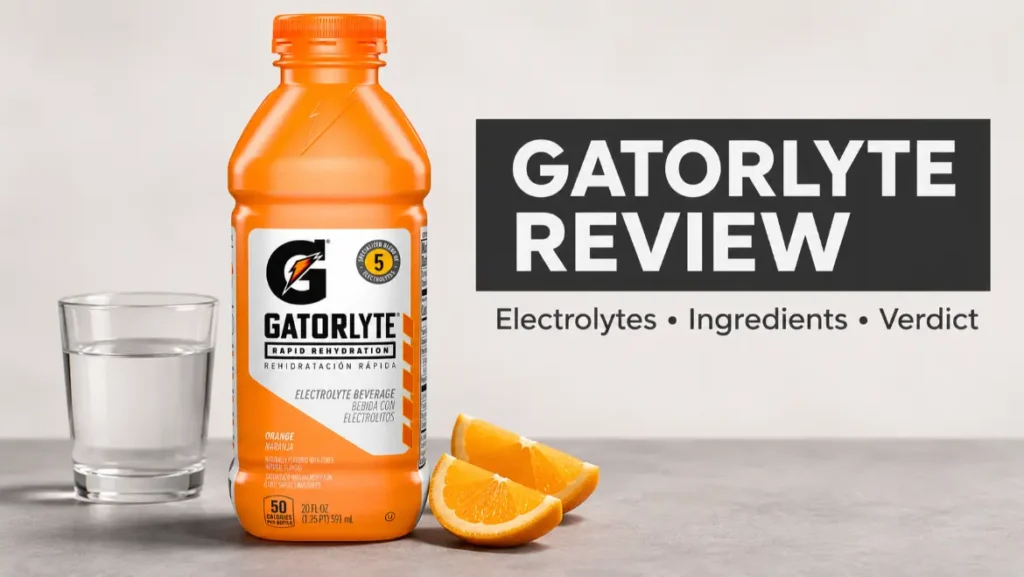
Gatorlyte is not simply regular Gatorade in a different bottle. It is a lower-sugar, higher-electrolyte drink designed for faster fluid replacement after substantial sweating. This Gatorlyte Review examines the standard 20-ounce ready-to-drink bottle – not Gatorlyte Zero or the powder sticks – so the nutrition numbers stay consistent.
Table of Contents
Quick verdict: Gatorlyte is a convenient choice for long, hot workouts, heavy sweaters, outdoor work, and occasions when meaningful fluid and mineral replacement is needed. Its five-electrolyte formula is more comprehensive than many ordinary sports drinks. However, the 490 milligrams of sodium, added sugar, color additives in certain flavors, and premium price make it excessive for casual daily sipping.
Gatorlyte Review: What Is Gatorlyte?
Gatorlyte is Gatorade’s rapid-rehydration line. The standard bottle combines water, carbohydrate, and five electrolytes: sodium, potassium, chloride, magnesium, and calcium. It comes ready to drink, which removes measuring and mixing from the equation.
According to the official Gatorlyte product page, the beverage is intended for on-the-go hydration before, during, or after exercise. The current line includes Orange, Cherry Lime, Glacier Freeze, Lime Cucumber, Mixed Berry, Strawberry Kiwi, and Watermelon. Availability can vary by retailer and location.
The important distinction is concentration. A 20-ounce bottle provides considerably more sodium and potassium than a typical bottle of Gatorade Thirst Quencher, while containing less sugar. That makes Gatorlyte more targeted toward rehydration than supplying a large amount of workout carbohydrate.
Gatorlyte Review: Nutrition Facts at a Glance
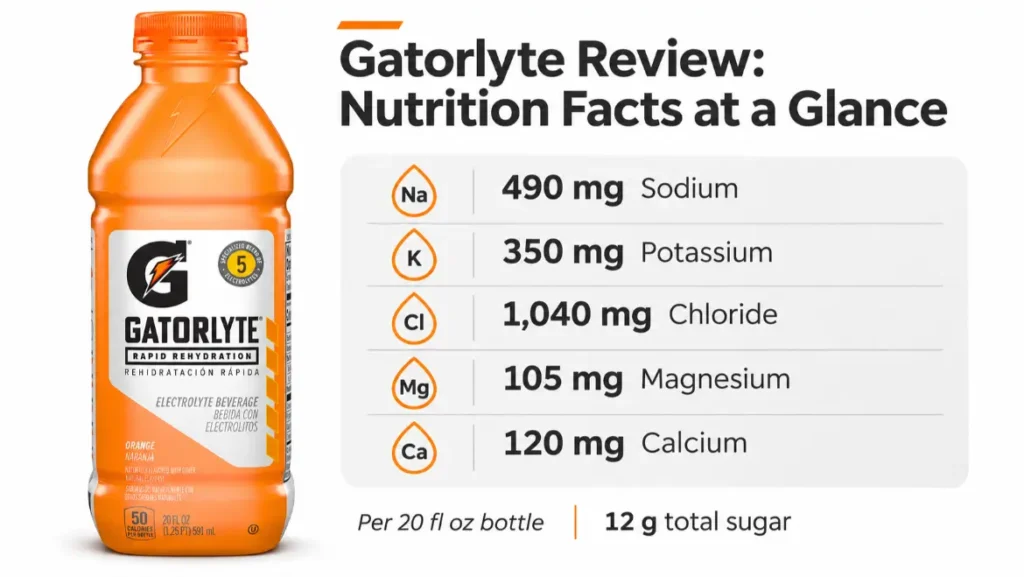
The label can vary slightly by flavor, so always check the bottle you are buying. The current standard 20-ounce ready-to-drink formula lists the following core values:
| Nutrient | Amount per 20 fl oz bottle |
|---|---|
| Calories | About 50–60 |
| Total carbohydrate | About 14 g |
| Total sugar | 12 g |
| Sodium | 490 mg |
| Potassium | 350 mg |
| Chloride | 1,040 mg |
| Magnesium | 105 mg |
| Calcium | 120 mg |
Those figures explain the product’s positioning. It supplies a modest amount of carbohydrate, but the main feature is its broad mineral profile. One bottle contains about 21% of the FDA Daily Value for sodium, so this is not a low-sodium drink.
The Gatorlyte nutrition facts also show why context matters. A high-electrolyte formula may be useful after a long run in the heat, yet unnecessary after a short walk or a normal day at a desk. More electrolytes are not automatically better; the useful amount depends on sweat loss, diet, weather, activity duration, and medical needs.
Gatorlyte Review: The Five-Electrolyte Formula
Sodium and Chloride Do Most of the Heavy Lifting
Sodium and chloride are the most abundant minerals in sweat. Gatorlyte provides 490 milligrams of sodium and 1,040 milligrams of chloride per bottle. That is a meaningful replacement dose for someone who has been sweating heavily, especially in hot or humid conditions.
The sodium level is also the main reason not to treat the drink like flavored water. Most people already get plenty of sodium from food, while people with certain kidney, heart, or blood-pressure concerns may have specific limits. If you have been told to restrict sodium, follow your clinician’s guidance rather than choosing an electrolyte drink based on marketing claims.
For endurance training, sweat rate and conditions matter more than brand loyalty. Our guide to electrolyte drinks for runners explains how session length, heat, and individual sweat losses change what a useful formula looks like.
Potassium, Magnesium and Calcium Broaden the Formula
The bottle also contains 350 milligrams of potassium, 105 milligrams of magnesium, and 120 milligrams of calcium. These minerals participate in normal fluid balance, nerve signaling, and muscle function, although a sports drink should not be treated as a cure for cramps or fatigue.
This wider profile is a genuine strength. Many basic sports drinks emphasize sodium and provide a small amount of potassium while including little or no labeled magnesium or calcium. Gatorlyte electrolytes therefore look more complete on paper.
Still, the serving should be judged as a whole. A longer mineral list does not make the drink necessary for every workout.
Gatorlyte Review: Ingredients and Sweeteners
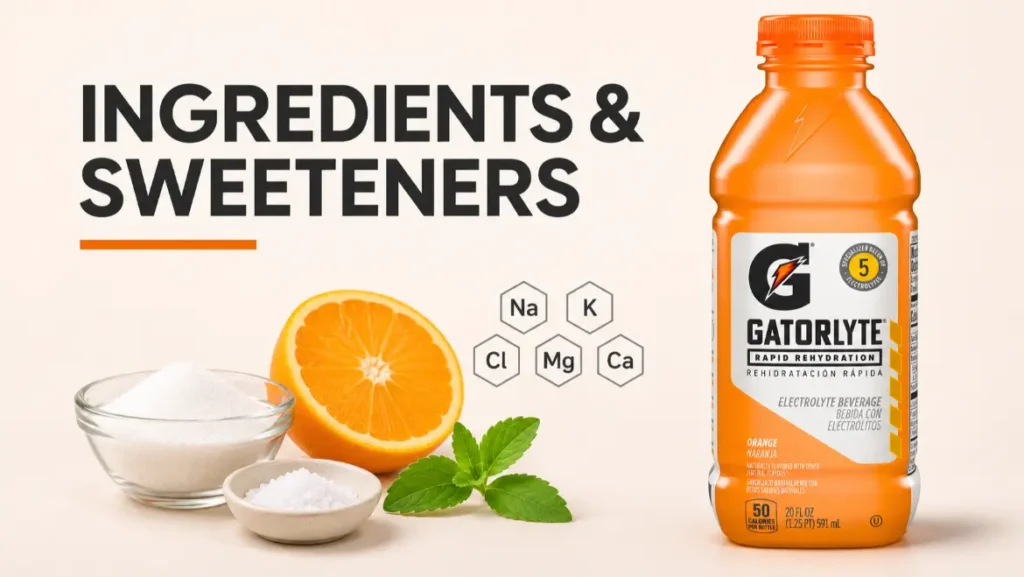
The Gatorlyte Review ingredient check starts with the Orange bottle: water, sugar, citric acid, salt, calcium lactate, potassium chloride, magnesium oxide, gum arabic, purified stevia leaf extract, natural flavor, sucrose acetate isobutyrate, glycerol ester of rosin, and Yellow 6. Other flavors may use different colors or flavor-specific ingredients.
This Gatorlyte Review finds the sweetener approach fairly sensible for the intended use. Sugar contributes 12 grams per bottle, while stevia helps provide sweetness without pushing the sugar level toward that of a standard sports drink.
Gatorade states that the product contains no artificial sweeteners or flavors. That wording does not mean every flavor is free from artificial colors; Orange, for example, lists Yellow 6.
Sugar is not itself an electrolyte. In a properly designed hydration beverage, however, carbohydrate can contribute energy and support the movement of sodium and water through the intestine. Our explanation of whether sugar is an electrolyte separates those two roles in plain language.
People who dislike stevia may notice its lingering sweetness, particularly as the drink warms. Anyone avoiding added sugar should compare the regular bottle with Gatorlyte Zero, but the zero-sugar version is a separate formula and should not be assumed to share every ingredient or taste characteristic discussed here.
Gatorlyte Review: Taste, Flavors and Drinkability
The Gatorlyte Review taste assessment is straightforward: it is generally saltier and less syrupy than traditional sports drinks. That profile makes sense because it contains more electrolytes and less sugar.
Served cold, the saltiness tends to feel more integrated. At room temperature, both the mineral edge and stevia finish may become more obvious.
Orange is familiar and easy to understand, with a tart citrus direction rather than a juice-like taste. Cherry Lime is sharper, while Watermelon and Strawberry Kiwi lean fruitier. Lime Cucumber is likely to appeal most to shoppers who prefer a lighter, less candy-like flavor.
Taste is personal, so buying one bottle before committing to a case is the safest approach.
In this Gatorlyte Review, drinkability is a qualified positive. The beverage is easier to finish than very salty powders, and the bottle is convenient when traveling or leaving a gym. It is less appealing for someone who wants a neutral, unsweetened drink or who is sensitive to stevia and food dyes.
Gatorlyte Review: Gatorlyte vs Gatorade
The clearest difference identified in this Gatorlyte Review is purpose. Regular Gatorade Thirst Quencher provides more carbohydrate for activity fuel and a lighter electrolyte dose. Gatorlyte reduces the sugar while increasing sodium, potassium, chloride, magnesium, and calcium to emphasize rehydration after heavier fluid loss.
| Feature | Gatorlyte ready-to-drink | Gatorade Thirst Quencher |
|---|---|---|
| Primary emphasis | Rapid rehydration | Hydration plus carbohydrate fuel |
| Electrolyte variety | Five labeled electrolytes | Mainly sodium and potassium |
| Sugar | Lower | Higher |
| Sodium concentration | Higher | Lower |
| Best fit | Heavy sweat, heat and longer activity | Training that benefits from more carbohydrate |
Neither formula wins universally. A person completing an easy 30-minute session may need only water and a normal meal. An athlete training for several hours may require more total carbohydrate than Gatorlyte supplies. A heavy sweater focused on restoring fluid and minerals may prefer Gatorlyte’s stronger electrolyte profile.
For a direct brand comparison, read our Gatorlyte vs Liquid I.V. guide. It compares the ready-to-drink option with a portable powder format and shows why convenience, serving volume, and mineral amounts can matter as much as the brand name.
Gatorlyte Review: When Gatorlyte Makes the Most Sense
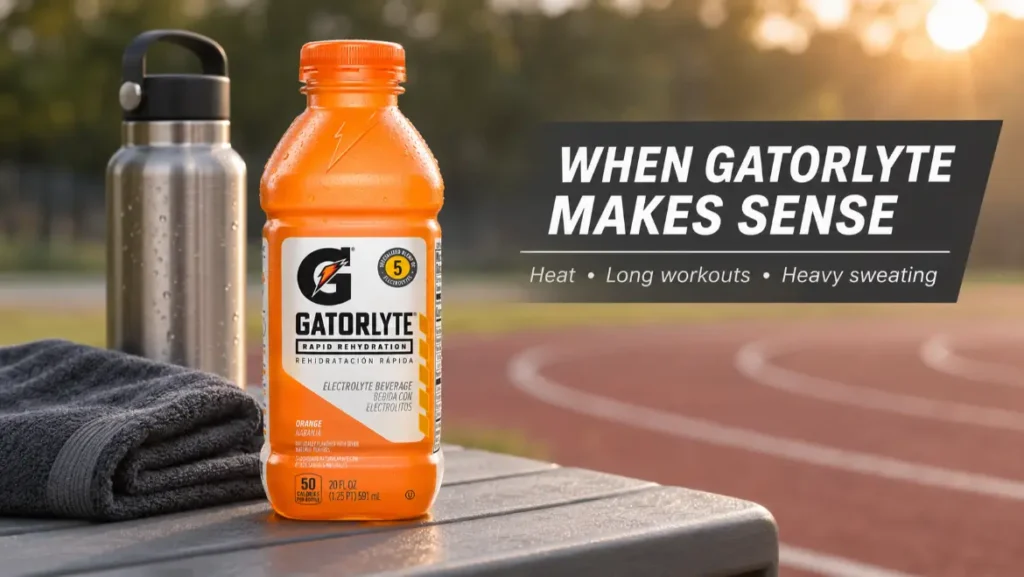
The best-fit conclusion from this Gatorlyte Review is that the drink belongs in situations involving notable sweat or fluid loss. Examples include a long run, tournament day, strenuous outdoor work, extended time in heat, or recovery after a demanding training session.
The bottle is particularly convenient when you cannot measure powder or do not have a clean container available.
The American College of Sports Medicine’s hydration guidance notes that most people exercising for less than roughly 60–90 minutes in normal conditions are unlikely to become depleted of electrolytes. Endurance athletes, heavy sweaters, and people training in heat deserve more deliberate planning.
A bottle may also be easier to tolerate when appetite is low, but it is not a universal medical rehydration solution. For significant vomiting, diarrhea, or signs of dehydration, follow medical advice.
The NIDDK’s diarrhea treatment guidance distinguishes ordinary electrolyte-containing drinks from oral rehydration solutions and recommends professional guidance for severe dehydration and higher-risk people.
Gatorlyte Review: Who Should Consider an Alternative?
This Gatorlyte Review recommends plain water instead if the activity is short, cool, and easy and you will eat a normal meal afterward. You may also prefer another product if you need a sugar-free drink, want no added color, dislike stevia, or are trying to limit sodium.
People managing kidney disease, heart disease, high blood pressure, diabetes, or medications that affect fluid and electrolyte balance should not assume a concentrated sports drink is automatically appropriate. Potassium, magnesium, sugar, sodium, and fluid can all matter in those situations.
When illness is the reason for shopping, the severity and type of fluid loss should guide the choice. Our overview of the best electrolyte drink when sick explains when a sports drink may be reasonable and when a purpose-made oral rehydration solution deserves consideration.
Gatorlyte Review: Price and Value
As checked on November 2, 2026, Gatorade listed a 12-bottle case at $32.99, or about $2.75 per 20-ounce bottle before shipping, discounts, or subscriptions. Single bottles at major retailers commonly cost roughly $2.50 to $3.50, although local prices and promotions vary.
That is more expensive than mixing a large tub of basic sports-drink powder. You are paying for a stronger mineral profile, a sealed ready-to-drink bottle, and the convenience of buying one serving at a time. Powder sticks can reduce the cost per serving, but they require water and proper mixing.
The value verdict in this Gatorlyte Review depends on frequency. An occasional bottle for hot-weather recovery is easy to justify. Drinking one every day without meaningful sweat loss adds cost, sodium, and sugar without a clear need.
Pros and Cons
Pros
- Five clearly labeled electrolytes
- 490 mg sodium and 350 mg potassium per bottle
- Less sugar than a conventional sports drink
- Ready to drink with no mixing required
- Multiple widely available flavors
- No artificial sweeteners or flavors
Cons
- High sodium for casual hydration
- Contains 12 g of sugar
- Some flavors contain artificial colors
- Stevia aftertaste may bother some drinkers
- More expensive than basic powder or water
- Not a substitute for medical care or an appropriate oral rehydration solution
Gatorlyte Review: Is Gatorlyte Good for You?
“Is Gatorlyte good for you?” is too broad to answer with a simple yes. It can be a useful hydration tool when its formula matches a real need. After substantial sweat loss, the sodium, chloride, and potassium are relevant, and the ready-to-drink format makes replacement straightforward.
For light activity or ordinary thirst, the same bottle may be more concentrated than necessary. The central Gatorlyte Review lesson is that health value comes from fit, not from the number of minerals printed on the front.
Consider what you lost, what you will eat, and whether you have any reason to limit sodium, potassium, sugar, or fluid.
Gatorlyte Review: Frequently Asked Questions
Does Gatorlyte Have More Electrolytes Than Regular Gatorade?
Yes. The standard 20-ounce Gatorlyte bottle contains a more concentrated blend of sodium and potassium and also lists chloride, magnesium, and calcium. Regular Gatorade places more emphasis on carbohydrate fuel with a lighter electrolyte profile.
Does Gatorlyte Contain Caffeine?
The standard ready-to-drink Gatorlyte electrolyte beverage is caffeine-free. Always check the exact label because Gatorade sells multiple product lines.
Can You Drink Gatorlyte Every Day?
You can, but daily use is not automatically helpful. One bottle contains 490 milligrams of sodium and 12 grams of sugar. People with low sweat losses may be better served by water and normal meals, while heavy sweaters may have a stronger reason to use it.
Is Gatorlyte an Oral Rehydration Solution?
Gatorlyte is marketed as a rapid-rehydration sports beverage. Do not assume it is interchangeable with a medical oral rehydration solution recommended for vomiting, diarrhea, children, or severe dehydration. Use the product a healthcare professional recommends for the situation.
Is Gatorlyte Better Than Water?
It may replace minerals more effectively than plain water after substantial sweating. For short activity and ordinary thirst, water is usually enough. The best option depends on duration, heat, sweat loss, food intake, and individual health needs.
Gatorlyte Review: Final Verdict
This Gatorlyte Review finds a focused product rather than an all-purpose wellness drink. The standard bottle delivers a credible five-electrolyte blend, notably 490 milligrams of sodium, 350 milligrams of potassium, and 1,040 milligrams of chloride, with only 12 grams of sugar.
That combination suits heavy sweating, heat, long activity, and convenient post-workout recovery.
The tradeoffs are equally clear. Gatorlyte is relatively salty, contains added sugar and stevia, may include artificial color depending on the flavor, and costs more than water or basic powder.
Best for: Heavy sweaters and active people who want a convenient, lower-sugar recovery drink.
Skip it for: Routine desk hydration, short easy workouts, or diets that require careful sodium, potassium, or sugar control.
This article contains affiliate links. If you purchase through our links, we may earn a commission at no extra cost to you. We only recommend products we genuinely believe in. Read our Affiliate Disclaimer for full details.