
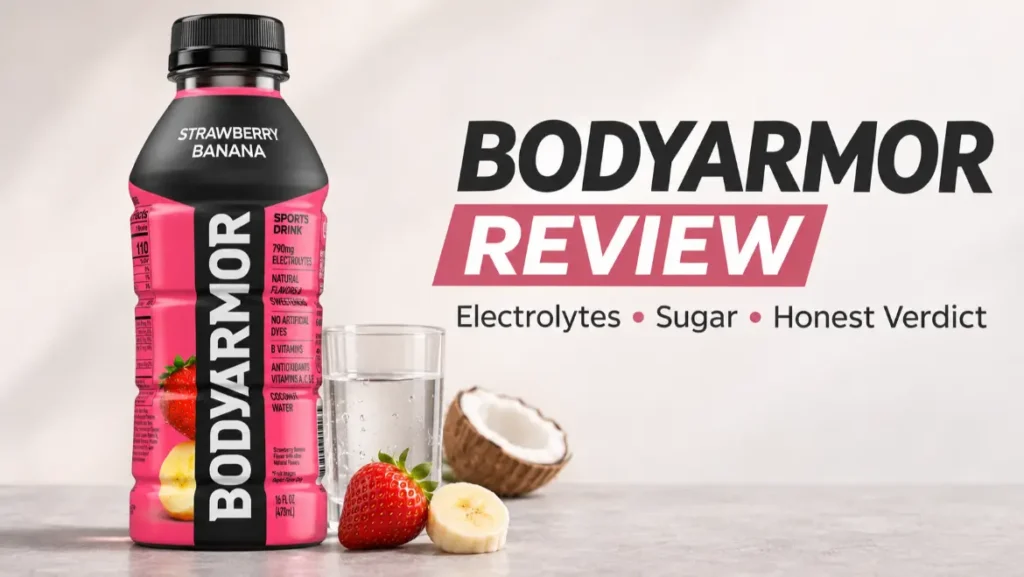
BODYARMOR promises a more natural-looking alternative to traditional sports drinks, combining coconut water, potassium-rich electrolytes, vitamins, cane sugar, and no artificial dyes. That sounds appealing, but the front label does not tell the complete hydration story.
Table of Contents
This BODYARMOR Review examines the standard Strawberry Banana Sports Drink in the 16-fluid-ounce bottle. It does not use the nutrition numbers for BODYARMOR LYTE, Zero Sugar, FIT, Flash I.V., SportWater, or other products with different formulas.
Quick verdict: Standard BODYARMOR tastes smooth and fruit-forward, avoids artificial dyes, and provides plenty of potassium. However, it contains 25 grams of sugar and only 30 milligrams of sodium. It can work as a pleasant carbohydrate drink for light activity, but it is not our first choice for replacing the sodium lost during long, hot, or extremely sweaty exercise.
BODYARMOR Review: What Exactly Are We Reviewing?
BODYARMOR sells several beverages that look similar but serve different purposes. The original Sports Drink is the sweetened, coconut-water-based formula. LYTE is lower in calories, Zero Sugar removes sugar, FIT contains caffeine, and Flash I.V. is built around a more concentrated hydration profile.
For a fair BODYARMOR Review, those products cannot be treated as one formula. This article focuses on Strawberry Banana BODYARMOR Sports Drink, which currently comes in a 16-ounce bottle and lists one bottle as a serving.
According to the official Strawberry Banana BODYARMOR product page, one bottle supplies 790 milligrams of electrolytes, coconut water, natural flavors and sweeteners, vitamins, and no artificial dyes. The 790-milligram figure combines several minerals rather than representing sodium alone.
That distinction matters. Sodium is the main electrolyte lost in sweat, whereas most of BODYARMOR’s headline electrolyte number comes from potassium. The drink may therefore suit casual activity differently from prolonged, high-sweat exercise.
BODYARMOR Review: Nutrition Facts at a Glance
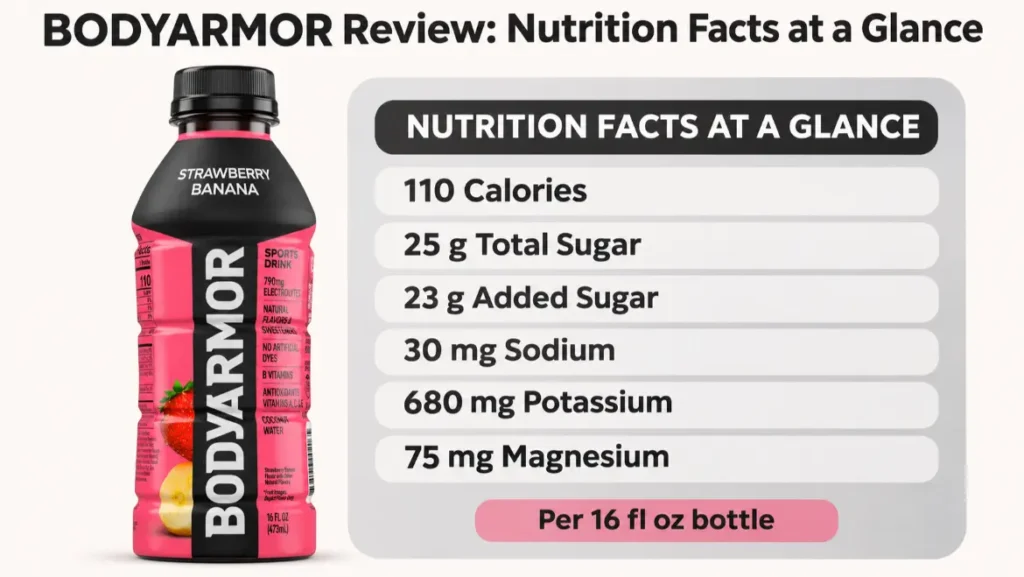
The current Strawberry Banana label provides the following amounts per 16-fluid-ounce bottle:
| Nutrient | Amount per bottle |
|---|---|
| Calories | 110 |
| Total carbohydrate | 25 g |
| Total sugar | 25 g |
| Added sugar | 23 g |
| Sodium | 30 mg |
| Potassium | 680 mg |
| Magnesium | 75 mg |
| Zinc | 7.7 mg |
| Protein | 0 g |
The bottle also contains vitamins A, C, E, B3, B5, B6, B9, and B12. Those additions make the nutrition panel look substantial, but vitamins do not automatically improve hydration or compensate for an electrolyte balance that may not match a person’s sweat losses.
The most important BODYARMOR nutrition facts in this BODYARMOR Review are the combination of high potassium, very low sodium, and 25 grams of sugar. The drink provides carbohydrate energy and a large potassium serving, but it is not a balanced substitute for every mineral lost in sweat.
BODYARMOR Review: Electrolytes Explained
Potassium Is the Dominant Electrolyte
Strawberry Banana BODYARMOR contains 680 milligrams of potassium. That is far more potassium than many conventional sports drinks provide and accounts for most of the advertised 790 milligrams of electrolytes.
The BODYARMOR Review assessment is that potassium is a genuine strength, not proof of complete exercise hydration. Potassium supports normal muscle function, nerve signaling, and fluid balance, but more potassium is not automatically better. A sports drink should be evaluated against what the body is actually losing.
Anyone who needs to limit potassium because of kidney disease, heart disease, or medication should not assume a sports drink is safe merely because it uses coconut water. Our guide to low-potassium electrolyte drinks explains why the amount per serving deserves attention.
Sodium Is Surprisingly Low
One 16-ounce bottle contains only 30 milligrams of sodium. Sweat generally contains considerably more sodium than potassium, particularly during extended exercise or hot-weather work. BODYARMOR electrolytes therefore do not mirror typical sweat losses as closely as the large front-label number may imply.
This does not make the drink useless. Someone completing a light workout in cool conditions may not need much supplemental sodium. A person eating a normal meal afterward may also replace sodium through food.
The limitation becomes more important during long runs, tournaments, outdoor labor, or repeated sessions in heat.
Our guide to electrolyte drinks for runners explains why duration, temperature, sweat rate, and visible salt marks on clothing can matter more than a product’s total-electrolyte marketing number.
Magnesium and Zinc Add Breadth
The formula lists 75 milligrams of magnesium and 7.7 milligrams of zinc. Magnesium participates in normal muscle and nerve function, while zinc supports numerous processes in the body.
These amounts add nutritional breadth, but zinc is not one of the main minerals people are trying to replace through a conventional sports drink.
In this BODYARMOR Review, the electrolyte verdict is mixed. The formula is transparent and potassium-rich, but its 30 milligrams of sodium is modest for a beverage marketed toward active people. Heavy sweaters should compare individual mineral amounts instead of relying on the combined total.
BODYARMOR Review: Ingredients and Sweeteners
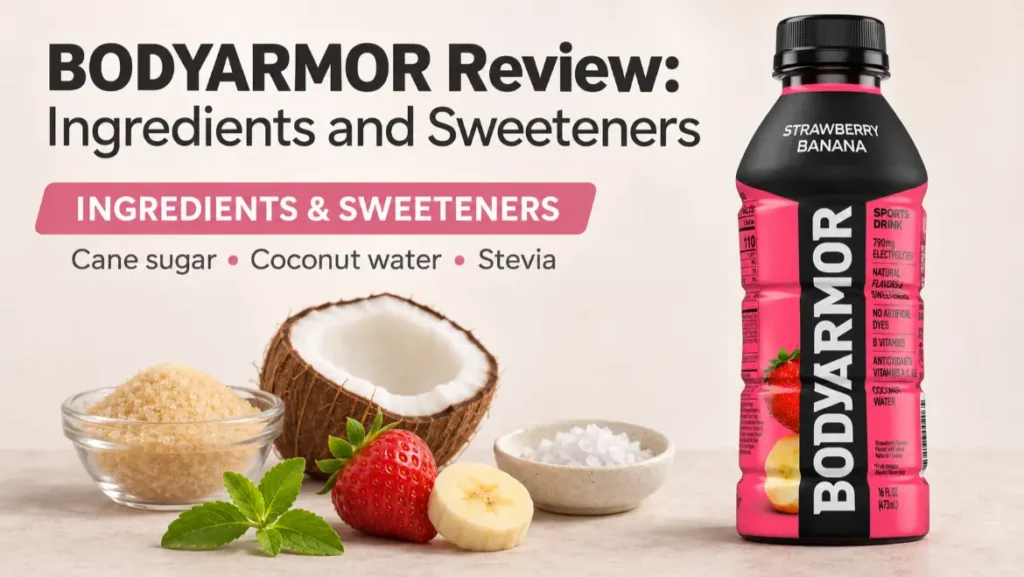
The Strawberry Banana ingredient list begins with filtered water, cane sugar, coconut water concentrate, and citric acid. It then includes an electrolyte blend made from dipotassium phosphate, magnesium oxide, and zinc oxide.
Other BODYARMOR ingredients include fruit and vegetable juice for color, added vitamins, gum arabic, natural strawberry-banana flavor, ester gum, steviol glycosides, and beta-apo-8’-carotenal for color.
There are several positives in the BODYARMOR Review ingredient analysis. The product uses no artificial dyes, and BODYARMOR states that the standard Sports Drink contains no artificial flavors or sweeteners. Cane sugar provides most of the sweetness, while stevia helps intensify it without adding even more sugar.
The tradeoff is that 23 of the 25 grams of sugar are added sugars. The FDA’s Nutrition Facts guidance explains that added sugars contribute calories without the same nutritional package found in intact foods. One bottle provides a meaningful portion of the 50-gram Daily Value used on food labels.
Sugar is not an electrolyte, although carbohydrate can supply exercise energy and participate in fluid absorption when a drink has an appropriate sodium-and-carbohydrate balance. Our guide explaining whether sugar is an electrolyte covers that difference in more detail.
BODYARMOR Review: Coconut Water and Vitamin Claims
The BODYARMOR Review coconut-water verdict needs context. Coconut water concentrate is one reason BODYARMOR contains so much potassium and why its flavor feels different from many traditional sports drinks.
However, “made with coconut water” does not mean the bottle has the same nutrition profile as plain coconut water. It is a formulated beverage with added cane sugar, flavors, vitamins, stabilizers, and mineral compounds.
The vitamins are clearly labeled and present in meaningful amounts. Vitamins A, C, and E are promoted as antioxidants, while several B vitamins are included. These nutrients can contribute to total dietary intake, but most people do not need a sugary sports drink to obtain them.
This BODYARMOR Review treats the vitamins as a secondary benefit rather than the main reason to buy the product. Hydration performance depends more directly on fluid volume, sodium, other electrolytes, carbohydrate concentration, exercise conditions, and the drinker’s individual needs.
BODYARMOR Review: Taste and Drinkability
Strawberry Banana is sweet, smooth, and closer to a fruit beverage than a salty sports drink. Strawberry is the stronger first impression, while banana creates a rounded finish. The coconut water is not especially strong, although it contributes to the drink’s softer texture.
People who dislike the distinctive artificial flavor associated with some traditional sports drinks may prefer BODYARMOR. The absence of artificial dyes is also attractive to shoppers trying to avoid Red 40, Yellow 5, or Blue 1.
The sweetness can become heavy when the drink is warm. Serving it cold improves drinkability, but anyone who normally chooses lightly flavored water may find 25 grams of sugar too much. Stevia can also leave a mild lingering note even though cane sugar is the primary sweetener.
Taste is one of the strongest results in this BODYARMOR Review. It is approachable, fruit-forward, and easy to find in several flavors. That pleasant taste may encourage someone to drink more fluid, but taste alone cannot establish whether the electrolyte profile fits the situation.
BODYARMOR vs Gatorade: Which Is Better?
BODYARMOR and Gatorade make different tradeoffs. Standard BODYARMOR emphasizes potassium, coconut water, vitamins, natural flavors, and the absence of artificial dyes. Traditional Gatorade generally provides more sodium and has a formula built more directly around carbohydrate and sweat replacement during exercise.
| Feature | Standard BODYARMOR | Traditional Gatorade |
|---|---|---|
| Main electrolyte strength | Potassium | Sodium |
| Sodium | Very low | Higher |
| Sugar | High | High, depending on size |
| Coconut water | Yes | No |
| Added vitamins | Several | Limited or none, depending on product |
| Artificial dyes | No | Present in many classic flavors |
| Best fit | Casual activity and fruit-forward taste | More deliberate sweat and carbohydrate replacement |
Neither is automatically healthier. BODYARMOR may appeal to someone prioritizing potassium and avoiding artificial colors. Gatorade may fit exercise involving more meaningful sodium loss. Water may be enough for short, easy activity.
Our complete BODYARMOR vs Gatorade comparison examines the two labels side by side and explains how the better choice changes by use case.
BODYARMOR Review: When Does It Make Sense?
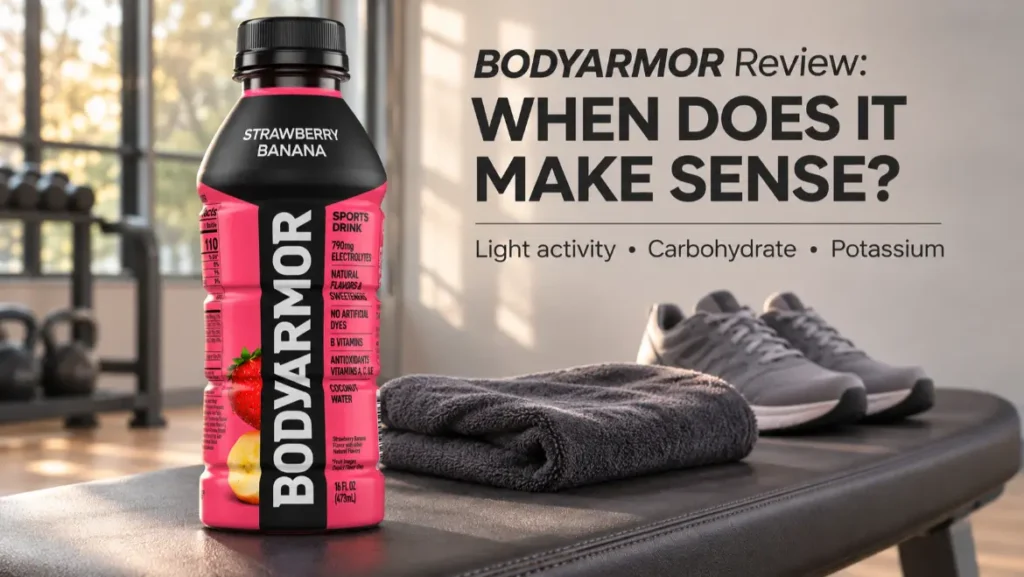
The BODYARMOR Review best-fit conclusion is straightforward. Standard BODYARMOR makes the most sense when someone wants a sweet, ready-to-drink beverage that provides carbohydrate, substantial potassium, and added vitamins.
It can be convenient after a recreational workout, during a day when food intake has been light, or simply as an occasional alternative to soda.
The American College of Sports Medicine’s hydration guidance notes that most people exercising for less than approximately 60 to 90 minutes in normal conditions are unlikely to become meaningfully depleted of electrolytes. Longer events, heat exposure, and heavy sweating require more individualized planning.
That guidance exposes BODYARMOR’s unusual position. The standard drink may be unnecessary for a short workout, yet its sodium level may be too low to serve as a complete solution during a long, sweaty one.
Its strongest role is therefore flavor, fluid, carbohydrate, and potassium—not comprehensive sodium replacement.
Who Should Consider Another Drink?
This BODYARMOR Review suggests considering an alternative if you want a low-sugar or zero-sugar drink, need more sodium for heavy sweating, must restrict potassium, or prefer a minimally sweetened beverage.
BODYARMOR LYTE and Zero Sugar address the sugar concern, but they are separate formulas and require their own label review.
People with diabetes should account for the 25 grams of carbohydrate and 23 grams of added sugar. People with kidney disease or medications that affect potassium should ask a qualified healthcare professional whether a 680-milligram potassium drink is appropriate.
For vomiting, diarrhea, or clinically significant dehydration, do not assume a standard sports drink is interchangeable with a medical oral rehydration solution. Children, older adults, and people with underlying health conditions may require more specific guidance.
BODYARMOR Review: Price and Value
As checked on November 4, 2026, individual 16-ounce Strawberry Banana bottles were commonly listed at approximately $1.25 to $1.70, depending on the retailer and promotion. Multipacks may reduce the per-bottle price.
That price is competitive for a ready-to-drink sports beverage. The bottle requires no preparation and offers a recognizable ingredient story built around coconut water, potassium, vitamins, and natural colors.
Value becomes weaker if the drink does not match the reason you are buying it. A heavy sweater may need a higher-sodium formula. Someone seeking ordinary hydration can choose water. A person mainly interested in vitamins can usually obtain them through food without consuming 23 grams of added sugar.
The price verdict in this BODYARMOR Review is therefore reasonable but use-dependent. It is affordable as an occasional flavored sports drink, yet buying it daily can add significant sugar and cost without guaranteeing better hydration.
Pros and Cons
Pros
- 680 mg potassium per 16-ounce bottle
- Contains coconut water concentrate
- No artificial dyes, flavors, or sweeteners
- Includes magnesium, zinc, and several vitamins
- Smooth, fruit-forward taste
- Widely available and reasonably priced
- Convenient ready-to-drink bottle
Cons
- Contains 25 g total sugar and 23 g added sugar
- Provides only 30 mg sodium
- Electrolyte marketing can obscure the potassium-heavy balance
- Not ideal for heavy or salty sweaters
- Stevia finish may bother some people
- High potassium may be unsuitable for certain medical diets
BODYARMOR Review: Is BODYARMOR Good for You?
Is BODYARMOR good for you? The honest answer depends on what you need from it. The drink supplies fluid, carbohydrate, potassium, magnesium, zinc, and several vitamins. It also avoids artificial dyes and uses familiar sweeteners such as cane sugar and stevia.
On the other hand, one bottle contains 25 grams of sugar and very little sodium. The BODYARMOR Review health verdict cannot ignore serving frequency, diet, activity, sweat loss, and medical needs.
This BODYARMOR sports drink review finds that the standard formula is best treated as an occasional sports or flavored beverage—not a mandatory daily hydration product. Water and normal meals remain sufficient for many people during ordinary days and shorter workouts.
BODYARMOR Review: Frequently Asked Questions
Does BODYARMOR Have More Electrolytes Than Gatorade?
BODYARMOR may advertise a larger combined electrolyte number, but most of that total comes from potassium. Traditional Gatorade generally contains more sodium, which is the main electrolyte lost through sweat. Compare the individual mineral amounts rather than only the total.
Does BODYARMOR Have Caffeine?
Standard BODYARMOR Sports Drink is caffeine-free. BODYARMOR FIT is a separate caffeinated line, so check the exact product name before purchasing.
Is BODYARMOR Sugar-Free?
The standard Strawberry Banana Sports Drink is not sugar-free. It contains 25 grams of total sugar, including 23 grams of added sugar. BODYARMOR Zero Sugar and LYTE are separate options with different nutrition profiles.
Is BODYARMOR Good After a Workout?
It can provide fluid, carbohydrate, and potassium after a light or moderate workout. Following prolonged heavy sweating, its 30 milligrams of sodium may be insufficient as the only electrolyte-replacement strategy.
Can You Drink BODYARMOR Every Day?
You can, but daily use adds 25 grams of sugar per bottle. Whether that fits depends on your overall diet, activity, health goals, and medical needs. Water is usually the more practical everyday hydration choice.
Is BODYARMOR Better Than Water?
For ordinary thirst or short activity, water is usually enough. BODYARMOR adds carbohydrate, flavor, potassium, and vitamins, which may be useful in certain situations but are not automatically necessary.
BODYARMOR Review: Final Verdict
This BODYARMOR Review finds a pleasant, potassium-rich sports drink with both genuine strengths and important limitations. The coconut-water-based formula, natural colors, vitamins, and fruit-forward taste make it more appealing than many brightly dyed sports drinks.
However, the standard Strawberry Banana bottle contains 25 grams of sugar and only 30 milligrams of sodium. The headline 790-milligram electrolyte claim sounds powerful, but it does not mean the drink offers 790 milligrams of sweat-replacing sodium.
Best for: People who want a flavorful, ready-to-drink source of carbohydrate and potassium after light or moderate activity.
Consider another option if: You need significant sodium replacement, want minimal sugar, must limit potassium, or only need ordinary daily hydration.
This article contains affiliate links. If you purchase through our links, we may earn a commission at no extra cost to you. We only recommend products we genuinely believe in. Read our Affiliate Disclaimer for full details.