
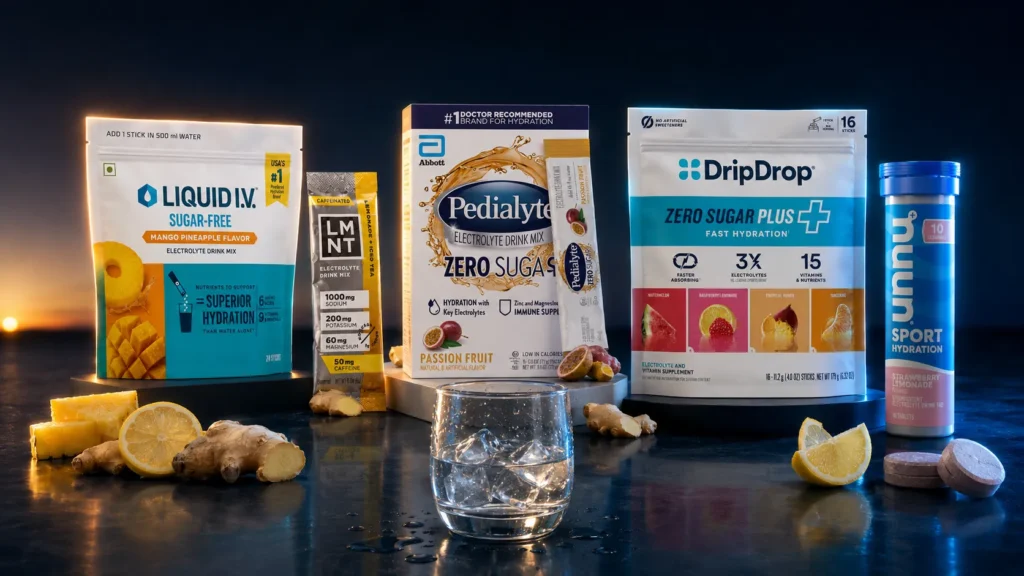
Electrolyte drinks for hangover nausea may replace some fluid and sodium after alcohol consumption, but they do not accelerate alcohol metabolism or cure a hangover. This guide compares five products by sodium, sugar, format, and ease of use. Sip fluids gradually, and seek medical help for confusion, breathing problems, seizures, or difficulty waking someone.
Table of Contents
The key is to understanding what alcohol actually does to your body’s fluid and mineral balance – and which products address that damage directly rather than just masking symptoms.
This guide ranks the 5 best electrolyte drinks specifically for hangover nausea: products evaluated on sodium content, B-vitamin inclusion, stomach gentleness, sugar load, and absorption speed. It also covers what to avoid, when to take them, and the honest truth about what electrolytes can and cannot fix after a night of drinking.
Why Alcohol Causes Nausea – and Where Electrolytes Help

A hangover is not a single problem. It is several physiological problems happening simultaneously, which is why no single remedy fixes everything. Getting specific about nausea matters because the causes are layered.
The Diuretic Effect
Alcohol suppresses antidiuretic hormone (ADH), the hormone that tells your kidneys to retain water. Without ADH doing its job, your kidneys excrete far more fluid than they should – producing that characteristic “bathroom every twenty minutes” effect during a night out.
This is where electrolyte drinks for hangover recovery become directly relevant. The fluid loss is not just water. Research published in the Journal of Clinical Medicine found that alcohol consumption leads to measurable decreases in plasma levels of phosphate, magnesium, potassium, sodium, and calcium – a multi-mineral depletion that compounds the severity of symptoms including nausea, headache, and fatigue.
Acetaldehyde and Nausea
Here is the honest caveat that most hangover drink marketing skips: a significant portion of hangover nausea is caused not by dehydration but by acetaldehyde. When your liver breaks down alcohol, it produces acetaldehyde – a compound 10 to 30 times more toxic than alcohol itself, according to biochemistry research. Acetaldehyde triggers inflammation, irritates the stomach lining, and directly causes the nausea and headache that tend to hit hardest a few hours after drinking stops.
Electrolytes do not eliminate acetaldehyde. That compound clears only as the liver continues to metabolize it – a process that takes time regardless of what you drink. The important distinction: electrolyte drinks address the dehydration-driven symptoms (headache from reduced blood volume, dizziness, fatigue, dry mouth) very effectively. They provide partial relief from nausea when the nausea is dehydration-related. For nausea that is purely acetaldehyde-driven, rest and time are the primary solutions.
Stomach Irritation
Alcohol promotes excess hydrochloric acid secretion in the stomach and directly irritates the gastric lining. This is why nausea is often worse on an empty stomach and why eating something bland before drinking significantly reduces morning-after symptoms. For hangover nausea relief drinks, this matters in product selection: a heavily sweetened or artificially flavored electrolyte drink can worsen stomach irritation when the gut is already inflamed. Lower-sugar, gentler formulas are more appropriate when nausea is the primary symptom.
B Vitamin Depletion
Alcohol impairs the absorption and increases the excretion of several B vitamins – particularly thiamine (B1), B6, and B12. These vitamins are essential for energy metabolism, nerve function, and the enzymatic processes that support alcohol breakdown. Their depletion contributes to the fatigue, weakness, and brain fog that accompany hangover nausea. Products that include meaningful B-vitamin doses alongside electrolytes provide more complete recovery support than mineral-only formulas.
What to Look for in an Electrolyte Drink for Hangover Nausea
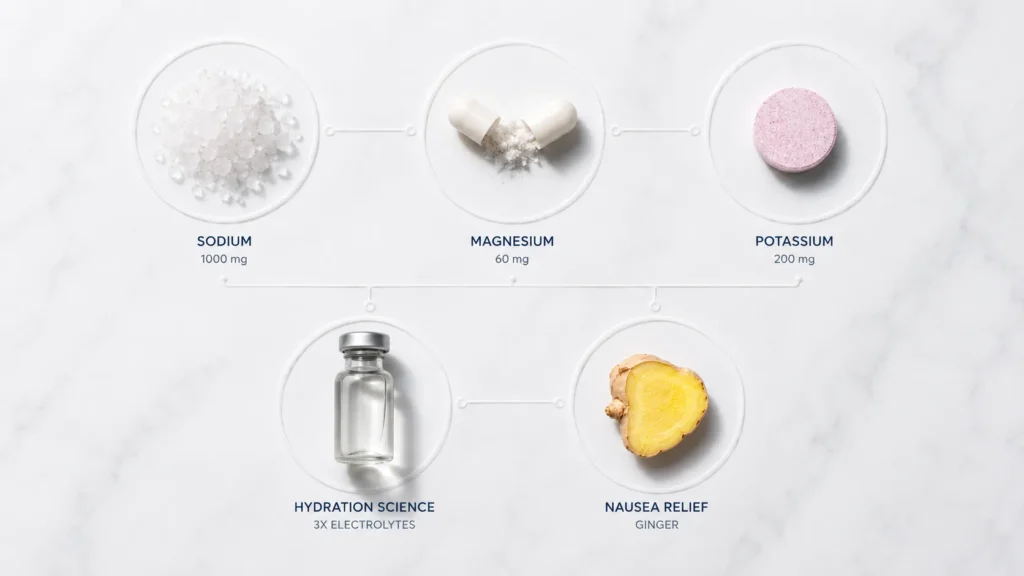
Not all electrolyte products handle the specific demands of hangover recovery equally. Here is what to prioritize:
- Sodium (1,000–2,000 mg total from drink and food): Sodium is the primary mineral lost through alcohol-induced diuresis. Higher sodium content drives faster rehydration. For acute hangover recovery, research suggests targeting 1,000–2,000 mg of sodium as part of the rehydration strategy.
- B Vitamins (especially B1, B6, B12): Look for drinks that include at minimum B6 and B12. B1 (thiamine) is the most critical for alcohol metabolism support. Products with a full B-complex stack – including B3, B5, B6, and B12 – offer the most comprehensive recovery support.
- Magnesium (60–100 mg, bioavailable form): Magnesium depletion contributes to headache, muscle cramps, and anxiety post-drinking. Magnesium glycinate or citrate absorb best. Avoid products using magnesium oxide – it is poorly absorbed and can cause loose stools, which is the last thing you want when nausea is already in play.
- Low or zero sugar: When your stomach is already irritated, 11–12 g of sugar in a single drink can be uncomfortable. The sugar-free versions of popular electrolyte products are gentler on a sensitive hangover stomach. If glucose-powered absorption speed is the priority, the regular version is fine – but for severe nausea, choose the zero-sugar variant.
- No caffeine: Caffeine is a mild diuretic. Adding it to a body that is already dehydrated from alcohol is counterproductive. Avoid electrolyte products with added caffeine for hangover use – regardless of how tired you feel.
Important Note:
Electrolytes work significantly better when combined with food. A bland snack – toast, bananas, crackers, plain rice – slows alcohol absorption if you are drinking proactively, and for recovery, it stabilizes blood sugar and gives the stomach something to work with. Taking an electrolyte drink on a completely empty, nauseous stomach may cause further discomfort. Sip slowly rather than drinking a full packet in one go.
The 5 Best Electrolyte Drinks for Hangover Nausea – Ranked
#1 – Liquid IV Hydration Multiplier (Sugar-Free)
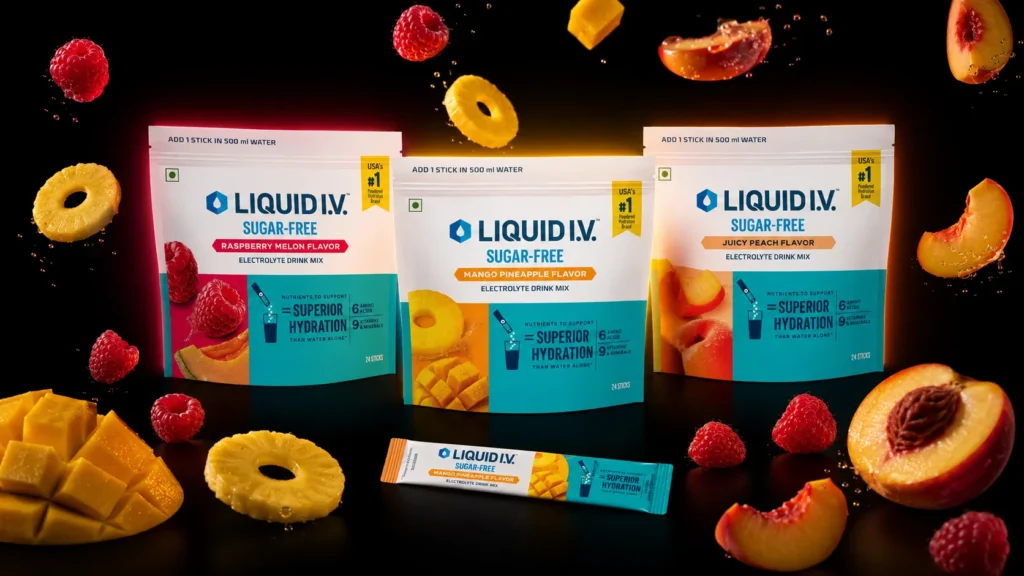
Best For: Fast absorption, B-vitamin coverage, and wide availability
| Nutrient | Amount |
|---|---|
| Sodium | 500–560 mg |
| Potassium | 370 mg |
| Vitamin B3 (Niacin) | 120% DV |
| Vitamin B5 (Pantothenic Acid) | 190% DV |
| Vitamin B6 | 110% DV |
| Vitamin B12 | 240% DV |
| Vitamin C | 70% DV |
| Magnesium | 0 mg (Original Formula) |
| Sugar | 0 g (Sugar-Free Version) |
| Caffeine | None |
| Price per Serving | ~$1.47–$1.56 |
Liquid IV earns the top spot for hangover nausea relief because it combines two things no other mainstream product does as effectively in one packet: fast absorption through Cellular Transport Technology (CTT) and a comprehensive B-vitamin stack that directly addresses alcohol-induced nutrient depletion.
The question “does Liquid IV help with hangovers” comes up constantly – and the honest answer is yes, specifically for the dehydration-driven portion of symptoms. CTT uses the sodium-glucose cotransport mechanism (SGLT1) to pull water into the bloodstream faster than passive drinking. When you are dehydrated from a night of drinking, that speed matters. The original formula’s 11 g of sugar activates the SGLT1 transporter; the Sugar-Free version uses allulose and amino acids to achieve similar absorption without the glucose load.
The B-vitamin profile is what separates Liquid IV from most electrolyte competitors for hangover use specifically. B12 at 240% DV is meaningful for the neurological symptoms – brain fog, low mood, fatigue – that accompany alcohol’s impact on nervous system function. B6 at 110% DV supports enzyme function involved in alcohol metabolism. B5 at 190% DV supports energy production from carbohydrates, proteins, and fats during recovery.
#2 – LMNT Electrolyte Drink Mix
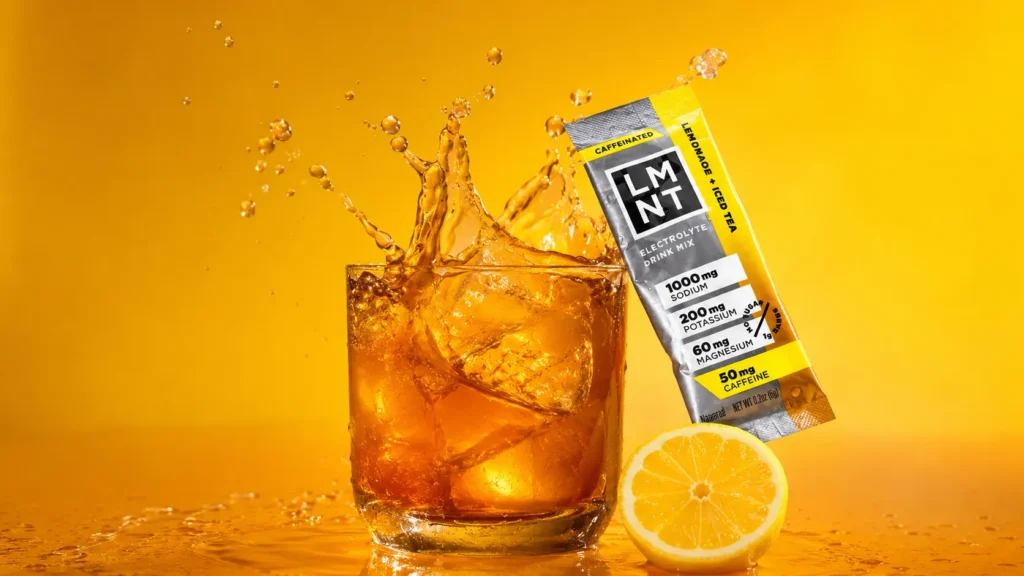
Best For: Maximum sodium replacement, athletes, heavy drinkers with high fluid loss
| Nutrient | Amount |
|---|---|
| Sodium | 1,000 mg |
| Potassium | 200 mg |
| Magnesium | 60 mg (Magnesium Malate) |
| B Vitamins | None |
| Sugar | 0 g |
| Caffeine | None |
| Price per Serving | ~$1.50 |
LMNT’s 1,000 mg of sodium per packet makes it the most powerful rehydration drink on this list for the dehydration-specific component of a hangover. Research recommends 1,000–2,000 mg of sodium for effective hangover recovery – a single LMNT packet delivers half of that target in one serving.
The magnesium malate form (60 mg per packet) is well-absorbed and relevant for the muscle cramps, headache, and tension that often accompany alcohol-related magnesium depletion. Alcohol is a known magnesium wasting agent – chronic heavy drinking is associated with clinical magnesium deficiency, and even isolated binge episodes deplete it meaningfully in sensitive individuals.
Where LMNT falls short for hangover nausea specifically: it contains no B vitamins, which are directly depleted by alcohol and contribute to fatigue and cognitive symptoms. For complete hangover recovery, pair LMNT with a separate B-complex supplement or take it alongside Liquid IV.
#3 – Pedialyte AdvancedCare Plus
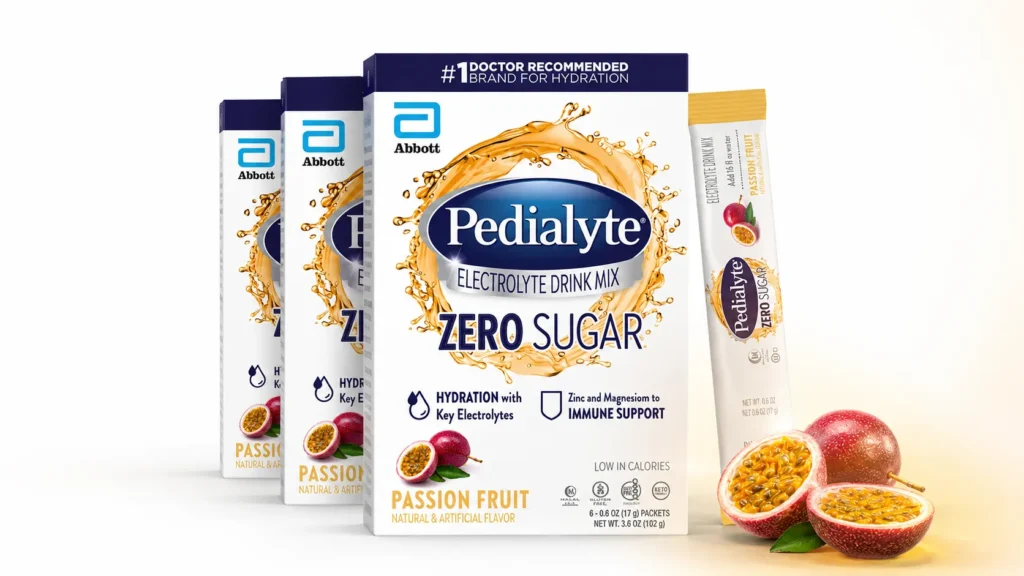
Best For: Sensitive stomachs, clinical-grade reliability, families
| Nutrient | Amount |
|---|---|
| Sodium | ~370 mg |
| Potassium | ~280 mg |
| Zinc | Included |
| Prebiotic Fiber | PreActiv Prebiotics (Gut Support) |
| B Vitamins | None (Standard Formula) |
| Sugar | ~9 g (or 0 g in Powder Packs) |
| Price per Serving | ~$2.00–$3.25 |
Pedialyte for hangover adults has become something of a cultural institution – and the clinical credibility behind the brand is real. Abbott’s AdvancedCare Plus line includes PreActiv Prebiotics, which support gut microbiome recovery and reduce gastrointestinal inflammation – a feature that is directly relevant when hangover nausea is partly driven by alcohol’s irritation of the stomach lining.
The formula is medically calibrated for rapid oral rehydration using the same sodium-glucose cotransport science as Liquid IV. For people whose stomachs are particularly irritated – where the idea of anything sweet or heavily flavored sounds unbearable – Pedialyte Unflavored is one of the only mainstream options that is genuinely neutral in taste. That matters more than most people expect when nausea is severe.
The sodium content (370 mg) is lower than LMNT or Liquid IV, making Pedialyte more suitable for moderate dehydration cases rather than severe fluid loss from heavy drinking. The higher price per serving (particularly in powder pack format) is the main drawback versus Liquid IV or LMNT for regular use.
#4 – DripDrop Zero ORS
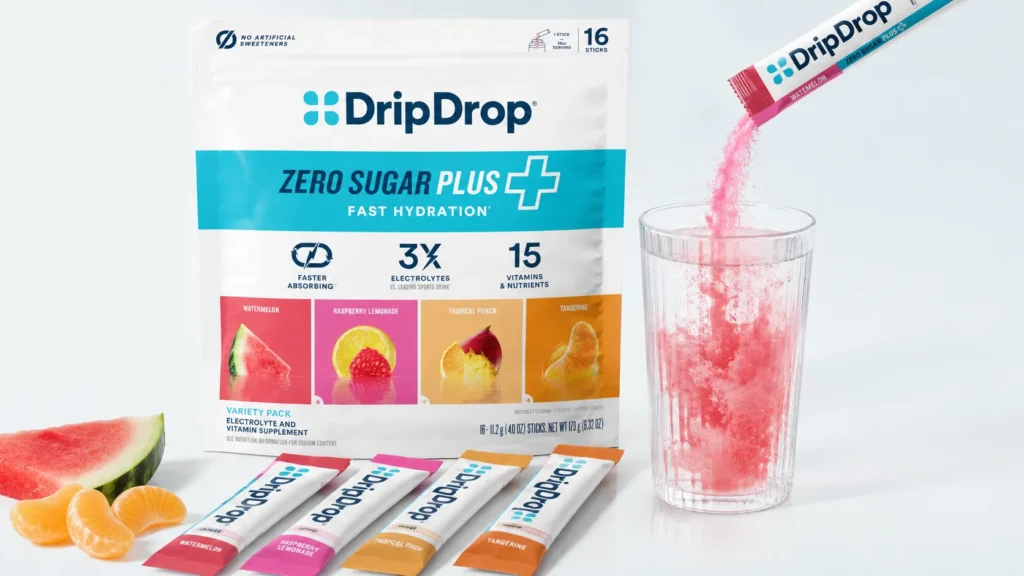
Best For: Fast ORS-grade absorption with zero sugar, illness and alcohol recovery
| Nutrient | Amount |
|---|---|
| Sodium | 330 mg |
| Potassium | 180 mg |
| Magnesium | 40 mg (Citrate) |
| Zinc | 10% DV |
| Vitamin C | Included |
| B Vitamins | Included (Zero Version) |
| Sugar | 0 g |
| Caffeine | None |
| Coloring | Natural Coloring Only (No FD&C Dyes) |
| Price per Serving | ~$1.00–$1.15 |
DripDrop Zero is arguably the best rehydration drink after drinking alcohol for people who want ORS-grade absorption speed without the sugar load. The original DripDrop was created by a physician working in disaster relief – where fast oral rehydration in the absence of IV access was critical. That same formulation logic applies directly to hangover recovery.
The zero-sugar version (Zero) maintains the core ORS absorption mechanism using alternative pathways, adds a B-vitamin stack (B3, B5, B6, B12), and uses natural coloring only – no FD&C artificial dyes that can aggravate a sensitive stomach. The 40 mg of magnesium citrate per packet is the lowest magnesium content among top-ranked options, but the citrate form absorbs well without digestive side effects.
#5 – Nuun Sport Electrolyte Tablets
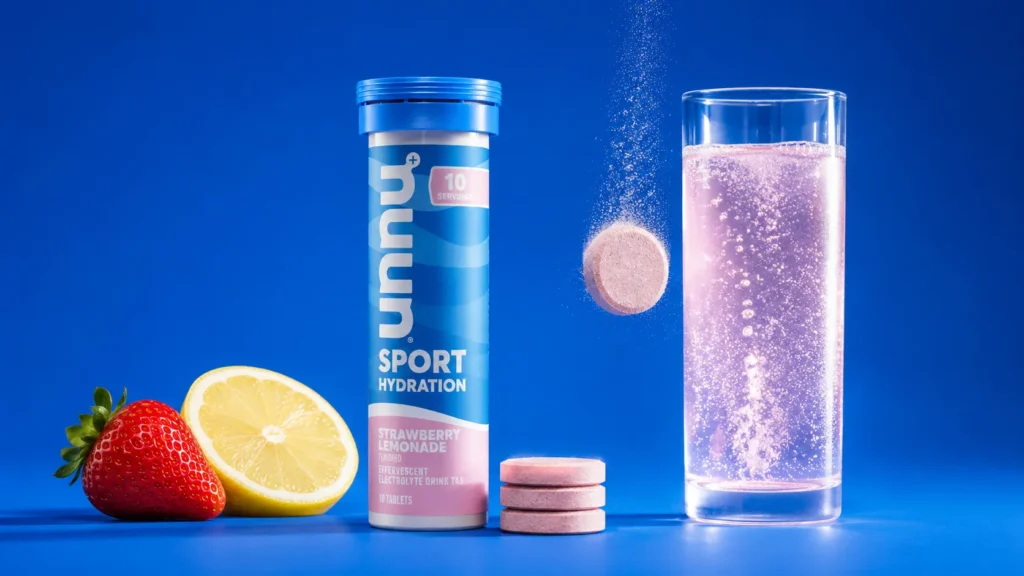
Best For: Light hangovers, budget option, easy travel format
| Nutrient | Amount |
|---|---|
| Sodium | 300 mg |
| Potassium | 150 mg |
| Magnesium | 25 mg |
| Calcium | 13 mg |
| Vitamin C | Included |
| B Vitamins | None (Sport Version) |
| Sugar | 1 g |
| Caffeine | None |
| Format | Effervescent Tablet |
| Price per Serving | ~$0.60–$0.70 |
Nuun Sport rounds out this list as the most budget-friendly and portable option for mild to moderate hangover situations. The effervescent tablet format dissolves directly into water, fizzes gently, and produces a lightly flavored drink that is notably easier to prepare than powder packets – which matters when motor function and motivation are both compromised in the morning.
The 25 mg of magnesium per tablet is the lowest on this list, and the absence of B vitamins in the Sport version is a gap for hangover use specifically. Nuun Immunity or Nuun Vitamins variants add vitamin C and some B vitamins, making them marginally better for alcohol recovery if you can access them.
The 1 g of sugar is functionally zero – the lowest of any product on this list – and the effervescent format tends to be gentle on queasy stomachs. Many people find carbonation-style drinks more tolerable during nausea than flat liquids.
Natural Hangover Nausea Relief: Food-First Alternatives

Electrolyte drinks are not the only option. Several natural, food-based approaches are both effective and easy to access without a trip to the store.
Coconut water: Naturally rich in potassium (~600 mg per cup), magnesium, and sodium. Light, easy on the stomach, and available at most convenience stores. Not a complete hangover electrolyte drink on its own – the sodium content is lower than most ORS-based products – but a solid complement to food-based recovery.
Banana and almond milk: Bananas deliver potassium (~422 mg per banana) and a small amount of B6. Almond milk adds magnesium and is gentle on irritated stomachs. Together they function as a lightweight hangover recovery snack and fluid source.
Bone broth: Provides 500–900 mg of sodium per cup alongside collagen and amino acids that support gut lining recovery. Warm broth is one of the most stomach-friendly sodium sources available for someone with severe hangover nausea – easier to manage than a cold, sweet electrolyte drink.
Ginger tea with sea salt: Ginger has evidence-backed anti-nausea properties through its action on gastric motility and serotonin receptors. A cup of ginger tea with a small pinch of sea salt addresses both the nausea and the sodium deficit simultaneously, with no sugar and no artificial ingredients.
Lemon water with salt: A hangover nausea relief drink you can make in thirty seconds: juice of half a lemon, a pinch of sea salt, 16 oz of water. The citrate from lemon juice supports kidney function; the sodium provides immediate electrolyte replacement; the water addresses fluid deficit. Not as complete as a formulated electrolyte product, but effective and universally available.
Final Verdict: Which Electrolyte Drink Is Best for Hangover Nausea?
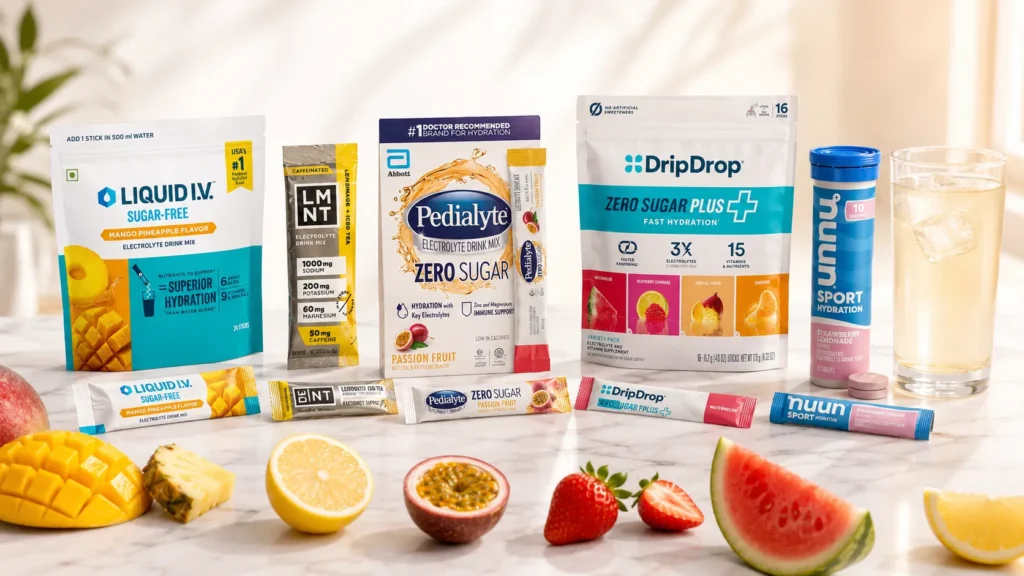
The right pick depends on how severe your symptoms are and what specific aspect of the hangover is hitting hardest.
For fast B-vitamin recovery and absorption speed: Liquid IV Sugar-Free. The CTT mechanism speeds rehydration, and the B12, B6, and B5 directly address alcohol-induced vitamin depletion. Most widely available. Best all-around pick.
For maximum sodium replacement and serious dehydration: LMNT. At 1,000 mg sodium and 60 mg magnesium malate per packet, it is the most targeted product for the dehydration-specific portion of a hangover. Pair with a B-complex supplement for complete coverage.
For sensitive stomachs and gut support: Pedialyte AdvancedCare Plus. The prebiotic addition and unflavored option make it the most stomach-gentle clinical-grade choice for severe nausea. Available at every pharmacy.
For zero-sugar fast absorption and clean ingredients: DripDrop Zero. ORS-grade speed, B vitamins included, no artificial dyes – the cleanest formula on the list. Best for those who want medical-grade recovery without glucose.
For light hangovers and portability: Nuun Sport. Effervescent, gentle, budget-friendly, and easy to travel with. Best for mild cases or as a prevention tool taken during a night out.
One honest reminder: the best hangover prevention is pacing your drinking, eating before and during, and alternating alcohol with water throughout the night. Electrolyte drinks are a genuine recovery tool – they are not a license to drink without consequence. They fix the dehydration. The rest, your body handles on its own schedule.
Frequently Asked Questions
Q1. Do electrolyte drinks actually help hangovers? for leg cramps at night??
Yes – specifically for the dehydration-driven symptoms: headache from reduced blood volume, dizziness, fatigue, dry mouth, and dehydration-related nausea. Electrolytes do not directly address the acetaldehyde (toxic byproduct of alcohol metabolism) component of hangovers, which causes a separate category of nausea and inflammation. Research confirms that electrolyte beverages restore hydration status and electrolyte levels more effectively than plain water after significant fluid loss.
Q2. Is Liquid IV or Pedialyte better for a hangover? help leg cramps?
For most adults, Liquid IV has an edge due to its B-vitamin stack (B3, B5, B6, B12) and CTT absorption mechanism. Pedialyte is the better choice for severe nausea, very sensitive stomachs, or anyone who wants an unflavored clinical option. Both work well – the right pick depends on symptom severity and stomach tolerance.
Q3. Should I drink electrolytes before or after sleeping after drinking? at night?
Before sleeping is significantly more effective. Taking an electrolyte drink before bed interrupts the dehydration cycle at its beginning, rather than allowing hours of diuretic-driven fluid loss while you sleep. If you missed the before-bed window, take a serving immediately upon waking alongside a small amount of bland food.
Q4. Can I make my own hangover electrolyte drink at home?
Yes. A simple homemade rehydration drink after drinking alcohol: mix 16 oz of water with ¼ teaspoon of sea salt (approximately 590 mg sodium), the juice of half a lemon (citrate + Vitamin C), and a teaspoon of honey (optional – adds glucose to support absorption). Not as complete as a formulated electrolyte product, but effective and available in most kitchens at any hour.
Q5. Why do I still feel nauseous after drinking an electrolyte drink?
If nausea persists after electrolyte replacement, it is likely driven by acetaldehyde rather than dehydration. Acetaldehyde clears only as the liver metabolizes it – a process that cannot be accelerated by any drink or supplement. Rest, bland food, ginger tea, and time are the most effective approaches for acetaldehyde-driven nausea. If nausea is severe and persistent, or accompanied by vomiting that prevents keeping fluids down, seek medical attention.
Q6. Is it safe to take pain relievers like ibuprofen or acetaminophen alongside an electrolyte drink for a hangover?
This depends on which painkiller you choose, and it matters more than most people realise. Ibuprofen (Advil, Nurofen) is a prostaglandin inhibitor that also irritates the stomach lining – combining it with alcohol’s existing gastric irritation can worsen nausea and in some cases cause gastric bleeding. Taking ibuprofen alongside an electrolyte drink does not neutralise that risk. Acetaminophen (Paracetamol, Tylenol) is gentler on the stomach but carries a different concern: alcohol significantly increases the liver’s production of a toxic acetaminophen metabolite, raising the risk of liver damage even at standard doses.
Q7. How many electrolyte drinks can you safely take in one hangover recovery session?
For most healthy adults, two servings of a standard electrolyte product taken 2-3 hours apart covers the sodium, potassium, and B-vitamin replacement needs of a typical hangover without pushing any single mineral into excess. The main variable to watch is sodium – two LMNT packets in quick succession deliver 2,000 mg of sodium, which sits at the upper end of what most rehydration protocols recommend and should be spaced out over several hours rather than taken back to back. For lower-sodium products like Pedialyte or Nuun, two servings in a morning is well within safe parameters. Drinking three or more packets in a single morning offers diminishing returns once hydration is restored – the body simply excretes the excess rather than retaining it. Food, water, and rest do the remaining work that additional electrolyte servings cannot.
This article contains affiliate links. If you purchase through our links, we may earn a commission at no extra cost to you. We only recommend products we genuinely believe in. Read our Affiliate Disclaimer for full details.