
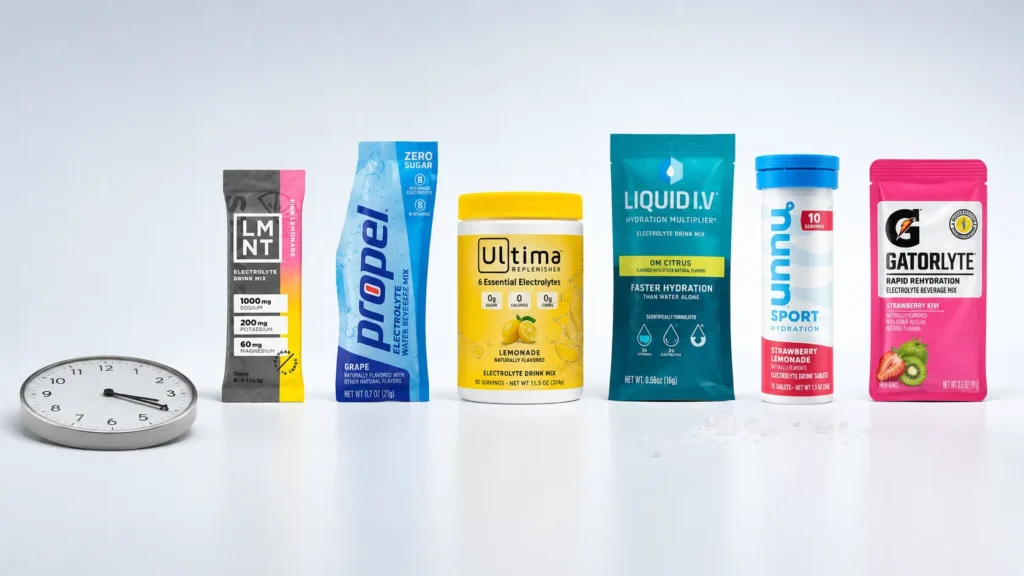
Do electrolytes break a fast? Sodium, potassium, and magnesium contain no calories by themselves, but an electrolyte product may also contain sugar, carbohydrates, protein, or other ingredients that conflict with a particular fast. The answer therefore depends on the complete label and whether your goal is calorie restriction, religious observance, gut rest, or medical preparation.
Table of Contents
The short version: pure, zero-calorie electrolytes – sodium, potassium, magnesium, calcium – do not break a fast. They contain no calories, no carbohydrates, and no protein, which means they produce no insulin response and do not interrupt fat burning, ketosis, or autophagy. The longer version: a lot of electrolyte products on the market are not pure minerals. They contain sugar, maltodextrin, fruit juice, or high-calorie sweeteners that absolutely do break a fast.
This article covers the full picture – the science of why electrolytes are lost during fasting, exactly what breaks a fast and what does not, how popular products like LMNT, Propel, and Ultima stack up, and which formats (powders, tablets, drops, drinks) are safe to use in a fasted window without sabotaging your results.
Why Fasting Depletes Electrolytes in the First Place

To understand whether electrolytes break a fast, you first need to understand what fasting does to electrolyte balance. Because the depletion is not incidental – it is a predictable physiological consequence of how fasting works.
When you stop eating, insulin levels fall. Insulin does more than regulate blood sugar – it also signals the kidneys to retain sodium. When insulin drops during a fast, the kidneys receive the opposite signal and begin excreting sodium through urine in a process called the natriuresis of fasting. Water follows sodium out of the body, which reduces blood volume and explains the dizziness, fatigue, and headaches that many people experience in the early hours of a fast, even when they are drinking plenty of plain water.
Research indicates that during the first 24 hours of fasting, sodium losses through urine can range between 1,100 to 5,700 mg – a significant range that varies based on individual kidney function, baseline sodium intake, and whether the person exercises during the fasted window. Potassium and magnesium follow similar pathways, with urinary excretion increasing as the body adjusts to the absence of food intake.
This is the fundamental reason why plain water often fails to resolve fasting symptoms. You are not simply dehydrated – you are electrolyte depleted. Drinking more water without replacing minerals dilutes what is left in your bloodstream and can actually worsen the imbalance. Replacing those minerals with a clean, zero-calorie electrolyte source is the physiologically rational response – and it does not interfere with the metabolic state your fast is trying to create.
What Actually Breaks a Fast – and What Doesn’t
The definition of “breaking a fast” varies depending on your goal, and that distinction is what makes this question genuinely nuanced.
For Fat Burning and Metabolic Fasting
A fast breaks when you consume something that raises blood sugar or triggers an insulin response. Insulin is the switch – when it rises, your body exits fat-burning mode and returns to glucose metabolism. Calories from carbohydrates and protein are the most powerful insulin triggers. Fat has a minimal insulin response. Zero-calorie minerals have none at all.
By this definition, can electrolytes break a fast? No – provided they contain no sugar, no maltodextrin, no fruit juice, and no caloric sweeteners. Pure electrolyte minerals are metabolically inert. They do not provide energy, do not raise insulin, and do not signal the body to stop burning fat. This applies whether the minerals come in powder form, tablet form, or liquid drops.
For Autophagy
Autophagy – the cellular cleanup process where the body breaks down and recycles damaged cells – is primarily activated by caloric restriction and low insulin. It is inhibited by protein and carbohydrate intake, specifically through the mTOR (mechanistic target of rapamycin) signalling pathway.
Does electrolyte powder break a fast for autophagy purposes? Again, the answer is no – pure minerals do not activate mTOR and do not inhibit autophagy. Where stricter autophagy-focused fasters draw the line is on flavourings and sweeteners. Even non-caloric sweeteners like stevia can, in some individuals, produce a cephalic phase insulin response – a mild insulin release triggered by sweet taste rather than actual sugar. The research on whether this meaningfully interrupts autophagy is inconclusive. For most people, stevia-sweetened electrolytes are fine. For strict autophagy purists, unflavoured options provide the cleanest approach.
For Religious Fasting
Religious fasting protocols – Ramadan, Jewish fasting observances, certain Christian traditions – define breaking a fast through the act of consuming food or drink of any kind. Under these frameworks, even zero-calorie electrolyte supplements would technically break the fast. This article focuses on metabolic and health-based fasting; for religious fasting, follow the guidance of your tradition.
For Gut Rest
Some people fast specifically to give their digestive system complete rest – addressing bloating, gut sensitivity, or inflammatory bowel conditions. Pure electrolytes require very little digestive processing and are generally compatible with gut-rest protocols. The exception: certain fillers, artificial colours, or thickening agents in commercial electrolyte products may require gut processing and are better avoided during a strict gut rest fast.
Does LMNT Break a Fast? And Other Popular Products
Does LMNT Break a Fast?
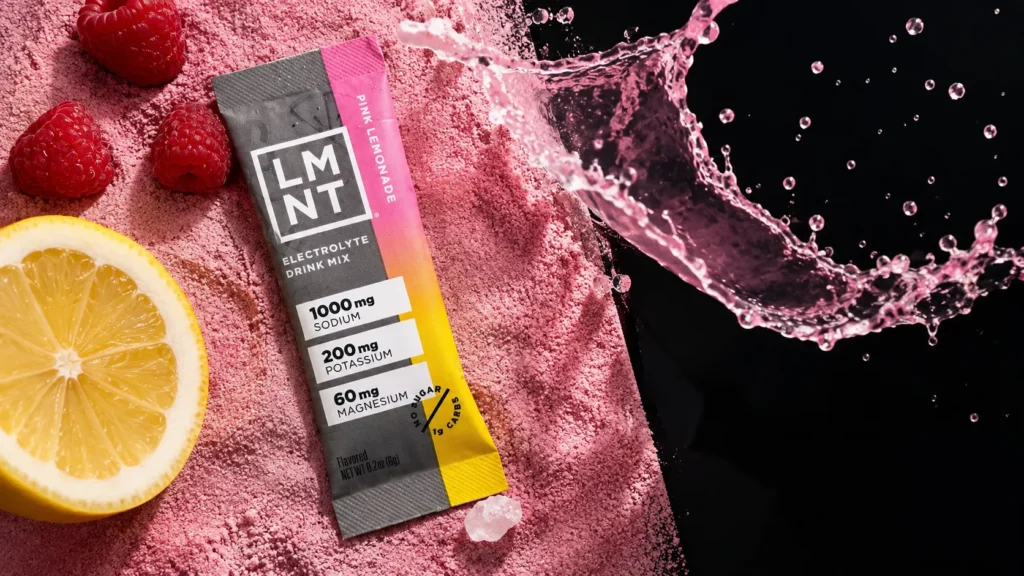
No. LMNT contains 1,000 mg of sodium, 200 mg of potassium, and 60 mg of magnesium malate per packet, with approximately 5–10 calories from the stevia and natural flavours used. Those trace calories are not enough to trigger a meaningful insulin response or interrupt fat burning. LMNT specifically addresses this on its science page, noting that the caloric content is so minimal that it does not disrupt the fasted state for the vast majority of users.
The stevia sweetener used in LMNT is a non-glycaemic sweetener – it does not raise blood sugar. For the majority of people fasting for metabolic health or weight loss, LMNT is fully compatible with a fasted window. Strict autophagy fasters who want to eliminate all flavour stimuli may prefer to use LMNT’s Raw Unflavoured version – pure minerals with nothing else added. Does LMNT break a fast? For all practical metabolic fasting purposes, no.
LMNT is also one of the most recommended electrolytes for keto fasting. We cover how it compares to Ultima on every key metric in our detailed LMNT vs Ultima Replenisher comparison.
Does Propel Electrolyte Water Break a Fast?
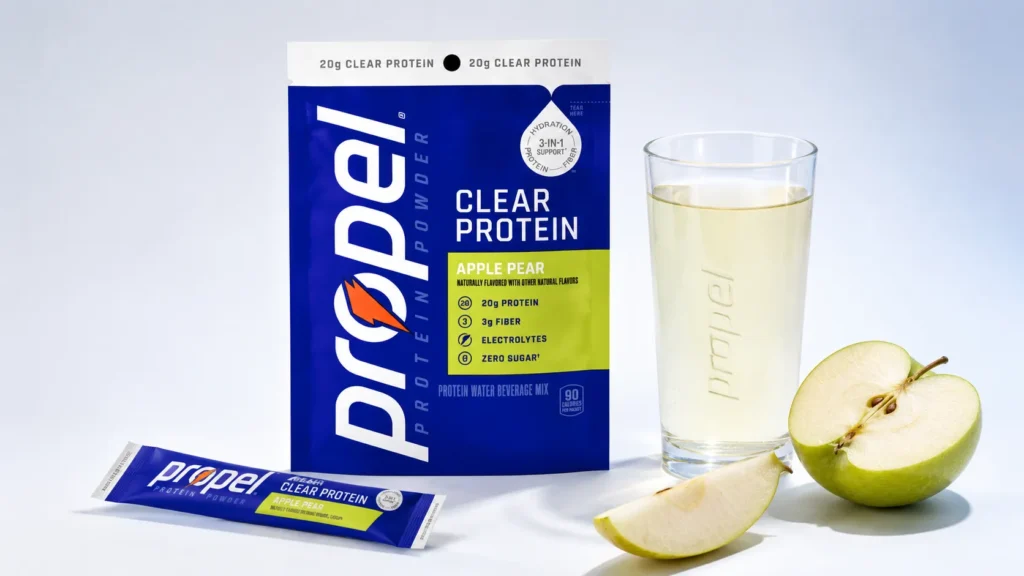
Generally no, but check the specific product. Propel markets its electrolyte water as zero sugar and zero calories, sweetened with sucralose and acesulfame potassium (Ace-K). Neither sweetener provides calories or raises blood sugar in the direct sense.
The nuance: sucralose and Ace-K are more controversial than stevia in the fasting community. Some research suggests these artificial sweeteners can produce a cephalic phase insulin response in certain individuals – triggering a small insulin release through taste receptors alone. The evidence is not definitive, and most people do not experience meaningful metabolic disruption from sucralose. But for strict fasters or people who know they are sensitive to artificial sweeteners, does Propel electrolyte water break a fast? For strict autophagy protocols, the artificial sweeteners introduce more uncertainty than stevia or unflavoured options. For general intermittent fasting for weight loss or metabolic health, Propel is typically fine.
Also worth noting: Propel contains B vitamins, which are water-soluble and have no caloric value. They do not break a fast.
Does Ultima Electrolytes Break a Fast?

No. Ultima Replenisher contains zero calories, zero sugar, zero carbohydrates, and zero protein. It delivers six electrolytes alongside Vitamin C and zinc, sweetened exclusively with stevia leaf extract. Because stevia does not raise blood sugar or insulin levels in any clinically significant way, does Ultima electrolytes break a fast? No – for all standard fasting purposes, Ultima is fully fast-compatible.
Ultima itself confirms this directly: their electrolytes do not break a fast because they contain no calories, no sugar, and no carbs. The stevia used is natural rebaudioside A, which is one of the safest sweetener options for fasting. As noted above, the most conservative autophagy-focused fasters may prefer unflavoured options entirely – but for the vast majority of intermittent fasters, does Ultima electrolytes break a fast? Definitively no.
Does Electrolyte Powder Break a Fast? (General)
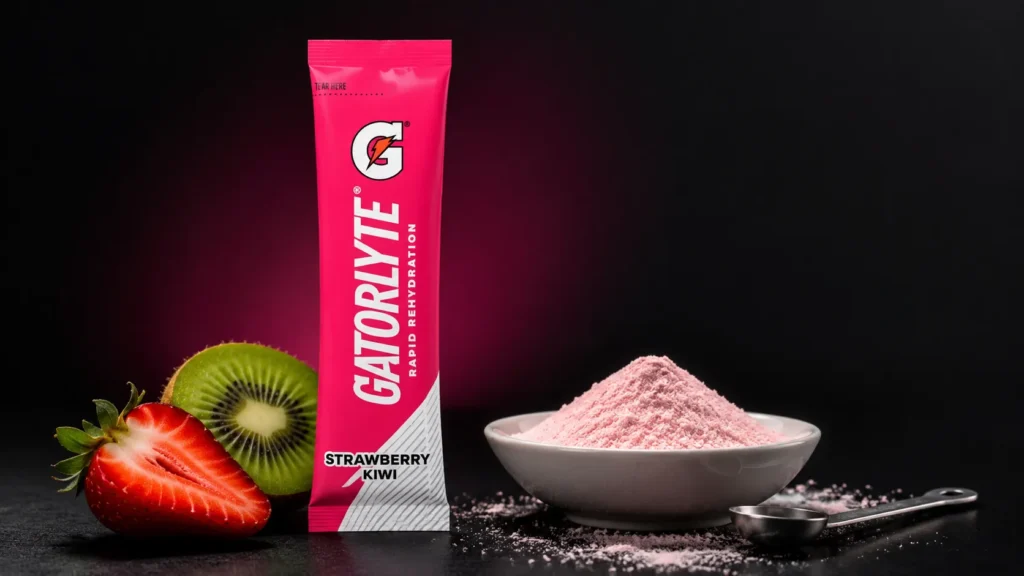
Whether electrolyte powder breaks a fast depends entirely on what is in it. This is the single most important thing to check before using any powder in a fasted window.
Powders that do not break a fast: zero sugar, zero calories, sweetened with stevia or nothing at all. Examples: LMNT, Ultima, Redmond ReLyte, Buoy Hydration Drops, Seeking Health Optimal Electrolyte.
Powders that do break a fast: anything containing dextrose, maltodextrin, fructose, cane sugar, glucose, or fruit juice concentrate. Maltodextrin has a glycaemic index higher than table sugar – it will spike blood sugar and raise insulin rapidly. Standard Pedialyte contains dextrose for its ORS absorption mechanism. Gatorade and standard Liquid IV (original formula) contain 11–12 g of sugar per serving. All of these break a metabolic fast.
If you are using electrolytes while following a keto diet alongside your fasting protocol, our article on electrolytes for keto flu headache explains exactly how the sodium-potassium relationship works during low-carb fasting and which products address it most effectively.
Do Electrolyte Tablets Break a Fast?
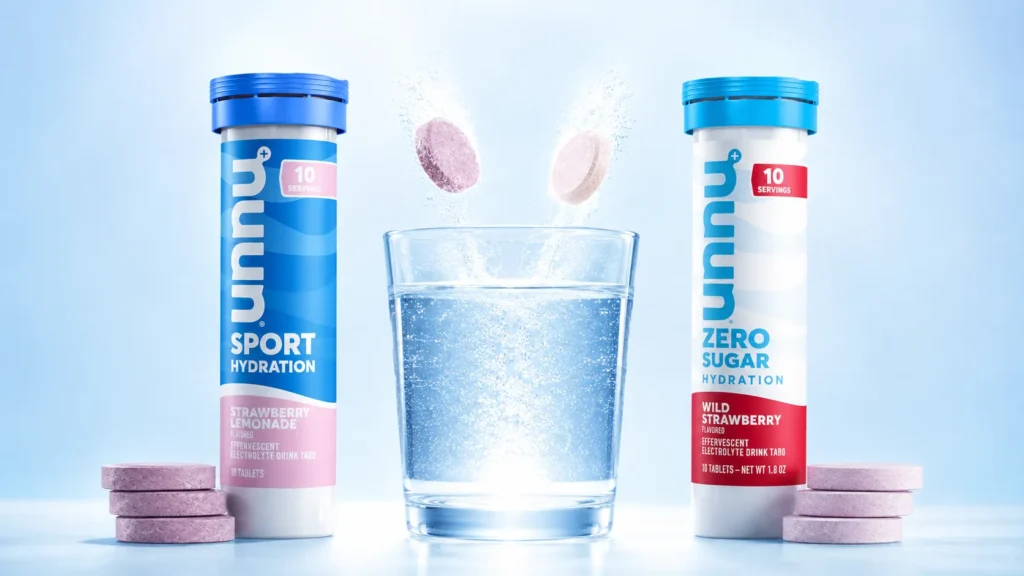
Usually no, but verify the binder ingredients. Most electrolyte tablets use the same minerals as powders – sodium, potassium, magnesium, calcium – and carry the same logic: zero calories, no insulin response, safe for fasting. Nuun Sport tablets, for example, contain 1 g of sugar per tablet and approximately 15 calories – low enough that most metabolic fasters consider them fast-compatible, though the trace sugar technically raises insulin in a minor way.
The main thing to watch for in tablet formats is the binding agents and coating ingredients. Some cheap tablets use cellulose, stearic acid, or silicon dioxide – all inert and fine for fasting. Others use maltodextrin as a binder or flavour carrier, which is not. Check the inactive ingredients label, not just the active minerals.
Do Electrolyte Supplements Break a Fast?
Electrolyte capsules are the cleanest format for strict fasting. They typically contain just the minerals plus an inert capsule shell (typically vegetarian cellulose or bovine gelatin). No sweeteners, no flavours, no coatings. Do electrolyte supplements in capsule form break a fast? Almost never – unless the capsule itself contains a sugar-based coating, which is uncommon.
The tradeoff: capsules are less pleasant to take during extended fasting when you may feel slightly nauseous, and they tend to deliver lower absolute mineral amounts per serving than powders or drops. For strict extended fasting beyond 24 hours where absolute ingredient purity is the goal, capsules are the most unambiguously safe format.
Sweeteners in Electrolyte Drinks: What Is Safe During Fasting?
Since sweeteners are the main variable that determines whether an electrolyte drink breaks a fast, this deserves a clear breakdown.
- Stevia (Rebaudioside A): Zero calories, does not raise blood sugar or insulin. Widely considered safe for all standard fasting protocols. Safest sweetener option for fasting.
- Allulose: A rare sugar that provides minimal calories and does not raise blood sugar or insulin meaningfully. Safe for metabolic fasting. Appears in Liquid IV Sugar-Free.
- Monk fruit extract: Zero calories, does not raise blood sugar. Generally considered safe for fasting. Slightly more ambiguous data on cephalic phase insulin response than stevia.
- Sucralose (Splenda) and Ace-K: Zero calories, do not raise blood sugar directly. More contested in the fasting community due to potential cephalic phase insulin response in some individuals. Fine for most people; strict autophagy fasters may prefer to avoid.
- Xylitol and maltitol (sugar alcohols): Provide some calories and can raise insulin – particularly maltitol, which has a glycaemic index of approximately 36. Avoid during a strict metabolic fast.
- Dextrose, maltodextrin, cane sugar, fructose: All caloric, all raise insulin. Do electrolyte drinks break a fast when they contain these? Yes, unambiguously. Avoid entirely during any fasted window.
The practical check: look at the ingredients list, not just the front-of-pack claims. A product that says ‘no added sugar’ may still contain maltodextrin as a filler or carrier. A product with ‘natural flavours’ may use fruit concentrates. Read the full label every time.
How to Use Electrolytes Effectively During a Fast

Getting the product right is half the equation. Using it correctly during a fasted window is the other half.
Start proactively, not reactively: The best time to take electrolytes during fasting is before you develop symptoms – not after the headache or dizziness has already set in. For an overnight fast (16:8 intermittent fasting, for example), taking an electrolyte supplement first thing in the morning at the start of your fasted window sets you up for a stable fasting period.
Sodium first, always: Sodium is the primary driver of fasting electrolyte depletion through natriuresis. If you experience symptoms – dizziness, headache, low energy – sodium is almost always the first deficiency to address. Products like LMNT (1,000 mg sodium) or Redmond ReLyte (810 mg sodium) are specifically designed to address this quickly.
Do electrolyte drinks break a fast when taken multiple times? No – taking multiple servings of a zero-calorie electrolyte throughout a fasted window is perfectly safe from a metabolic standpoint. During extended fasts of 24 hours or longer, two servings per day is common and appropriate to offset ongoing urinary losses.
Sip – do not chug: Drinking a full serving of any electrolyte drink too quickly on a fasted stomach can cause mild nausea. Sipping over 10–15 minutes is gentler on an empty gut and allows mineral absorption to occur more gradually.
Keep it cold or room temperature: During fasting, the digestive system is quieter and some people find very cold drinks uncomfortable. Room temperature or mildly chilled electrolyte drinks tend to be better tolerated during extended fasted periods.
Quick Reference: Does It Break Your Fast?
- LMNT (all flavours): No – zero sugar, ~5–10 trace calories, stevia sweetened. Fast-safe.
- Ultima Replenisher: No – zero calories, zero sugar, stevia sweetened. Fast-safe.
- Propel Electrolyte Water: Generally no – zero calories, zero sugar, but uses sucralose/Ace-K. Fine for most fasters; avoid if sensitive to artificial sweeteners.
- Buoy Hydration Drops: No – unflavoured, zero sweeteners, zero calories. The strictest fast-safe option available.
- Redmond ReLyte: No – zero sugar, stevia sweetened, mineral-sourced from real salt. Fast-safe.
- Standard Liquid IV (original): Yes – 11 g of sugar, 45–50 calories. Breaks a metabolic fast. Use Sugar-Free version instead.
- Standard Pedialyte: Yes – contains dextrose. Breaks a fast. Pedialyte Zero Sugar Powder Packs are the exception.
- Gatorade / Gatorlyte (standard): Yes – contains sugar. Breaks a fast. Gatorlyte Zero is the exception.
- Nuun Sport tablets: Borderline – 1 g sugar, ~15 calories. Most metabolic fasters consider it fine; strict fasters may avoid.
- Plain sea salt in water: No – zero calories, zero sugar. The original zero-cost fasting electrolyte approach.
If you are combining fasting with a keto diet and experiencing keto flu symptoms on top of fasting fatigue, our breakdown of electrolytes for keto flu headache covers the overlapping sodium-potassium dynamic in detail.
Frequently Asked Questions
Do electrolytes break a fast for weight loss?
No. Zero-calorie electrolytes do not produce an insulin response and do not interrupt fat burning. For weight loss fasting, the primary concern is calories and insulin – pure electrolyte minerals produce neither. They actually support weight loss fasting by reducing the symptoms (dizziness, headache, fatigue) that cause most people to break their fast early.
Does drinking electrolytes break a fast for autophagy?
Pure, unflavoured electrolytes do not break autophagy. Autophagy is primarily halted by calorie intake – specifically carbohydrates and proteins that activate mTOR signalling. Zero-calorie minerals do not activate mTOR. Some strict autophagy fasters prefer unflavoured options to eliminate any theoretical cephalic phase insulin response from sweeteners, but the practical evidence for sweeteners like stevia meaningfully interrupting autophagy is thin.
Can I drink Pedialyte while fasting?
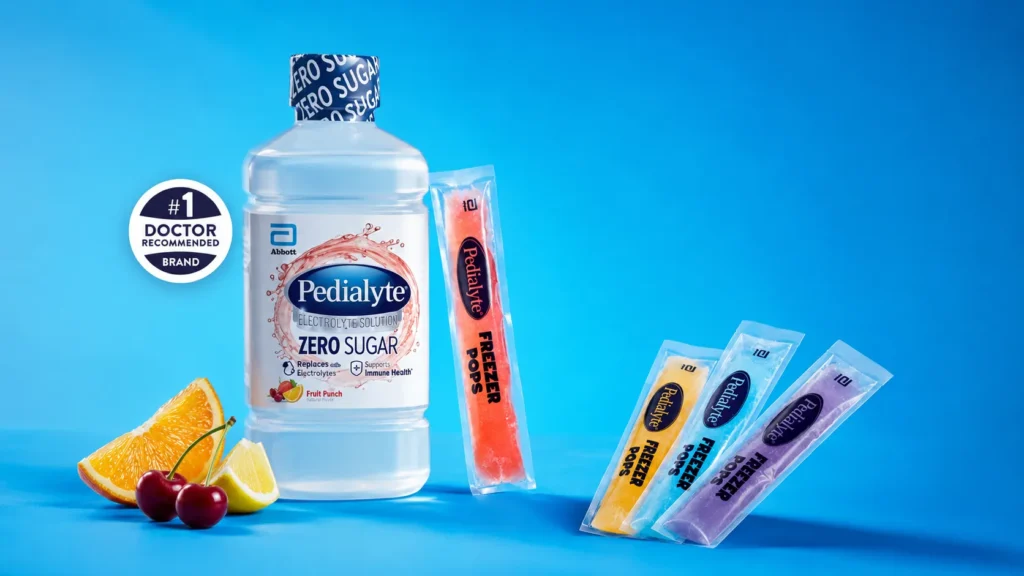
Standard Pedialyte contains dextrose – a form of glucose – that raises blood sugar and insulin. It breaks a metabolic fast. Pedialyte Zero Sugar Powder Packs use sucralose instead and contain no meaningful calories – these are compatible with most fasting protocols. Always check which Pedialyte product you are buying; the distinction between classic and sugar-free versions is critical for fasting use.
Does drinking electrolytes break a fast if I take them in pill form?
Electrolyte capsules are the least likely format to break a fast. They contain only minerals and an inert capsule shell – no sweeteners, no flavours, no coatings. For strict extended fasting where ingredient purity is the priority, capsules are the most unambiguously safe format. Check that the capsule shell itself does not use a sugar-based coating, which is uncommon but worth verifying.
How many electrolytes can I take while fasting?
For standard intermittent fasting (16–24 hours), one serving of a zero-calorie electrolyte per fasted window is sufficient for most people. For extended fasts of 24–72 hours, two servings per day – morning and evening – is common practice to offset ongoing sodium and potassium losses. For fasts beyond 72 hours, medical monitoring is recommended and electrolyte management becomes a clinical rather than a consumer product question.
Does LMNT’s Chocolate Salt break a fast?
No more than any other LMNT flavour. The Chocolate Salt variant contains the same electrolyte profile and trace calorie count as other LMNT flavours – approximately 5-10 calories per packet from stevia and natural cocoa flavouring. It is fast-compatible for metabolic fasting purposes. Some people use it dissolved in warm water as a morning fasted drink, which is a practical way to manage both hydration and the psychological comfort of having a warm beverage during a fasted period.
Does Liquid IV Sugar-Free break a fast?
No – the Sugar-Free version of Liquid IV is compatible with metabolic fasting. It replaces the 11 g of cane sugar and dextrose found in the original formula with allulose, a rare sugar that does not meaningfully raise blood glucose or trigger an insulin response. The sodium, potassium, and B vitamin content remain the same as the original. Unlike standard Liquid IV – which breaks a fast due to its sugar content – the Sugar-Free version sits in the same category as LMNT and Ultima: zero glycaemic impact, fasting-safe for weight loss and metabolic health purposes.
Can I add salt to water instead of using an electrolyte product during fasting?
Yes – plain salt dissolved in water is one of the oldest and most effective fasting electrolyte strategies. A quarter teaspoon of sea salt or Himalayan pink salt in 500 ml of water delivers approximately 500–600 mg of sodium with zero calories, zero sweeteners, and zero cost. It directly addresses the natriuresis of fasting – the primary driver of fasting symptoms – without any ingredient concerns. The limitation is that it only replaces sodium and chloride. If you are on an extended fast where potassium and magnesium losses are also significant, a formulated product like LMNT or Ultima covers all three minerals in one serving. For shorter intermittent fasts, plain salted water is a perfectly valid minimalist approach.
Do electrolytes break a fast if you are doing a 24-hour or extended fast?
No – zero-calorie electrolytes remain fast-safe regardless of the duration of your fast. In fact, they become more important as fast length increases. During a 24-hour or longer fast, cumulative sodium and potassium losses through urine accumulate to levels that plain water cannot address. The same rule applies as with shorter fasts: products with no sugar, no calories, and no caloric sweeteners do not interrupt fat burning, ketosis, or autophagy at any point during the fasted window. The only additional consideration for extended fasts is that electrolyte needs are higher – two servings per day of a clean zero-calorie product is standard practice for fasts beyond 24 hours.
Does the timing of electrolytes during fasting matter – morning versus evening?
Timing does not affect whether electrolytes break your fast, but it does affect how effectively they manage your symptoms. Taking electrolytes at the beginning of your fasted window – typically first thing in the morning for 16:8 fasters – is more effective than waiting until symptoms appear. Sodium depletion through natriuresis begins within the first few hours of fasting and accelerates in the morning when overnight urinary losses compound. Starting your fasted window with a zero-calorie electrolyte drink front-loads sodium before the headache or fatigue sets in, rather than trying to reverse the deficit once it has already developed.
This article contains affiliate links. If you purchase through our links, we may earn a commission at no extra cost to you. We only recommend products we genuinely believe in. Read our Affiliate Disclaimer for full details.