
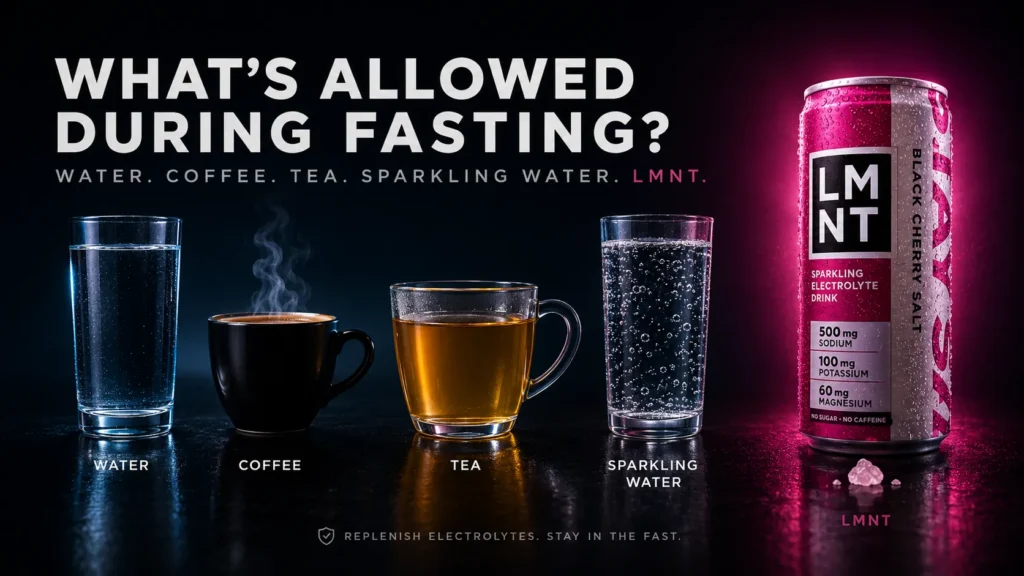
What can I drink during a fast? Plain water, unsweetened tea, and black coffee generally fit calorie-restricted fasting, while drinks containing sugar, protein, or meaningful calories break a strict fast. Whether LMNT fits depends on the flavor and your fasting goal. Religious fasting, metabolic fasting, gut rest, and pre-procedure fasting follow different rules.
Table of Contents
This guide covers every major drink category: what doesn’t break a fast, what breaks it immediately, and the gray area in between. We also answer the specific question a lot of fasters are asking right now – does LMNT break a fast? Spoiler: the answer is almost certainly no, and we will show you exactly why.
Why What You Drink During a Fast Actually Matters
Fasting works by keeping insulin low. When insulin stays low, your body switches from glucose metabolism to fat oxidation – and over longer fasts, autophagy begins, the process where your cells clean up damaged components.
Calories raise blood sugar. Blood sugar raises insulin. Insulin stops fat burning. That is the chain you are trying to avoid during a fasted window. So the practical test for any drink is simple: does it raise blood sugar or trigger a significant insulin response? If yes, your fast is compromised. If no, you are safe.
What makes this nuanced is that some zero-calorie drinks still provoke insulin responses through sweet taste receptors – a mechanism called cephalic phase insulin release. This is where drinks like Coke Zero sit in a gray zone, and why the fasting community debates them so often.
What Can I Drink During A Fast? – The Safe List
Plain Water – Always Safe
Water is the gold standard. Still, sparkling, or filtered – it contains zero calories, triggers zero insulin response, and actively supports kidney function and cellular processes during a fast. If you are dehydrated while fasting, plain water is your first stop.
One honest note: plain water alone can dilute sodium in your blood, particularly during longer fasts where the kidneys excrete sodium at higher rates. That is why many experienced fasters add a pinch of sea salt or use electrolyte products alongside water – more on that below.
Black Coffee – Safe with Caveats

Black coffee is fasting-safe for most people. It contains essentially zero calories, suppresses appetite, and has a mild metabolism-boosting effect through caffeine. Research suggests coffee may even support autophagy – one of the main cellular benefits of fasting.
The caveats: adding any cream, milk, sugar, or flavored syrup ends your fast immediately. Even small amounts of milk (say, a splash) contain lactose and protein that trigger insulin. Keep it black and you are fine. And if coffee on an empty stomach makes you nauseous, that is your gut telling you something – herbal tea is a gentler option.
Herbal Tea and Green Tea – Safe

Unsweetened herbal teas and green tea contain virtually no calories and produce no insulin response. Green tea specifically contains EGCG, a polyphenol with evidence for supporting fat oxidation – a mild synergy with the goals of fasting.
Black tea is equally fine. The rule applies universally: no sugar, no milk, no honey. A squeeze of lemon in warm water is also generally accepted among fasters. The trace calories from a squeeze of lemon (around 2-4 calories) are unlikely to produce a meaningful insulin response for most people.
Mineral Water and Sparkling Water – Safe
Plain sparkling water is just water with carbonation. Zero calories, zero insulin impact. It helps curb hunger pangs and provides a textural variety that plain water lacks – which is practically useful during a long fasted window when you are craving something interesting to drink.
Flavored sparkling waters vary. Naturally flavored versions with no added sweeteners are generally safe. Sparkling waters with added artificial sweeteners introduce the same caveats as Coke Zero (see below). Check the label before assuming safety.
How to Get Electrolytes While Fasting
This is where most fasters run into trouble. Electrolytes – sodium, potassium, and magnesium – are lost at higher rates during fasting because insulin signals the kidneys to retain sodium, and when insulin drops during a fast, sodium excretion increases. The result is the fasted headache, fatigue, and dizziness that many people mistake for hunger.
We cover the mechanism behind fasting electrolyte depletion in detail in our article on do electrolytes break a fast – which explains exactly why replenishing minerals during a fasted window actually supports the fast rather than compromising it.
The key is how to get electrolytes while fasting without triggering an insulin response. Options include:
- Sea salt in water: free, zero calories, replaces sodium immediately
- Pure mineral water: naturally contains trace minerals, zero calories
- – Zero-calorie electrolyte products: LMNT Raw, Nuun Sport (one tablet, borderline), Ultima Replenisher (zero sugar)
The electrolyte product you choose matters. Zero-sugar, zero-calorie formats are the safest. Products with dextrose, maltodextrin, or cane sugar break your fast – those ingredients exist to activate glucose absorption, which is the opposite of what fasting requires. The National Institutes of Health maintains clear guidance on electrolyte requirements and their function in fluid balance, relevant to understanding why fasting increases these needs.
The NIH’s Office of Dietary Supplements provides detailed, research-backed information on magnesium and sodium that is worth reviewing if you are new to managing electrolytes during extended fasts.
The Gray Zone: Drinks That Might or Might Not Break Your Fast
Does Coke Zero Break a Fast?
This is one of the most debated fasting questions online. Coke Zero contains zero calories and zero sugar – but it uses aspartame and acesulfame potassium (Ace-K) as sweeteners.
Here is the honest science: neither sweetener contains calories or raises blood sugar directly. However, research on cephalic phase insulin release suggests that sweet taste alone can trigger a mild insulin response in some individuals – the body prepares for sugar that never arrives.
A study published in OAText compared glucose and insulin responses to artificially sweetened sodas versus sugar-sweetened and carbonated water. Results showed minimal blood glucose impact from artificial sweeteners in most participants, but individual variation was notable. Some people show no response at all; others show a small spike.
So does Coke Zero break a fast? For strict autophagy-focused fasting, the answer is probably yes – the artificial sweeteners introduce uncertainty and potential gut microbiome disruption that purists prefer to avoid. For general intermittent fasting for weight loss or metabolic health, Coke Zero is unlikely to meaningfully derail your results. Know your goal, then decide.
Bone Broth – Technically Breaks a Fast
Bone broth contains protein (collagen) and calories – typically 30-50 calories per cup and several grams of protein. That technically breaks a fast by triggering insulin through the protein content.
However, many practitioners use bone broth in extended fasts (24+ hours) specifically for its electrolyte content (sodium, potassium, magnesium) while accepting the minimal protein interruption. This is often called “dirty fasting.” For strict metabolic fasting, skip the broth. For a 72-hour fast where electrolyte balance is the priority, small amounts of bone broth may be a reasonable trade-off.
Apple Cider Vinegar
A tablespoon of ACV diluted in water contains approximately 3-5 calories. That is borderline – and the fasting community is genuinely divided. Most practitioners consider ACV fasting-safe in small amounts because the caloric and insulin impact is negligible. ACV may also help manage appetite during a fasted window, which has practical value.
Does LMNT Break a Fast? The Clear Answer
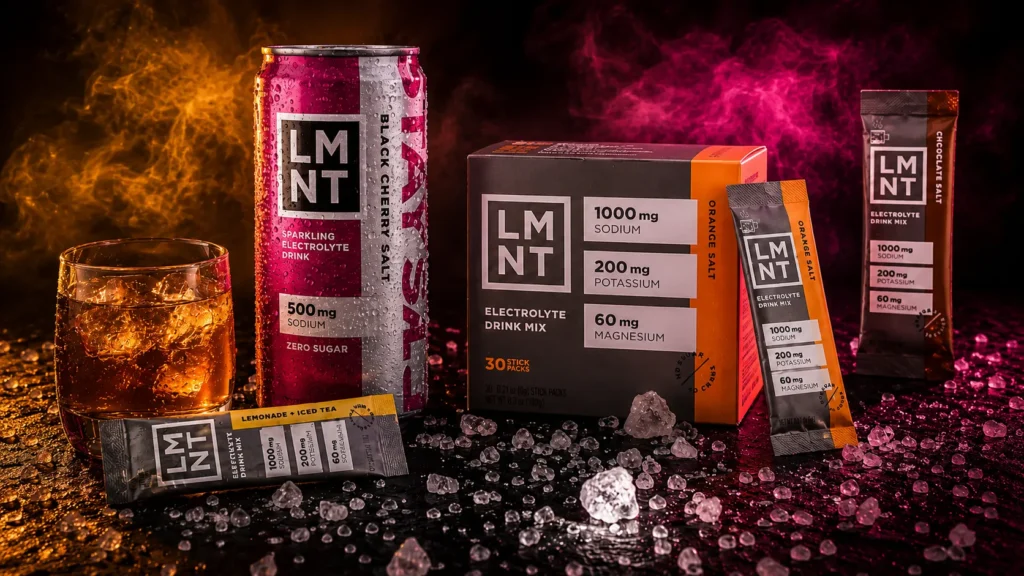
Does LMNT break a fast? According to LMNT directly, no – and the reasoning is straightforward.
LMNT’s official help center states: “LMNT will not break your fast. Calories break a fast by increasing blood sugar and provoking an insulin response – but the significance of that insulin response depends on how many calories you consume and what they came from. LMNT contains so few calories that many folks in our community who wear continuous glucose monitors have shared that they don’t experience any blood sugar increase when drinking LMNT.
Each LMNT flavoured packet contains approximately 5-10 calories from stevia and natural flavourings. There is no sugar, no dextrose, no maltodextrin, and no carbohydrates. The three ingredients that matter are sodium chloride (1,000 mg), potassium chloride (200 mg), and magnesium malate (60 mg).
The stevia sweetener used in LMNT is rebaudioside A – a natural, zero-glycaemic compound that does not raise blood sugar or produce a meaningful insulin response. This is a meaningfully different category of sweetener from the aspartame in Coke Zero.
So does LMNT break a fast for strict autophagy fasters? If you want to eliminate all sweetener-related variables entirely, LMNT Raw Unflavoured is the answer. It contains zero calories, zero stevia, zero flavourings – just pure sodium, potassium, and magnesium. That is about as fast-clean as an electrolyte product gets.
Our full breakdown of how much sodium in LMNT explains the exact formulation, the sodium-to-potassium ratio, and why those numbers are specifically relevant to people who fast on low-carb protocols.
How Many LMNT Packets Per Day While Fasting?
How many LMNT packets per day is a practical question – and the answer depends on your activity level, the length of your fast, and how much sodium you are losing through other means.
LMNT recommends one packet per day as a starting point. During an intermittent fasting window (typically 16-18 hours), one packet is generally sufficient for most people doing moderate activity. Each packet delivers 1,000 mg of sodium – which covers a significant portion of the elevated sodium needs fasters experience through natriuresis (the kidney’s increased sodium excretion when insulin is low).
For extended fasts of 24-72 hours with physical activity, some people use two packets per day – one in the morning, one in the afternoon. At two packets, you are consuming 2,000 mg of sodium – still within a reasonable range for active adults, though people with hypertension or kidney conditions should check with a physician before exceeding one packet daily.
How many LMNT packets per day is too many? LMNT advises listening to your body. If you taste salt strongly in your saliva or notice swelling, you have exceeded your sodium needs. For sedentary fasters eating a sodium-containing diet in their eating window, one packet is almost always sufficient.
What Breaks a Fast Immediately – Drinks to Avoid
If what doesn’t break a fast is the question, these are the definitive answers on the other side of the line.
- Anything with sugar: juice, soda, sports drinks, sweetened coffee, energy drinks with cane sugar – all break a fast immediately
- Milk of any kind: contains lactose (a sugar) and protein, both of which trigger insulin
- Smoothies: typically high in fruit sugar and protein – breaks a fast even when homemade
- Alcohol: contains 7 calories per gram, triggers insulin, disrupts fat metabolism and autophagy simultaneously
- Sugary electrolyte drinks: standard Liquid IV (11g sugar), Gatorade, standard Pedialyte Classic – ORS products with dextrose or cane sugar break a fast
- Protein shakes: protein is one of the strongest insulin triggers regardless of carb content
The pattern is consistent: calories from carbohydrates and protein end a fast. Zero-calorie drinks without insulin-triggering ingredients do not. Keep that framework in mind and most drink decisions become clear without needing to memorize a specific list.
If you are also managing electrolytes on a ketogenic diet alongside fasting, our article on electrolytes for keto flu headache covers the sodium depletion mechanism in depth – which applies directly to extended fasts.
Practical Tips for Staying Hydrated While Fasting
Knowing what to drink is half the equation. These practical strategies make a real difference during long fasted windows.
- Start the morning with electrolytes, not just water: One serving of a zero-calorie electrolyte product first thing in the morning addresses the overnight sodium deficit before symptoms like headache or fatigue develop.
- Sip throughout the day, do not chug: Large amounts of plain water consumed quickly can dilute blood sodium, worsening fasting symptoms. Spread fluid intake evenly across the fasted window.
- Track urine colour: Pale yellow means well-hydrated. Dark yellow means drink more. Completely clear means you may be over-hydrating without adequate electrolytes – reduce water and add minerals.
- Use salt if you do not have an electrolyte product: A quarter teaspoon of sea salt in 16 oz of water provides approximately 590 mg of sodium for free. Effective, clean, and available in any kitchen.
- Black coffee with an electrolyte packet: A popular combination among experienced fasters. Black coffee suppresses appetite; an electrolyte packet handles the mineral deficit. Together they cover the two main fasting discomforts: hunger and fatigue from low sodium.
Frequently Asked Questions
Does Coke Zero break a fast?
Coke Zero is a gray area. Zero calories and zero sugar, but artificial sweeteners like aspartame may trigger a mild cephalic phase insulin response in some people. For strict autophagy fasting, avoid it. For general intermittent fasting for weight loss, it is unlikely to meaningfully derail results.
Does taking vitamins break a fast?
Most plain vitamins and minerals contain negligible calories and do not break a fast. Gummy vitamins contain sugar and do break a fast. Fat-soluble vitamins (A, D, E, K) absorb better with food – consider timing them in your eating window.
How long does it take to hydrate?
Plain water begins absorbing within 5 minutes. Full hydration from a significant deficit takes 45-90 minutes with adequate fluid intake. Electrolyte drinks with sodium accelerate absorption through the SGLT1 transport mechanism, reducing that window meaningfully.
Does salt help with hydration?
Yes. Sodium drives water retention at the cellular level. Adding a small amount of salt to water during fasting supports blood volume and reduces the dizziness and headaches that come from sodium loss through increased urinary excretion during a fast.
Is LMNT electrolyte ok for fasting?
Yes. LMNT confirmed on their help page that it will not break a fast. The 5-10 trace calories from stevia and natural flavourings do not raise blood sugar. LMNT Raw Unflavoured is the zero-calorie option for strict fasters.
Does Watermelon LMNT break a fast?
No. Watermelon Salt is an LMNT flavour with the same electrolyte profile as all other LMNT varieties – 1,000 mg sodium, 200 mg potassium, 60 mg magnesium, zero sugar. The flavouring is natural with trace calories only, not enough to disrupt a fast.
Will 20 calories of electrolytes break a fast?
For most fasting goals, no. 20 calories from a mineral source produces no meaningful blood sugar or insulin response. Strict autophagy fasters may prefer to stay at absolute zero – in which case LMNT Raw Unflavoured (zero calories) is the cleanest option.
How many LMNT packets can I have daily?
LMNT recommends one packet per day as a starting point. Active fasters or those doing extended fasts may use two packets. People with hypertension or kidney conditions should not exceed one without medical guidance.
This article contains affiliate links. If you purchase through our links, we may earn a commission at no extra cost to you. We only recommend products we genuinely believe in. Read our Affiliate Disclaimer for full details.