
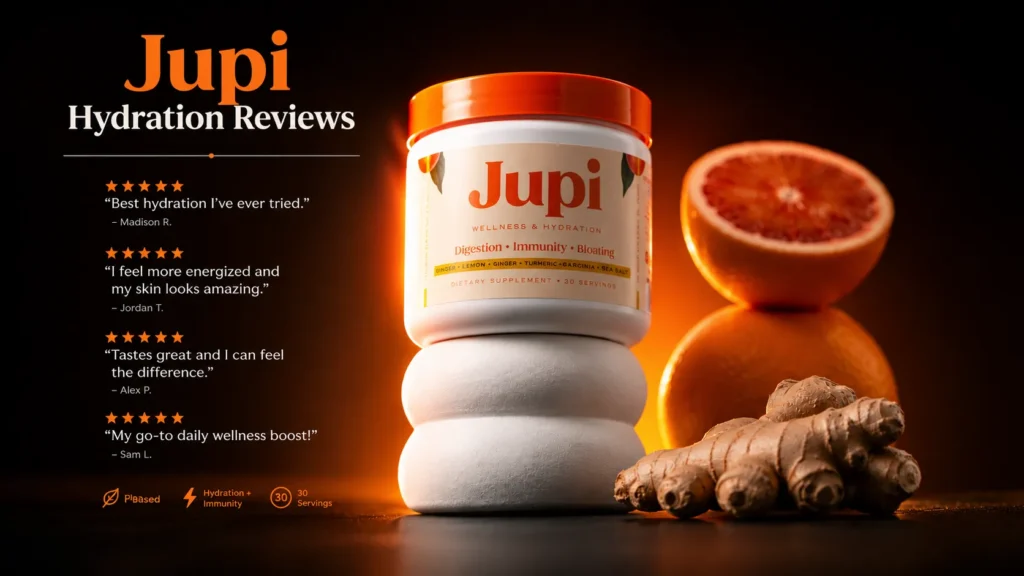
This Jupi Hydration review examines the product’s electrolyte, vitamin, and wellness ingredients, along with the evidence behind its advertised benefits. Ingredient research can help explain why something is included, but it does not prove that the finished powder produces a particular digestive, energy, hydration, or immune outcome. The review therefore separates verified label facts from manufacturer claims.
| Attribute | Details |
|---|---|
| Our Verdict | 7.4 / 10 – Worth trying for wellness + hydration combo use |
| Full Name | Jupi Debloat & Hydration |
| Made by | Jupiter Nutrition |
| Serving | 1 scoop (8g) in 8–12 oz water |
| Sodium | 400 mg |
| Potassium | 150 mg |
| Magnesium glycinate | 100 mg listed |
| Sugar | 0 g |
| Sweetener | Stevia and monk fruit |
| Price | $31.99 promotional ($1.07/serving) |
| Guarantee | 30-day money-back |
| Available | drinkjupi.com and Amazon |
Table of Contents
What Are Customers Saying About Jupi Hydration?
If you have seen Jupi Hydration pop up in your social feed and wondered whether those glowing testimonials hold up to scrutiny, you are in the right place. This Jupi Hydration Reviews article covers the real formula, what the ingredients actually do, what customers are genuinely reporting, and where the product falls short of its marketing. No paid promotional language here – just what the evidence says.
Jupi Hydration, sold under the full name Jupi Debloat and Hydration, describes itself as a daily wellness powder that reduces bloating, boosts gut health, and supports immunity and energy. It combines electrolytes with a broad herbal and fruit powder blend. The official website currently rates 4.8 out of 5 based on over 1,024 reviews, while Amazon shows approximately 4.2 from over 1,100 ratings.
The honest version of a j u p i review has to address one core question: does the formula live up to the positioning? The answer is partly yes, partly not proven – and knowing where that line falls is the whole point of this article.
What Is Jupi Hydration and Wellness Powder?
Jupi Hydration is made by Jupiter Nutrition and sells through their official website at drinkjupi.com and Amazon. It is a powdered supplement that you mix one scoop (8 grams) into 8 to 12 ounces of cold water and drink once daily. The company positions it primarily as a debloating and hydration product, though the formula also includes immunity support and energy ingredients.
What makes Jupi different from a standard electrolyte powder is its dual identity. It provides a legitimate 400 mg of sodium per serving – enough to function as a real electrolyte drink – while also loading in a substantial herbal and fruit powder complex targeting digestive wellness. Most electrolyte powders do not include ginger, turmeric, kiwi, papaya, or apple cider vinegar. Jupi bundles them all together.
That broad scope is both the product’s main selling point and its most significant limitation. When a formula tries to do many things, it is harder to do any single one of them at the highest therapeutic dose. The jupi hydration & wellness powder is best understood as a daily hydration habit with wellness bonuses – not a clinical-grade bloating treatment or a performance electrolyte designed for endurance athletes.
Jupi Hydration Ingredients: Full Breakdown
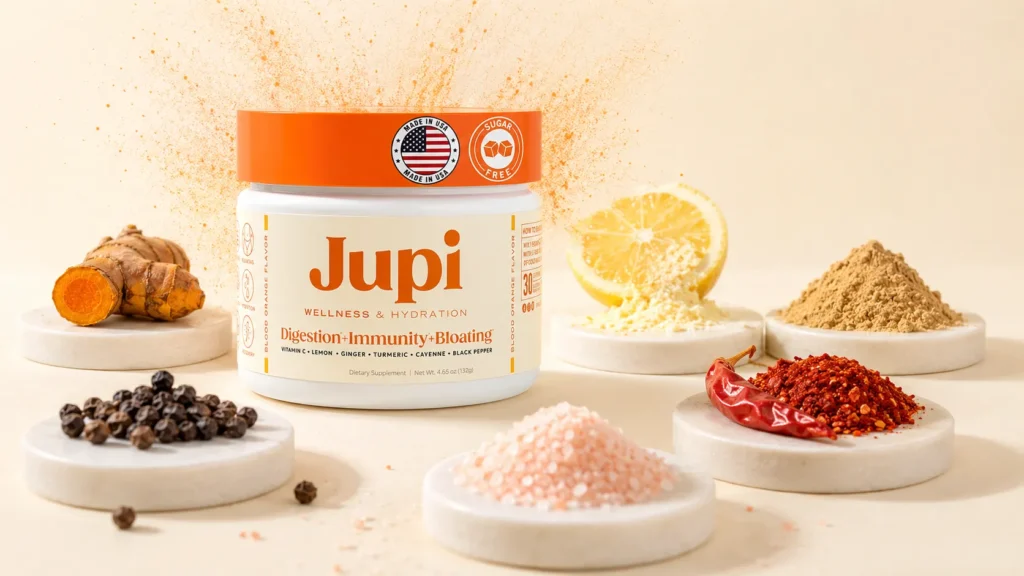
Here is exactly what Jupi Hydration contains per serving, sourced directly from the official product page at drinkjupi.com and cross-referenced with the verified ingredient analysis from independent review sources.
Electrolyte Profile
- Sodium: 400 mg
- Chloride: 610 mg
- Potassium: 150 mg
- Magnesium glycinate: 100 mg (elemental magnesium amount not separately disclosed)
- Coconut water powder: 100 mg
The 400 mg sodium per serving is meaningful. It compares favorably to products like DripDrop ORS (330 mg) and sits well below LMNT’s unusually high 1,000 mg. For moderate daily hydration – a walk in the heat, a light workout, travel dehydration – the sodium load in Jupi is appropriate and effective.
The potassium at 150 mg is modest. LMNT delivers 200 mg, Liquid IV delivers 370 mg, and Gatorlyte delivers 350 mg. For active users who sweat heavily, Jupi’s potassium alone will not cover significant losses. The coconut water powder adds some trace minerals but not enough to compensate at the listed dose.
The magnesium listing is worth flagging. The official page states “Magnesium Glycinate (100 mg)” without clarifying how much elemental magnesium that compound provides. Magnesium glycinate is approximately 14% elemental magnesium by weight, which would mean the elemental magnesium is considerably less than 100 mg – possibly around 14 mg. Until Jupiter Nutrition clarifies this on their Supplement Facts panel, it is inaccurate to compare this number directly to products that clearly state elemental magnesium content.
For a comparison of electrolyte products that fully disclose their elemental mineral content, our Ultima vs LMNT comparison covers both formulas in detail – Ultima’s 100 mg is confirmed elemental magnesium citrate.
Digestive and Wellness Ingredients
- Organic turmeric root: 500 mg
- Kiwi fruit powder: 300 mg
- Organic ginger root: 250 mg
- Baobab fruit: 200 mg
- Papaya fruit: 150 mg
- Organic apple cider vinegar: 125 mg
- Lemon balm extract: 100 mg
- Organic cayenne pepper: 10 mg
- BioPerine black pepper extract: 5 mg
- Organic lemon fruit: 25 mg
Vitamins and Minerals
- Vitamin C (from acerola cherry): 100 mg
- Vitamin D3: 50 mcg (2,000 IU)
- Zinc: 2 mg
The vitamin D3 dose at 2,000 IU per serving is one of the more notable entries in the formula. The National Institutes of Health sets the adult tolerable upper intake at 4,000 IU per day. One Jupi serving accounts for half that limit. Users taking a multivitamin, separate vitamin D capsules, or other fortified products should add their total daily vitamin D across all sources before deciding if Jupi’s contribution is appropriate for them.
The NIH Office of Dietary Supplements vitamin D fact sheet provides current guidance on safe intake levels and upper limits by age group – worth checking if you already supplement vitamin D.
Jupi Hydration Benefits: What the Evidence Actually Shows
Does It Work for Hydration?
Yes – with appropriate expectations. The electrolyte profile (400 mg sodium, 610 mg chloride, 150 mg potassium) is sufficient for daily hydration maintenance and recovery from moderate sweating, travel, or light exercise. This is a legitimate jupi hydration benefit and the most consistently supported claim in the formula.
What Jupi is not: it is not a medical oral rehydration solution (ORS). ORS products like DripDrop and Pedialyte use glucose alongside specific sodium concentrations to activate the SGLT1 intestinal transport mechanism that drives rapid fluid absorption. Jupi contains no added sugar and is sweetened with stevia and monk fruit, which do not activate that mechanism. For everyday mild-to-moderate dehydration it is fine. For clinical rehydration from illness or significant fluid loss, use a proper ORS product.
Does It Actually Help with Bloating?
This is the centerpiece of Jupi’s marketing – and the area where the evidence is most nuanced. Some individual ingredients have research behind them. The complete finished product has no published clinical trial specifically testing it for bloating. That gap matters.
Ginger is the strongest individual ingredient for gut motility. A randomized trial found ginger accelerated gastric emptying in people with functional dyspepsia – though it did not significantly improve their actual symptoms. Jupi contains 250 mg of ginger root, which is a reasonable dose but not equivalent to the studied clinical formats.
Kiwi fruit has positive evidence for supporting bowel regularity – but the positive trials used two whole kiwifruits daily, not a powder extract. A separate trial using 1 gram per day of freeze-dried kiwi extract found no significant improvement in bowel function. Jupi provides 300 mg of kiwi powder. The gap between whole fruit doses and a 300 mg extract is significant, and the evidence does not automatically transfer.
Turmeric at 500 mg with 5 mg BioPerine is a thoughtful combination – black pepper extract improves curcumin bioavailability. However, turmeric root powder is not a standardized curcumin extract, and the National Center for Complementary and Integrative Health notes that available research on turmeric products varies significantly by form.
The honest summary on bloating: Jupi may help some people with occasional post-meal heaviness or mild digestive discomfort related to low hydration or irregular habits. It is not a proven treatment for chronic bloating, IBS, gastroparesis, or food intolerance. Individual results will vary based on what is causing the bloating in the first place.
Does It Boost Energy?
Jupi contains no caffeine. The formula is not going to give you a stimulant energy boost. Any energy benefit would come from better hydration correcting mild fluid deficits, from electrolyte replenishment reducing fatigue, or from better vitamin D and C status if you were previously deficient. These are real but indirect effects. If you expect it to behave like a pre-workout or an energy drink, you will be disappointed.
Does It Support Immunity?
The 100 mg of Vitamin C from acerola cherry, 2,000 IU of Vitamin D3, and 2 mg of zinc all contribute to immune function. The NIH notes these are established roles for each nutrient – Vitamin C supports immune cell function, Vitamin D modulates immune response, and zinc plays a role in immune signaling. These are not marketing claims; they are supported by established nutritional science. Whether Jupi’s specific doses make a meaningful difference depends on your baseline status for each nutrient.
The NIH fact sheet on Vitamin C and sodium and fluid balance guidance from the FDA are both relevant reference points for understanding what Jupi’s ingredients actually do at a physiological level.
Jupi Hydration Reviews: What Real Customers Report
Customer feedback across the official site and Amazon tells a reasonably consistent story. Here is the pattern that emerges from over 2,100 combined ratings.
What Customers Like
- Taste: the citrus-ginger flavor is consistently well-rated among users who enjoy ginger-forward drinks. Most describe it as light and refreshing rather than medicinal
- Bloating reduction: a meaningful proportion of customers report less post-meal heaviness after consistent use. This is the most cited positive outcome
- No added sugar: stevia and monk fruit sweetening is a genuine draw for people avoiding sugar who still want a flavored daily drink
- Convenience: one scoop once daily is a low-effort routine that people actually maintain
- Energy feel: multiple reviewers describe feeling less sluggish after making it a morning habit – consistent with what better daily hydration actually does
Common Complaints
- Sweetener aftertaste: stevia and monk fruit leave a noticeable aftertaste for some users, particularly those who are sensitive to either sweetener
- Spicy finish: ginger and cayenne can produce more heat than expected, especially at the 8 oz water dilution. Using 12 oz reduces this noticeably
- No result for some users: a subset of reviewers note no change in bloating or digestion after 2-4 weeks. This aligns with the fact that bloating has many underlying causes that Jupi cannot address
- Price at regular rate: at $39.99 per tub the regular price is harder to justify. At the promotional $31.99 it is more competitive
- Stomach sensitivity: some users with reflux or acid sensitivity report that the ginger, turmeric, cayenne, and apple cider vinegar combination triggers heartburn
What Does Jupi Hydration Taste Like?
Jupi describes the flavor profile as light citrus with ginger and cayenne. Based on customer descriptions, this tracks: the dominant notes are citrus-forward from lemon and acerola cherry, with a warming finish from ginger and a faint spice from the cayenne.
Sweetened with stevia and monk fruit, there is no added sugar. Users who already enjoy lemon-ginger wellness shots, ginger tea, or turmeric lattes will likely find the flavor profile familiar and enjoyable. Users who dislike the aftertaste of stevia or find warm-spice flavors unpleasant in a cold drink may want to start with the full 12 oz dilution before committing.
Mixing works better with a frother or shaker bottle than a spoon. The powder is not instantly soluble with a quick stir.
Possible Jupi Hydration Side Effects
Most users tolerate Jupi without issue. But several ingredients in the formula have documented side effects in sensitive populations.
Ginger in oral supplement form can cause heartburn, diarrhea, abdominal discomfort, and mouth or throat irritation – particularly at higher doses or on an empty stomach. The National Center for Complementary and Integrative Health confirms these as known effects of ginger supplementation.
Turmeric can cause reflux, stomach upset, nausea, diarrhea, or constipation in some people. People taking blood-thinning medications like warfarin should discuss turmeric supplementation with a physician – turmeric has mild antiplatelet properties.
Cayenne pepper, even at 10 mg, can aggravate existing heartburn or GERD symptoms. Apple cider vinegar and citrus elements also lower gastric pH, which some users with reflux find uncomfortable.
Kiwi allergy is a genuine concern. If you have a latex allergy or known sensitivity to kiwi, papaya, or tropical fruit, the formula contains multiple triggers.
The 2,000 IU of Vitamin D3 per serving is safe for most adults, but people already taking high-dose vitamin D supplements should not stack them with Jupi without checking total daily intake against the 4,000 IU upper limit.
Our Verdict: Who Should Avoid Jupi:
Pregnant or breastfeeding individuals (consult doctor) | People with reflux, GERD, or stomach ulcers | Anyone with kiwi or tropical fruit allergy | People taking blood thinners | CKD patients on potassium or sodium restrictions | People already at high vitamin D intake
Jupi Hydration Price and Where to Buy
Jupi Hydration is available in two places: the official website and Amazon. The brand frequently runs promotions, so the price you see may differ from the list price.
- Official site promotional price: $31.99 per tub (30 servings) = approximately $1.07 per serving
- Regular listed price: $39.99 per tub = approximately $1.33 per serving
- Shipping: free to US addresses on the promotional offer; confirm current terms at checkout
- Guarantee: 30-day money-back guarantee on all purchases
Jupi hydration where to buy options are currently limited to their own website and Amazon. The promotional price at $31.99 is competitive for a multi-ingredient wellness powder of this breadth. The regular $39.99 price is harder to justify compared to simpler electrolyte products that deliver stronger mineral profiles at lower cost per serving.
For current pricing, availability, and any active promotions, check the official Jupi product page directly before purchasing. Promotional prices and free shipping offers can change without notice.
Who Should Use Jupi Hydration – and Who Should Skip It
Good Fit For:
- Adults with occasional post-meal bloating or digestive heaviness
- People who want electrolytes and wellness ingredients in a single daily habit
- Users who enjoy citrus-ginger flavor profiles and dislike artificial sweeteners
- Anyone wanting a caffeine-free, sugar-free morning or after-meal drink
- People who are slightly low on Vitamin C, D, or zinc and want one product to help
- Users avoiding multiple daily supplement pills and wanting a drink format instead
Not the Right Fit For:
- Serious athletes or heavy sweaters who need high sodium and potassium for performance: consider LMNT or Gatorlyte instead
- Anyone needing clinical ORS for illness dehydration: use DripDrop or Pedialyte
- People with reflux, GERD, kiwi allergy, or blood-thinning medication use
- Users already taking high-dose vitamin D supplements
- Anyone expecting a proven clinical treatment for chronic bloating or IBS
If you need a dedicated high-performance electrolyte drink rather than a wellness hybrid, our LMNT vs Liquid IV comparison covers the top two options for athletes and active users in depth.
Final Verdict: Is Jupi Hydration Worth It?
Jupi Hydration is a legitimate, well-intentioned multi-purpose wellness powder. The electrolyte base (400 mg sodium, 610 mg chloride) is real and functional. The digestive ingredient blend – ginger, turmeric, kiwi, papaya, apple cider vinegar, lemon balm – covers the most commonly discussed gut-support botanicals. The vitamin D3 and Vitamin C additions add meaningful nutritional value for people who do not supplement those elsewhere.
The honest limitation is the distance between plausible individual ingredients and a proven finished product. The jp hydration formula has not been tested in a clinical trial for bloating reduction. Some ingredient doses differ substantially from the amounts used in positive research. And the electrolyte profile, while solid for daily use, does not match the sodium and potassium levels that dedicated sports electrolyte products deliver.
For someone who wants a single morning habit that covers hydration, a digestive wellness blend, and some vitamin support – all without sugar – Jupi Hydration at $31.99 is worth trying, particularly with the 30-day money-back guarantee removing the financial risk. For someone who specifically needs maximum electrolyte replacement or a clinically proven digestive treatment, more specialized products serve those goals better.
This j u p i review rates it 7.4 out of 10. Solid product, honest formula, appropriately priced at promotion. Moderate evidence for its positioning. Worth a trial with realistic expectations.
Frequently Asked Questions
Does Jupi hydration really work?
For hydration – yes, the 400 mg sodium provides real electrolyte support. For bloating – it may help some users with occasional post-meal heaviness, but no clinical trial has tested the complete Jupi formula specifically for bloating.
How to prepare Jupi hydration at home?
Add one scoop (8g) to 8-12 oz of cold water. Stir well or use a frother until fully dissolved. Drink once daily – morning or after a meal. Using the full 12 oz produces a milder, less spicy drink.
Who makes Jupi Hydration?
Jupi Hydration is made by Jupiter Nutrition. The brand sells through their official website at drinkjupi.com and on Amazon. Their Facebook page is listed under ‘Jupiter Nutrition.’
What are the side effects of Jupi hydration?
Possible side effects include heartburn, nausea, or loose stools – particularly from ginger, turmeric, cayenne, and apple cider vinegar. People with reflux or kiwi allergy should use caution. Contains 2,000 IU Vitamin D3 per serving.
Does Jupi hydration help with weight loss?
Jupi does not market itself as a weight loss product and no weight loss evidence was found for its formula. Any indirect effect would come from better hydration habits, not from the ingredients having fat-burning properties.
When to drink Jupi hydration?
The brand recommends morning or after meals. Morning use establishes a daily hydration habit. After-meal use aligns with the digestive and debloating positioning. People with sensitive stomachs should take it with food rather than on an empty stomach.
What is called Jupi hydration?
The full product name is Jupi Debloat and Hydration, also referred to as Jupi Wellness Elixir. It is a citrus-ginger electrolyte and wellness powder made by Jupiter Nutrition and sold at drinkjupi.com.
Where can you buy Jupi?
Jupi Hydration is available at drinkjupi.com (official site with 30-day guarantee) and on Amazon. No physical retail presence was found. The promotional price of $31.99 is typically only available on the official website.
Is it safe to drink electrolyte water daily?
Yes for most healthy adults. Daily electrolyte use supports hydration, especially for active individuals, during heat, or on low-carb diets. People with kidney disease, hypertension, or heart conditions should consult a physician first about sodium and potassium intake.
This article contains affiliate links. If you purchase through our links, we may earn a commission at no extra cost to you. We only recommend products we genuinely believe in. Read our Affiliate Disclaimer for full details.