
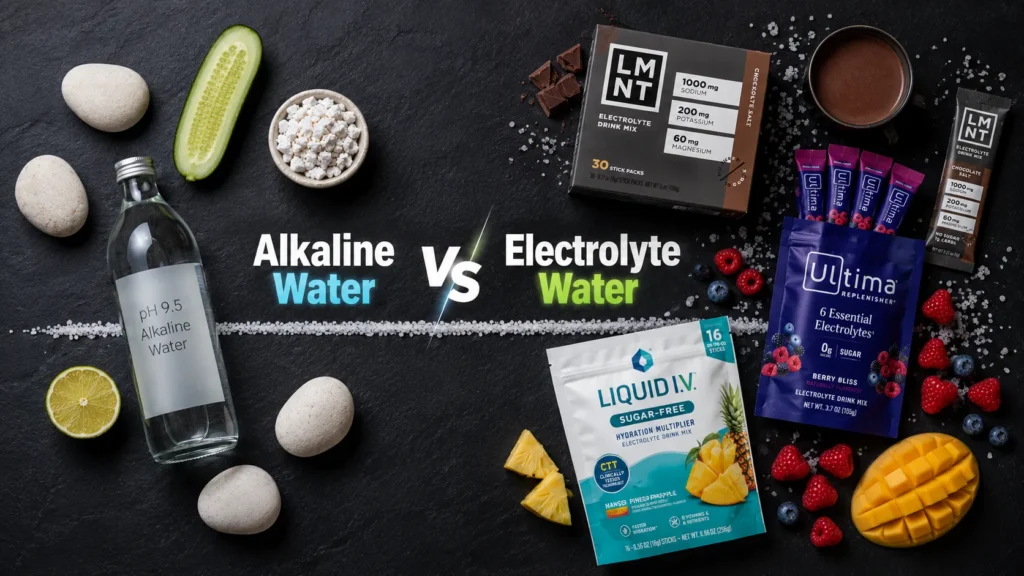
Alkaline vs electrolyte water describes two different product categories. Alkaline water is defined primarily by its higher pH, while electrolyte water contains minerals such as sodium, potassium, or magnesium in widely varying amounts. For most healthy people, neither automatically hydrates better than ordinary water, and the label matters more than words such as “alkaline,” “ionized,” or “enhanced.”
Table of Contents
Here is the quick answer before we go deep: alkaline water is defined by its pH level – it sits above 7 on the pH scale and is marketed primarily as a wellness and lifestyle choice. Electrolyte water is defined by its mineral content – sodium, potassium, magnesium, calcium – and is specifically designed to replace what your body loses through sweat, illness, or physical exertion.
What Is Alkaline Water?

Alkaline water is water with a pH above 7. Regular tap water typically sits at 6.5 to 7.5. Alkaline water products typically range from 7.5 to 9.5. The pH scale runs from 0 (extremely acidic, like battery acid) to 14 (extremely basic, like drain cleaner), with 7 being neutral.
Alkaline water gets its elevated pH in one of two ways. The natural route: water that passes over rocks and mineral deposits – springs, for example – picks up calcium, magnesium, and potassium as it flows. These minerals are naturally alkaline, which raises the pH of the water. The manufactured route: electrolysis, also called ionization. An electric current passes through water and separates acidic and alkaline components. Ionizers produce alkaline water from tap water using this process.
Most alkaline water brands in the US – Essentia, Core, Icelandic Glacial, and similar products – achieve their pH through either natural mineral sourcing or added minerals, not always through ionization. The specific pH claim on the label is what primarily distinguishes them from standard bottled water.
What Alkaline Water Actually Contains
Natural alkaline water from springs contains trace minerals – calcium, magnesium, potassium, bicarbonates – that raise the pH. These are real mineral content, though typically in small amounts not comparable to a dedicated electrolyte product. Manufactured alkaline water may add similar minerals, or may use additives like potassium bicarbonate to raise pH.
The key distinction: alkaline water is classified by its pH. The mineral content is secondary and often inconsistent between brands. It is not designed or dosed to replace specific minerals lost through sweat or illness.
What Is Electrolyte Water?

Electrolyte water is water that has been enhanced with minerals that carry an electrical charge – sodium, potassium, magnesium, and calcium. These minerals are called electrolytes because they conduct electrical signals in the body. They regulate fluid balance, enable muscle contractions, support nerve signaling, and drive the movement of water in and out of cells.
The difference between alkaline vs electrolyte at this fundamental level is clear: alkaline water is defined by pH, electrolyte water is defined by mineral content. A product can be both – some alkaline spring waters contain meaningful mineral levels – but most commercial alkaline waters are not designed as electrolyte replacements, and most electrolyte drinks are not designed to be alkaline.
Electrolyte water ranges from simple mineral additions (a few hundred milligrams of sodium) to full ORS formulations (matching WHO oral rehydration solution standards) to high-performance sports formulas with precise sodium-to-potassium ratios. The form matters as much as the concept.
The NIH Office of Dietary Supplements provides clear guidance on how potassium, sodium, and magnesium function in the body – essential reading if you want to understand what electrolyte water is actually doing when you drink it.
Alkaline Water vs Electrolyte Water: Side-by-Side
| Feature | Alkaline Water | Electrolyte Water |
| Primary Definition | pH above 7 (typically 7.5-9.5) | Mineral-fortified water with electrolytes |
| pH Level | 7.5-9.5 (intentionally elevated) | Varies; often 6-7 (some acidic due to citric acid) |
| Main Minerals | Trace calcium, magnesium, potassium | Sodium, potassium, magnesium, calcium (dosed) |
| Sugar | None | Varies: 0g (zero-sugar) to 11g+ (ORS/sports) |
| Best Use Case | General wellness, taste preference | Athletic recovery, illness, dehydration |
| Evidence Quality | Limited, mostly weak or mixed | Strong for electrolyte replenishment |
| Blood pH Impact | None (stomach neutralizes it) | None (electrolytes, not pH) |
| Muscle Cramp Help | Minimal direct evidence | Yes – potassium and magnesium have clear evidence |
| Post-workout | Not specifically effective | Yes – designed for this exact purpose |
| Price Range | $1-$3 per liter (retail) | $0.47-$1.56 per serving (powder) |
The Science Behind Each: What Evidence Actually Shows
Alkaline Water: What the Research Says
The alkaline water market has grown into a multi-billion dollar category on the back of some genuine studies – and a lot of extrapolation from those studies. Here is what the evidence actually supports.
- Acid reflux and GERD: A 2012 study published in the Annals of Otology, Rhinology, and Laryngology found that water with a pH of 8.8 permanently denatured pepsin, the main enzyme responsible for acid reflux symptoms. This is one of the most legitimate evidence points for alkaline water – specifically for people with laryngopharyngeal reflux, where stomach acid reaches the throat.
- Osteoporosis risk: Some studies suggest higher-pH water with bicarbonates may reduce urinary calcium excretion, which theoretically supports bone density. The evidence is modest and researchers have not confirmed this translates to meaningful real-world bone protection.
- Athletic performance: A small 2016 study suggested better blood viscosity after intense exercise in people drinking alkaline water. The sample size was small and the research has not been widely replicated.
The important counter-context: your body regulates blood pH between 7.35 and 7.45 with extraordinary precision. When you drink alkaline water, your stomach acid (pH 1.5-3.5) immediately begins neutralizing it. By the time alkaline water reaches your bloodstream, its pH effect on your body’s overall pH balance is negligible. Your kidneys and lungs maintain blood pH regardless of what you drink.
MYTH: Drinking alkaline water can significantly change your blood’s pH level.
FACT: Your body strictly regulates blood pH through the kidneys and lungs. Alkaline water may only help buffer acid in the stomach and esophagus – it cannot meaningfully shift blood pH. If blood pH changed significantly from drinking water, your organs would struggle to function.
Electrolyte Water: What the Research Shows
The evidence base for electrolyte replenishment is substantially stronger. The sodium-glucose cotransport mechanism (SGLT1) – the basis for oral rehydration solutions – has been studied since the 1960s and is confirmed by the WHO as the most effective approach for rehydration from fluid loss. A 2023 clinical trial found that ORS-based solutions retained 77% of ingested fluid compared to 58% for plain water after dehydration.
Potassium’s role in muscle function, sodium’s role in fluid retention, and magnesium’s role in muscle relaxation are all firmly established by decades of physiology research. The NIH confirms these functions clearly. Unlike alkaline water’s wellness claims, electrolyte function in the body is not a theory – it is core biology.
The FDA sodium and your diet guidance explains why sodium is especially critical for fluid balance – relevant context for understanding what electrolyte drinks are actually doing at a physiological level.
Alkaline Water vs Electrolyte Water: Head-to-Head
For Athletic Performance and Post-Workout Recovery
Edge: Electrolyte Water – Electrolyte water replaces sodium, potassium, and magnesium lost through sweat – the specific minerals needed for muscle function and fluid retention. Alkaline water has no specific mechanism for athletic recovery. This is not a close comparison for active use.
For Acid Reflux and GERD Symptoms
Edge: Alkaline Water (contextual) – The best evidence for alkaline water is specifically for acid reflux – particularly laryngopharyngeal reflux. The pH 8.8 pepsin-denaturation study is the most credible single piece of alkaline water research. For GI symptoms, alkaline water has an evidence advantage over standard electrolyte drinks.
For Illness Recovery and Dehydration
Edge: Electrolyte Water – ORS-calibrated electrolyte drinks (Pedialyte, DripDrop) are the medically recommended standard for illness-related dehydration. Alkaline water has no ORS mechanism and no clinical evidence in this context. The electrolyte advantage here is overwhelming.
For General Daily Hydration
Edge: Tie (context-dependent) – For healthy adults drinking adequate fluid, both alkaline and electrolyte water provide marginal additional benefit over plain water. Alkaline spring water provides pleasant taste and trace minerals. A low-sodium electrolyte supplement provides practical daily mineral support. Neither is dramatically superior for a well-hydrated sedentary adult.
Best of Both Worlds
Edge: Alkaline Water with Electrolytes (combined) – Products that combine higher pH with added electrolytes address both categories simultaneously. These are increasingly available from brands like Essentia (with trace electrolytes), core water, and specialized products. For most users, the electrolyte content matters more than the pH.
How to Make Alkaline Water at Home
How to make alkaline water at home is one of the most searched questions in this category. There are several legitimate methods.
- Baking soda (sodium bicarbonate): add 1/8 teaspoon per 8 oz of water. Sodium bicarbonate is naturally alkaline. This raises the pH noticeably. Note: adds about 630 mg of sodium per teaspoon, so use sparingly if sodium intake is a concern
- Lemon juice paradox: counterintuitively, lemon juice (acidic at pH 2-3) becomes alkaline after it metabolizes in the body. Adding lemon to water does not raise the pH of the water itself but has an alkalizing metabolic effect. This is a popular but frequently misunderstood recommendation
- pH drops: commercially available alkaline mineral drops add calcium, magnesium, and potassium to raise water pH. These are some of the cleanest how to make alkaline water approaches because they also add electrolytes
- Water ionizer machines: counter-top ionizers use electrolysis to separate alkaline and acidic water streams. Effective at reaching pH 8-10. Expensive ($200-$500+) and overkill for most users
- Natural mineral water: the simplest option: buy spring water from naturally alkaline sources. Brands like Evian (pH ~7.2), Fiji (pH ~7.7), and Icelandic Glacial (pH ~8.4) are naturally higher pH due to mineral content
For most people, the practicality of how to make alkaline water at home does not outweigh buying a quality electrolyte product. The exception: people with confirmed acid reflux benefits from alkaline water, for whom pH drops added to tap water are an affordable daily solution.
Alkaline Water with Electrolytes Benefits: When Both Matter
Alkaline water with electrolytes benefits represent the emerging category that bridges both products. Several brands now produce water that combines elevated pH with substantive mineral content – not just trace amounts.
Alkaline water with electrolytes benefits most clearly for: people who want both the taste and pH characteristics of alkaline water and the functional mineral replacement of electrolyte supplementation. Athletes who enjoy alkaline water but also sweat heavily and need genuine electrolyte replenishment. People with acid reflux who are also physically active and benefit from electrolyte support.
The honest caveat: in most of these combined products, the electrolyte content is what does the functional work. The alkaline pH adds taste preference and possible GI benefits, but the muscle support, fluid retention, and recovery benefits come from the sodium, potassium, and magnesium content – not the pH.
Our comparison of Ultima Replenisher vs LMNT covers two of the cleanest zero-sugar electrolyte options available – both provide the mineral function that alkaline water lacks, without any artificial dyes or sweeteners.
3 Best Electrolyte Products From ElectrolyteDaily.com for This Context
1. Ultima Replenisher – Best for Daily Wellness Hydration

Ultima Replenisher delivers six electrolytes (sodium 55 mg, potassium 250 mg, magnesium 100 mg, calcium 65 mg, phosphorus, chloride) plus Vitamin C and zinc per packet. Zero sugar, zero calories, stevia-sweetened, natural plant-based coloring. At $0.47-$0.63 per serving in canister format, it is the most affordable six-electrolyte option for daily wellness hydration.
For someone who has been drinking alkaline water daily for general wellness and wants to actually get functional minerals in that habit, Ultima is the direct upgrade. The six-electrolyte coverage at trace-to-moderate doses matches the “daily mineral support” goal better than pH-focused alkaline products.
Full breakdown in our Ultima vs LMNT comparison – including sodium levels, magnesium form, and which situations each product handles best.
2. LMNT – Best for Athletes Who Want Serious Electrolyte Replacement

LMNT delivers 1,000 mg sodium, 200 mg potassium, and 60 mg magnesium malate per packet. Zero sugar, zero artificial dyes, NSF Sport Certified. For people making the switch from alkaline water to a functional electrolyte product for athletic performance, LMNT’s high sodium specifically addresses the mineral most critical for sweat replacement.
Alkaline water has no mechanism for post-workout electrolyte replacement. LMNT is designed specifically for that scenario. If the reason you chose alkaline water was to support athletic recovery, LMNT is the functionally appropriate tool.
Our review of the 10 best LMNT flavors of 2026 covers which flavor profile works best for different daily routines and activity levels.
3. DripDrop ORS – Best for Illness and Clinical Rehydration

DripDrop ORS provides 330 mg sodium, 180 mg potassium, 40 mg magnesium citrate, plus zinc and Vitamin C with no artificial dyes. Physician-developed ORS formula using the sodium-glucose cotransport mechanism for faster absorption. For illness recovery specifically – where alkaline water has zero clinical evidence – DripDrop is the appropriate medical-grade alternative.
When the question is electrolyte water vs alkaline water for illness, DripDrop wins decisively. Stomach bugs, travel dehydration, heat exhaustion – these are scenarios requiring ORS-calibrated electrolyte replacement, not pH management.
Alkaline vs Electrolyte Water: Who Should Choose Which
- Choose alkaline water if: you have confirmed acid reflux or GERD symptoms and want a pH-based buffer. Taste preference matters to you and you prefer the smoother, mineral-rich taste of alkaline spring water. You are a generally healthy adult with no high-intensity sport or illness recovery needs
- Choose electrolyte water if: you exercise regularly or sweat heavily and need genuine mineral replacement. You are recovering from illness, experiencing significant fluid loss, or managing a low-carb diet that increases sodium excretion. You want evidence-backed functional hydration rather than lifestyle-positioned wellness water
- Choose alkaline water with electrolytes if: you want both benefits simultaneously – the pH characteristics you prefer and the mineral function you need. This category is growing and offers a practical middle ground for active users who also appreciate alkaline water
- Stick with plain filtered water if: you are well-hydrated, sedentary, not ill, and on a limited budget. Neither alkaline nor electrolyte water provides measurable benefits over plain water for this population at rest
Frequently Asked Questions
Is alkaline water the same as electrolyte water?
No. Alkaline water is defined by pH (above 7). Electrolyte water is defined by mineral content (sodium, potassium, magnesium). A product can be both, but they are different things. Most commercial alkaline water is not a meaningful electrolyte replacement.
What is the pH level of alkaline water vs. electrolyte water?
Alkaline water: typically 7.5-9.5. Electrolyte water pH varies widely – often 6-7, or slightly below 7 when citric acid is used as a flavoring. Electrolyte water is not defined by pH; some electrolyte drinks are actually slightly acidic.
Which is better for hydration, alkaline water or electrolyte water?
Electrolyte water is more effective for active hydration and mineral replacement. Alkaline water provides similar hydration to regular water for general daily use. For athletic recovery, illness, or significant fluid loss, electrolyte water wins clearly.
Can you drink alkaline water every day?
Yes, for most healthy adults. Drinking alkaline water daily is generally safe. Very high pH levels (above 9.5) consumed in large amounts may cause mild digestive discomfort or reduce stomach acid, which can impair digestion over time if excessive.
Does alkaline water contain electrolytes?
Naturally sourced alkaline spring water contains trace minerals including calcium, magnesium, and potassium – these are technically electrolytes. However, the amounts are typically far lower than dedicated electrolyte products dosed for functional mineral replacement.
Is electrolyte water better than alkaline water after a workout?
Yes, clearly. After a workout, your body needs to replace sodium, potassium, and magnesium lost through sweat. Electrolyte water is specifically designed for this. Alkaline water has no mechanism or evidence for post-exercise mineral replacement.
What are the health benefits of alkaline water?
Best-evidenced benefit: may help with acid reflux by deactivating pepsin at pH 8.8. Possible benefits include trace mineral contribution and improved taste palatability. Claims about cancer prevention, metabolism boost, or blood pH change are not supported by credible evidence.
Can drinking too much electrolyte water be harmful?
Yes, for specific populations. Excessive sodium from high-sodium products (like LMNT at 1,000 mg) can be problematic for those with hypertension or kidney disease. For healthy adults, over-supplementing potassium in very large amounts can cause cardiac issues. Follow recommended serving sizes.
How is alkaline water made?
Two primary methods: natural mineral sourcing (spring water passing over alkaline rocks picks up calcium, magnesium, and bicarbonates) or electrolysis/ionization (electrical current separates acidic and alkaline water streams). Many brands add minerals like potassium bicarbonate to raise pH.
Should you drink alkaline water or electrolyte water when sick?
Electrolyte water – specifically ORS-calibrated products like Pedialyte or DripDrop. Illness causes loss of sodium, potassium, and chloride through vomiting and diarrhea. Alkaline water has no clinical evidence for illness-related dehydration recovery.
Does alkaline water help with acid reflux?
There is some evidence yes. A 2012 study found water at pH 8.8 permanently inactivated pepsin, the enzyme responsible for acid reflux damage. This is the most credible health application for alkaline water. Standard antacids and dietary changes remain the primary treatment.
Which is better for you, alkaline or electrolyte water?
It depends on your needs. For athletic performance, illness recovery, or significant sweating: electrolyte water wins. For acid reflux symptoms, taste preference, or gentle daily mineral support: alkaline water has merit. For most people’s primary hydration need, electrolyte water is more functional.
Why do I feel weird after drinking alkaline water?
High-pH water temporarily reduces stomach acid, which can cause bloating, nausea, or digestive discomfort – particularly on an empty stomach. Very alkaline water (pH 9+ in large amounts) may interfere with digestion. These effects are typically mild and temporary.
Why do Japanese drink alkaline water?
Japan has regulated alkaline ionized water as a medical device since 1966 for conditions like gastrointestinal symptoms. Japanese alkaline water culture stems from this institutional recognition, which predates the Western wellness trend by decades and is grounded in specific GI applications rather than general wellness marketing.
Who should not drink electrolyte water?
People with chronic kidney disease (impaired electrolyte excretion), severe hypertension managed with strict sodium restriction, or heart failure requiring fluid management should consult a physician before using high-sodium or high-potassium electrolyte products regularly.
This article contains affiliate links. If you purchase through our links, we may earn a commission at no extra cost to you. We only recommend products we genuinely believe in. Read our Affiliate Disclaimer for full details.