
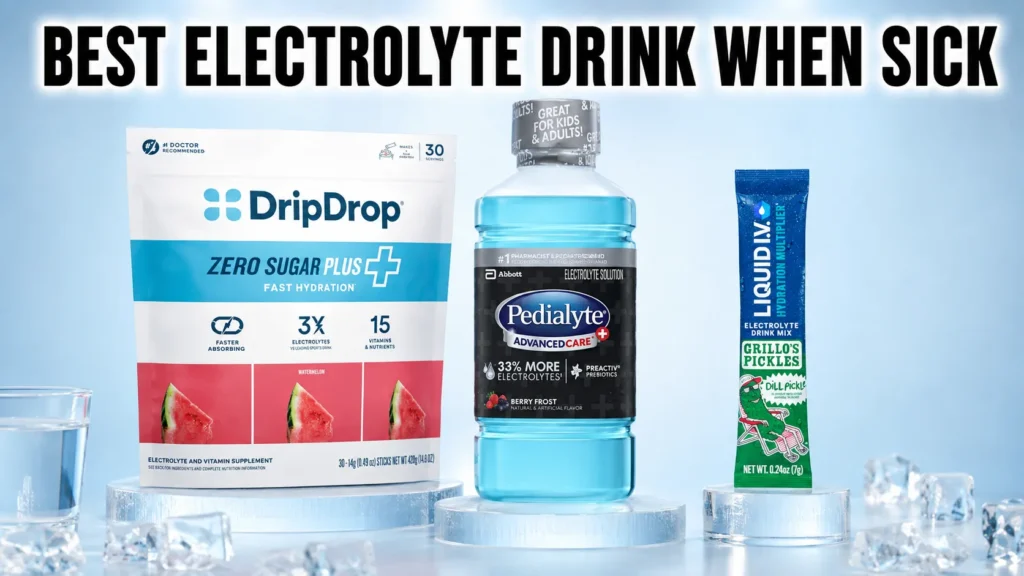
The best electrolyte drink when sick depends on the symptoms, age of the person, ability to keep fluids down, and severity of fluid loss. An oral rehydration solution may be more appropriate than a standard sports drink after vomiting or diarrhea because its sodium and carbohydrate balance serves a different purpose. Persistent dehydration or concerning symptoms require medical guidance.
Table of Contents
Being sick is bad enough without having to scroll through 47 hydration articles to figure out what to drink. So here is the short version first: when you are sick, your body loses sodium, potassium, and chloride at a rate that plain water cannot replace. The best electrolyte drink when sick is the one that addresses that specific mineral loss without flooding your already-irritated gut with excess sugar or artificial dyes.
The best drink for electrolytes when sick is not always the most famous brand in the pharmacy aisle. Standard Gatorade, for example, contains up to 34 grams of sugar per 20 oz bottle – well above the threshold that can worsen osmotic diarrhea. The right product uses just enough glucose to activate fluid absorption through the small intestine, not enough to create additional GI problems.
Why Electrolytes Matter More Than Plain Water When You Are Sick
Your body loses fluids during illness through more pathways than most people realize. A fever raises metabolic rate and increases water loss through breathing and sweat. Each degree above 100.4°F (38°C) increases fluid demand by approximately 110-500 ml per day. Vomiting expels gastric acid rich in sodium, chloride, and hydrogen. Diarrhea depletes potassium disproportionately through a compensatory kidney response.
The problem with drinking only plain water during illness is a condition called dilutional hyponatremia. When sodium is already depleted from illness losses and you drink large volumes of plain water, blood sodium falls further. The brain then triggers water movement into cells to equalize pressure – causing cellular swelling that worsens nausea, headache, and confusion. This is not a rare clinical extreme. It is the direct physiological explanation for why people say they drank water all day and still felt terrible.
A 2023 clinical trial confirmed that ORS-based solutions retained 77% of ingested fluid compared to 58% for plain water after dehydration. The World Health Organization’s ORS formula specifically includes sodium and glucose to activate the SGLT1 intestinal cotransporter – a biological pump that pulls both fluid and minerals into the bloodstream far faster than passive osmosis.
For a detailed breakdown of how ORS science works and how different products compare on that measure, our DripDrop vs Pedialyte comparison explains the mechanism behind the sodium-glucose cotransport system in depth..
What to Look for in the Best Electrolyte Drink for Dehydration When Sick
1. Sodium: The Non-Negotiable
Sodium is the primary electrolyte lost during illness-related dehydration. An appropriate sick-day electrolyte drink should deliver 300-560 mg of sodium per 8-12 oz serving. This range is calibrated to replace losses without exceeding what an already-stressed kidney needs to process.
Standard Gatorade delivers 160 mg per 12 oz – too low for meaningful illness replacement. LMNT delivers 1,000 mg – effective for athletic sweat replacement but potentially more sodium than needed for a person with fever and low activity. The sweet spot for illness sits in the ORS range: 330-560 mg per serving.
The FDA’s sodium and your diet guidance explains why sodium is essential for fluid balance – exactly the function it serves in ORS-calibrated illness recovery drinks.
2. Sugar: Enough to Activate Absorption, Not Enough to Worsen Diarrhea
The optimal illness electrolyte drink uses 6-9 grams of glucose per 12 oz serving. That small amount activates the SGLT1 transporter without creating the osmotic pressure that pulls water into the bowel and worsens diarrhea. Products with 30+ grams of sugar cross that threshold clearly.
Pedialyte’s own website states their formula contains “no more than one-half the sugar of the leading sports drink” for exactly this reason. If you have active diarrhea, a zero-sugar electrolyte product or one with less than 10 grams of glucose is the safer choice.
3. Ingredient Gentleness
When your stomach lining is irritated, the simpler the ingredient list the better. Strong herbal additions (ginger, turmeric, cayenne), high-dose B vitamins, and artificial dyes are all potential nausea triggers for an already-sensitive GI tract. Stick with products that use natural coloring or no coloring and minimal flavoring additives during the acute illness phase.
4. Format and Palatability
The best electrolyte drink for dehydration is worthless if you cannot keep it down. For severe nausea, unflavored or very lightly flavored products at room temperature are typically easiest to tolerate. Small sips of 4-6 oz every 10-15 minutes beats attempting to drink a full serving at once and vomiting.
Quick Comparison: Best Electrolyte Drink When Sick at a Glance
| Category | Details |
| Pedialyte AdvancedCare Plus | Best for GI illness, vomiting, diarrhea | Clinical ORS standard | Probiotics | 440mg chloride |
| DripDrop ORS | Best for adults wanting no artificial dyes | Physician-developed ORS | NSF certified | 40mg magnesium |
| Liquid IV Sugar-Free | Best for flu and fever in adults | Highest sodium and potassium | B-vitamin stack | CTT fast absorption |
| Gatorlyte | Best five-electrolyte coverage RTD bottle | 490mg sodium | 1,040mg chloride | Available convenience stores |
| Coconut water + sea salt | Best natural option with no additives | All-natural | No artificial anything | Budget-friendly |
| Ultima Replenisher | Best for mild cold daily maintenance | 6 electrolytes | Zero sugar | $0.47/serving canister |
Top Electrolyte Drinks When Sick

#1 – Pedialyte AdvancedCare Plus Best Overall for Vomiting and Diarrhea
| Category | Details |
|---|---|
| Sodium | 370 mg |
| Potassium | 280 mg |
| Chloride | 440 mg |
| Zinc | Yes |
| PreActiv Prebiotics | Yes |
| Sugar | 9 g |
| Artificial Dyes | No artificial dyes (AdvancedCare line) |
| Format | RTD liter or powder packs |
| Available | Every pharmacy, Walmart, CVS, Target – 24 hours |
Pedialyte is the physician-recommended standard for illness-related dehydration for a reason that goes beyond brand recognition: the formula is ORS-calibrated with sodium-glucose cotransport activation, a 440 mg chloride level that directly addresses the chloride lost in vomiting, and PreActiv Prebiotics for gut microbiome recovery – features that most general wellness electrolytes simply do not include.
For children specifically, this remains the clinical default. For adults, AdvancedCare Plus is the appropriate product – it has 33% more electrolytes than Classic Pedialyte and the prebiotic addition specifically supports gut lining recovery after viral gastroenteritis. It is the best electrolyte drink when sick for anyone dealing with GI illness.
Pedialyte AdvancedCare Plus Pro
✓ 60 years of clinical track record.
✓ ORS-calibrated formula.
✓ PreActiv Prebiotics for gut recovery.
✓ Zinc included.
✓ Widely available at 3 AM at any pharmacy.
Pedialyte AdvancedCare Plus Cons
✗ Unflavored Classic has a clinical taste many adults dislike.
✗ Powder packs more expensive per serving than DripDrop.
✗ Classic formula contains some FD&C dyes in flavored versions.
#2 – DripDrop ORS Best for Adults With No Artificial Dyes
| Category | Details |
|---|---|
| Sodium | 330 mg |
| Potassium | 180 mg |
| Magnesium | 40 mg (citrate) |
| Zinc | Yes |
| Vitamin C | Yes |
| Sugar | 7 g |
| Artificial Dyes | No FD&C dyes – natural coloring only |
| NSF Certified | Yes |
| Format | Powder packets |
| Available | Target, Walmart, Amazon, some Costco |
DripDrop ORS was created by a physician specifically for situations where IV fluid access is unavailable – a context that maps directly to home illness management. The no-artificial-dye formulation matters more during illness than in everyday use: an irritated gut lining is more reactive to synthetic additives, and FD&C dyes are among the inputs worth eliminating when the GI tract is already inflamed.
This is the best electrolyte drink when sick for adults who want clinical-grade ORS performance without artificial ingredients. The packet format – one packet into 8-12 oz of water – is flexible enough to manage during nausea where drinking a full ready-to-drink bottle feels impossible.
Our full DripDrop vs Pedialyte head-to-head covers which formula wins on every specific metric – chloride, magnesium, price, dyes, and more.
DripDrop ORS Pro
✓ Physician-developed ORS formula.
✓ No artificial dyes (gentler on irritated gut).
✓ NSF Content and Sport Certified.
✓ Magnesium citrate included.
✓ Portable packet format.
✓ Used by US Military and Mayo Clinic.
DripDrop ORS Cons
✗ Lower potassium than Pedialyte or Liquid IV.
✗ Lower sodium than Liquid IV.
✗ Slightly harder to find than Pedialyte at local pharmacies for emergency purchase.
#3 – Liquid IV Sugar-Free Best for Adults With Flu or Cold
| Category | Details |
|---|---|
| Sodium | 500–560 mg |
| Potassium | 370 mg |
| B Vitamins | B3, B5, B6, B12 |
| Vitamin C | 70% DV |
| Sugar | 0 g (allulose) |
| CTT Absorption Mechanism | Yes |
| Caffeine | Caffeine-free |
| Available | Costco, Target, Walmart, CVS, Amazon |
Liquid IV Sugar-Free is the best electrolyte drink when sick for adults dealing with flu or a bad cold rather than severe GI illness. The higher sodium (500-560 mg) makes it more appropriate for fever-related sweat losses than Pedialyte’s 370 mg. The B-vitamin stack – B12 at 240% DV, B6 at 110% DV – directly addresses the B-vitamin depletion that fever and reduced food intake accelerates over 2-3 days of illness.
For the best electrolyte drink when sick for adults dealing with respiratory flu where GI symptoms are not the primary issue, Liquid IV Sugar-Free is the most complete formula on this list.
For context on how Liquid IV compares to Gatorlyte’s five-electrolyte formula for different illness and athletic scenarios, see our Gatorlyte vs Liquid IV comparison.
Liquid IV Pro
✓ Highest sodium on this list – strong for fever and flu.
✓ Highest potassium.
✓ B-vitamin stack addresses flu-related nutrient depletion.
✓ Allulose sweetener does not worsen osmotic diarrhea.
✓ CTT drives fast fluid absorption.
Liquid IV Cons
✗ B vitamins harder to tolerate on severely nauseous stomach.
✗ Higher price than Pedialyte.
✗ Sugar-Free version has allulose which may cause mild GI discomfort in large amounts for sensitive users.
What to Drink When Sick – By Illness Type
Stomach Flu or Food Poisoning
Pedialyte AdvancedCare Plus is the first choice. The chloride content (440 mg) directly replaces what vomiting removes. The prebiotics support gut recovery. Sip 4-6 oz every 15 minutes rather than drinking a full serving at once. Avoid all high-sugar drinks.
Flu or High Fever
Liquid IV Sugar-Free or DripDrop ORS. Higher sodium addresses fever-related sweat losses. B vitamins in Liquid IV support metabolic function during the energy-depleting inflammatory response. Keep at room temperature – cold drinks can trigger nausea during fever.
Common Cold With Congestion
A moderate-sodium electrolyte drink once or twice daily is sufficient for a mild cold. Ultima Replenisher’s gentle formula (55 mg sodium) covers daily mineral maintenance without pushing into ORS territory. If mucus production is heavy, increase fluid intake and consider adding one standard serving of DripDrop or Pedialyte.
Best Electrolyte Drink for Elderly Patients
Older adults dehydrate faster due to lower total body water, reduced thirst sensation, and often more medications affecting electrolyte handling. The best electrolyte drink for elderly individuals during illness is Pedialyte Unflavored or DripDrop Zero Sugar – both avoid the high potassium in Liquid IV that can be a concern for elderly patients with compromised kidney function.
Elderly patients should drink smaller volumes more frequently – 4-6 oz every 15-20 minutes rather than full servings – and family members or caregivers should watch for signs of severe dehydration (confusion, very dark urine, dizziness on standing) that require medical attention rather than home fluid management.
The NIH’s potassium health information explains why potassium tolerance varies by kidney function and age – relevant context for choosing appropriate electrolyte drinks for older adults during illness.
Drinks to Avoid When Sick

- Standard Gatorade and Powerade: 34+ grams of sugar per 20 oz – worsens osmotic diarrhea by increasing bowel water movement
- Fruit juices: high fructose content worsens loose stools and does not provide meaningful electrolyte replacement
- Regular soda and diet soda: carbonation worsens nausea, sugar spikes insulin, artificial sweeteners may cause additional gut irritation
- Coffee and caffeinated tea: mild diuretic effect, can worsen fluid loss and irritate an already-inflamed stomach lining
- Alcohol: suppresses ADH hormone, forcing kidneys to excrete water, accelerating dehydration – never appropriate during illness
- Dairy: temporary reduction in lactase activity during viral illness makes lactose harder to digest, worsening GI symptoms
Plain water is not on the avoid list – but it is not sufficient on its own for significant illness fluid loss. Use water as supplementary hydration between electrolyte drink servings, not as the primary replacement strategy when you are losing significant fluid.
Practical Tips for Using Electrolyte Drinks During Illness
- Start early: Do not wait until dehydration is severe. Begin taking an electrolyte drink at the first sign of symptoms – a tickle in the throat, sudden fatigue, or the first episode of vomiting. Early intervention consistently produces better outcomes than reactive correction.
- Dose by episode, not by clock: For stomach flu specifically, aim for 8-12 oz of electrolyte solution after each vomiting or diarrhea episode. For fever, add an extra 8 oz per degree above 100.4F. Total daily intake may reach 2-3 liters during severe illness.
- Freeze into ice pops for high fever: If swallowing is difficult or nausea is severe, freeze an electrolyte drink into ice pops. They deliver fluid and minerals slowly and provide a cooling effect during high fever. Pedialyte and DripDrop both work well frozen.
- Room temperature is often better: Very cold drinks can trigger cramping in an already-irritated gut. Room temperature or slightly chilled is better tolerated for most adults during active illness. Children with fever may actually prefer cold or frozen formats for the cooling sensation.
- Seek medical care when needed: Electrolyte drinks address mild to moderate dehydration. If you cannot keep any fluid down for more than 24 hours (12 hours for children), have blood in vomit or stool, are confused, or have very dark or absent urination – go to urgent care or an emergency room. IV fluid replacement is more appropriate at that severity level.
Frequently Asked Questions
Is Gatorade or Pedialyte better for when you’re sick?
Pedialyte is clinically superior for most illness dehydration. Standard Gatorade has too much sugar, which worsens osmotic diarrhea. Gatorlyte is the exception – it is Gatorade’s ORS-calibrated formula with less sugar and more electrolytes, making it a legitimate alternative to Pedialyte for adults.
Is it okay to drink electrolytes when sick?
Yes – electrolytes are specifically recommended when sick. Illness causes mineral losses that plain water cannot replace. ORS-formulated electrolyte drinks are the medical standard for mild to moderate illness dehydration in both adults and children. Avoid high-sugar versions.
What drink gives the most electrolytes?
By sodium: LMNT (1,000 mg) and Gatorlyte (490 mg) lead. By overall electrolyte breadth: Gatorlyte covers five electrolytes including 1,040 mg chloride. By potassium: Liquid IV (370 mg) and Gatorlyte (350 mg) are strongest. For illness specifically, Pedialyte AdvancedCare Plus balances all key illness-relevant minerals best.
Will electrolytes get rid of a cold?
No – electrolytes do not eliminate the virus causing a cold. They prevent dehydration that worsens cold symptoms like headache, fatigue, and congestion. Proper hydration supports immune function, but electrolytes do not have direct antiviral properties. Rest and fluid replacement are the main interventions.
Is Liquid IV healthier than Pedialyte?
They serve different purposes. Liquid IV Sugar-Free delivers more sodium and potassium than Pedialyte Classic, plus B vitamins. Pedialyte has more chloride and adds prebiotics in AdvancedCare Plus, making it more appropriate for GI illness. Neither is universally healthier – the right product depends on your illness type.
Does Gatorade actually hydrate better than water when sick?
Standard Gatorade does not hydrate better than water for sick people – its high sugar can worsen diarrhea. Gatorlyte (Gatorade’s clinical formula) does hydrate better than water during illness because its ORS-calibrated sodium and glucose activate faster intestinal fluid absorption than passive osmosis.
What is the downside to Liquid IV?
The original Liquid IV contains 11 grams of sugar that can worsen osmotic diarrhea during GI illness. The B-vitamin stack can be hard to tolerate on a nauseous empty stomach. It also lacks magnesium and chloride in the original formula. Use the Sugar-Free version when sick with stomach illness.
What hydrates you faster, water or Pedialyte?
Pedialyte hydrates faster than plain water during illness. The sodium-glucose cotransport (SGLT1) mechanism in Pedialyte’s formula actively pulls fluid into the bloodstream. A 2023 clinical trial confirmed ORS solutions retained 77% of ingested fluid versus 58% for plain water after dehydration.
Is 1 Pedialyte a day too much?
For most adults with mild illness, one liter of Pedialyte daily is appropriate and within safe ranges. For more severe illness with significant fluid loss, two liters may be appropriate. Children’s dosing should follow the packaging or a pediatrician’s guidance based on the child’s weight and severity.
How many glasses of water is Liquid IV equal to?
Liquid IV markets its claim as equivalent to 2-3 times the hydration of plain water. This is based on the SGLT1 absorption rate improvement. In practical terms, one 16 oz serving of Liquid IV with the CTT mechanism may hydrate comparably to 2-3 glasses of plain water during a dehydration context.
What are the lawsuits against Liquid IV?
As of the date of this article, there are no major settled class-action lawsuits against Liquid IV specifically. Some consumer complaints about subscription billing practices have been filed with the BBB. For the most current legal status, check public court records directly.
Do doctors recommend Liquid IV?
Some physicians recommend Liquid IV Sugar-Free for adults with mild to moderate illness dehydration. Most pediatricians recommend Pedialyte over Liquid IV for children. For severe dehydration or GI illness, ORS products like Pedialyte or DripDrop ORS are more commonly recommended than Liquid IV’s original formula due to its sugar content.
This article contains affiliate links. If you purchase through our links, we may earn a commission at no extra cost to you. We only recommend products we genuinely believe in. Read our Affiliate Disclaimer for full details.