
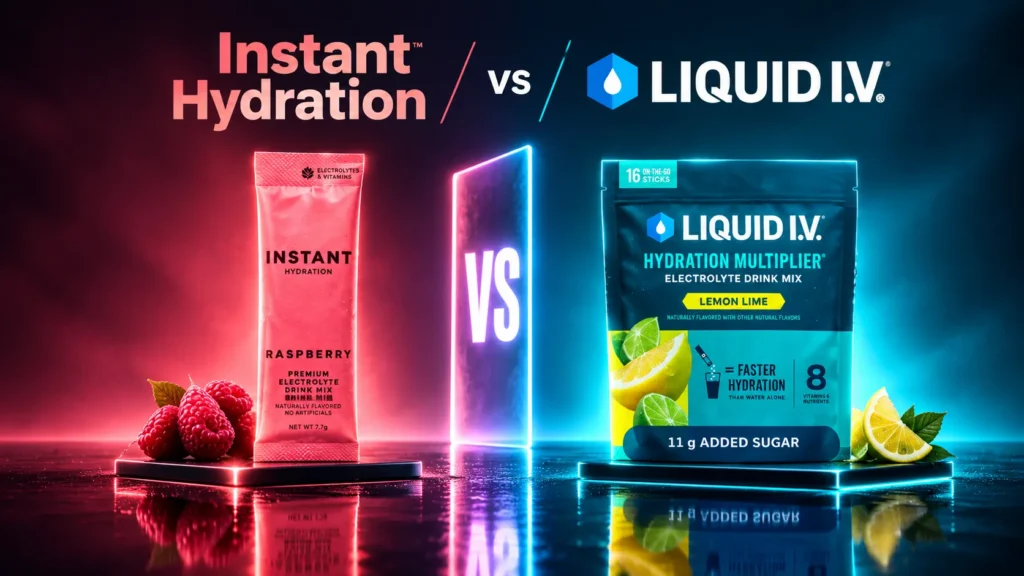
Instant Hydration is the stronger choice if you want zero sugar, fewer calories, and a broader listed mineral profile. Liquid I.V. Hydration Multiplier is the better fit if you want carbohydrate-containing hydration, broad retail availability, and a slightly lower one-time cost per stick. Both standard servings provide 500 mg sodium, so the decisive differences are sugar, calories, potassium, magnesium, calcium, taste preferences, and use case—not sodium alone.
Table of Contents
This comparison uses Instant Hydration Premium Electrolyte Drink Mix in Raspberry and the standard Liquid I.V. Hydration Multiplier in Lemon Lime. It does not substitute facts from Liquid I.V. Sugar-Free or other product lines. Prices and labels can change, so verify the package you buy.
Instant Hydration vs Liquid I.V. at a Glance
| Comparison point | Instant Hydration | Liquid I.V. Lemon Lime |
| Serving | 1 stick | 1 stick |
| Water | 16–24 fl oz | 16 fl oz |
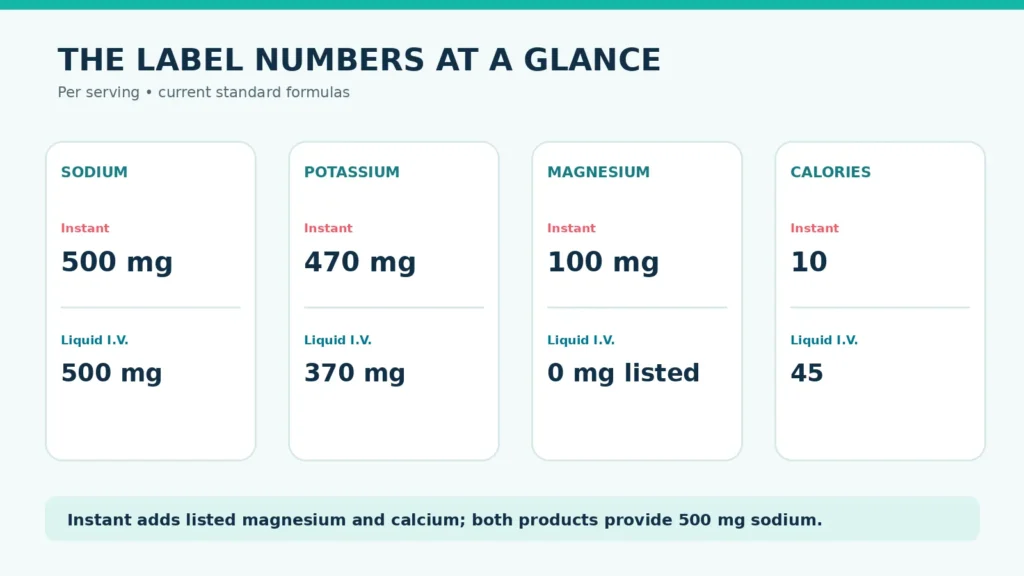
| Sodium | 500 mg | 500 mg |
| Potassium | 470 mg | 370 mg |
| Magnesium | 100 mg | None listed |
| Calcium | 170 mg | None listed |
| Calories | 10 | 45 |
| Total carbohydrate | 2 g | 11 g |
| Added sugar | 0 g | 11 g |
| Sweeteners | Stevia + monk fruit | Sugar + dextrose |
| One-time price* | $49.50 / 30; $1.65 each | $24.99 / 16; $1.56 each |
| Subscription shown* | $27.50 promotional first order; verify renewal | $17.49 / 16; $1.09 each |
*Prices observed on official US product pages on September 9, 2026. Promotions, pack sizes, shipping, taxes, and subscription renewal terms can change.
What Is Instant Hydration?
Instant Hydration Premium Electrolyte Drink Mix is a zero-sugar powder sold in single-serve sticks. Its current page lists 500 mg sodium, 470 mg potassium, 100 mg magnesium, 170 mg calcium, 2 g carbohydrate, and 10 calories. The brand reports 1,240 mg total electrolytes per stick and recommends mixing it with 16 to 24 ounces of water.
Its mineral ingredients include French gray sea salt, potassium chloride, magnesium bisglycinate chelate, and calcium from mineralized algae. Organic stevia and organic monk fruit supply sweetness. This is a relatively broad mineral formula: all four commonly discussed electrolytes—sodium, potassium, magnesium, and calcium—appear with stated amounts.
If this mineral-forward profile interests you, our Instant Hydration vs Re-Lyte comparison provides another useful look at higher-mineral electrolyte powders.
What Is Liquid I.V. Hydration Multiplier?
Liquid I.V. Hydration Multiplier Lemon Lime is the brand’s standard carbohydrate-containing electrolyte powder. One stick mixed with 16 ounces of water lists 500 mg sodium, 370 mg potassium, 11 g carbohydrate, 11 g added sugar, and 45 calories. It also includes vitamin C and several B vitamins.
The standard formula uses cane sugar and dextrose as carbohydrate sources. That distinguishes it from both Instant Hydration and Liquid I.V.’s separately marketed sugar-free range. Sugar is not automatically a defect in a sports drink: carbohydrate can contribute fuel during longer activity, but it adds calories that may be unnecessary for casual daily sipping.
For another comparison involving the same Liquid I.V. formula, see Liquid I.V. vs Waterboy.
Electrolytes: Same Sodium, Different Mineral Breadth
Sodium: a 500 mg tie
Each product provides 500 mg sodium per stick, about 22% of the FDA Daily Value of 2,300 mg. That makes both high in sodium per serving under the FDA’s general label-reading rule that 20% Daily Value or more is high. In a sweat-replacement context, 500 mg can be purposeful; during an inactive day with a sodium-rich diet, it may be more than a person needs from a beverage.
The FDA sodium guide recommends using the Nutrition Facts label and considering the entire day’s intake. People with medically directed sodium limits should follow individualized advice.
Potassium: Instant Hydration leads by 100 mg
Instant Hydration lists 470 mg potassium, versus 370 mg in Liquid I.V. The 100 mg difference is meaningful for a label comparison but does not establish better hydration by itself. Potassium needs also come from food, and some kidney conditions or medicines can make supplemental potassium inappropriate.
Readers managing potassium should consult our low-potassium electrolyte drinks guide and confirm every current label rather than relying on the word “hydration.”
Magnesium and calcium: listed only by Instant Hydration
Instant Hydration states 100 mg magnesium and 170 mg calcium. The standard Liquid I.V. Lemon Lime label does not list either mineral. This gives Instant Hydration the broader disclosed electrolyte profile, although broader is not automatically necessary for every use. Normal meals may already supply these minerals, and a drink mix should not be treated as a substitute for a balanced diet.
Sugar, Calories, and Sweeteners
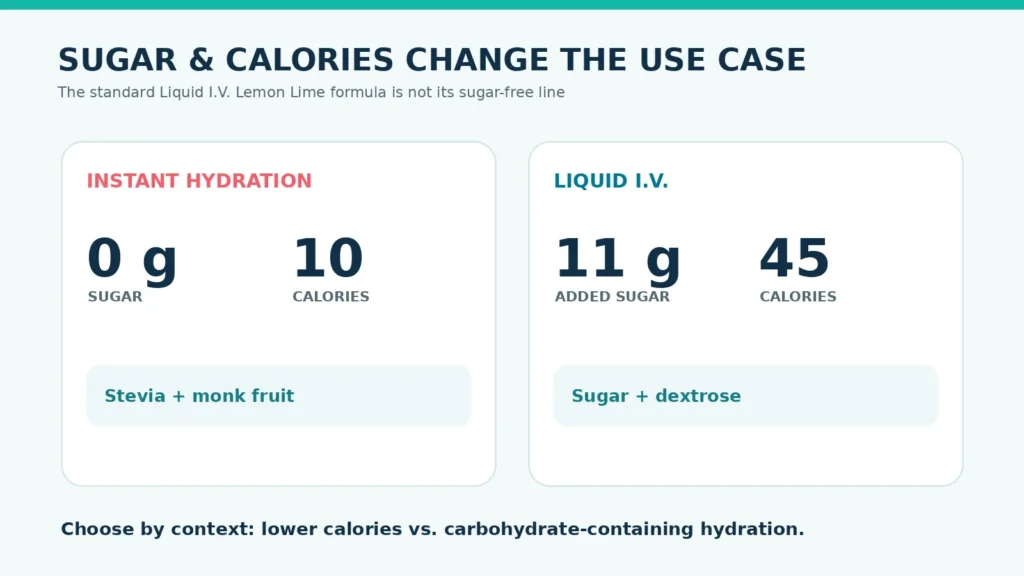
This is the largest practical difference. Instant Hydration has 0 g sugar and 10 calories. Liquid I.V. Lemon Lime has 11 g added sugar and 45 calories. One Liquid I.V. stick therefore contributes 22% of the 50 g added-sugar Daily Value shown on US labels. That may matter to readers tracking added sugar or using electrolyte drinks repeatedly through the day.
The FDA added-sugars guidance explains how to interpret added sugar on the Nutrition Facts label. It does not say every gram of sugar is harmful; the relevant question is whether the carbohydrate serves a purpose in your routine and fits your total intake.
The taste systems also differ. Instant Hydration uses stevia and monk fruit, which keeps sugar at zero but can leave an aftertaste for people sensitive to high-intensity sweeteners. Standard Liquid I.V. uses sugar and dextrose, creating a more conventional sweet profile. Taste remains personal, and this editorial comparison does not claim a hands-on flavor test.
Exercise, Heat, and Everyday Hydration
For short, low-intensity exercise, water and ordinary meals are often adequate. Electrolyte products become more relevant when sessions are long, conditions are hot, sweat losses are substantial, or a person needs a portable measured drink. Both products bring the same 500 mg sodium, so neither wins the primary sweat-electrolyte comparison on sodium.
Instant Hydration better suits someone who wants minerals without sugar or wants a drink stretched across 16 to 24 ounces. Liquid I.V. may suit someone who wants some carbohydrate with hydration during sustained activity. However, 11 g carbohydrate is modest compared with the fuel many endurance athletes consume per hour, so it should not be assumed to cover an entire fueling plan.
The American College of Sports Medicine hydration overview emphasizes that fluid and electrolyte needs vary with sweat rate, duration, environment, and the individual. Neither powder has been shown in a reliable head-to-head clinical trial to outperform the other.
Ingredients and Dietary Preferences
Instant Hydration is the obvious pick when avoiding added sugar is non-negotiable. It also uses magnesium bisglycinate and calcium from mineralized algae, ingredients absent from the standard Liquid I.V. label. Liquid I.V. offers added vitamins and carbohydrate but no listed magnesium or calcium. Neither distinction proves superior absorption or recovery in the finished product.
Check the exact flavor label for allergens and dietary claims. Formulas can differ across product families, regions, and redesigns. A comparison of one Raspberry stick and one Lemon Lime stick should not be generalized to every flavor or every Liquid I.V. line.
Price, Pack Size, and Value
At the observed one-time prices, Liquid I.V. costs about $1.56 per stick and Instant Hydration about $1.65—a nine-cent advantage for Liquid I.V. Instant Hydration’s 30-count box requires the larger upfront purchase, while Liquid I.V.’s listed 16-count pouch costs less at checkout.
Subscription displays require care. Liquid I.V. showed $17.49 for 16 sticks, or about $1.09 each. Instant Hydration showed a $27.50 introductory subscription price, about $0.92 per stick, but buyers should verify the renewal price and cancellation terms before treating that promotion as the long-term cost. Value depends on whether you care more about mineral breadth, sugar content, vitamins, retail access, or the lowest stable price.
Which Product Is Better for You?
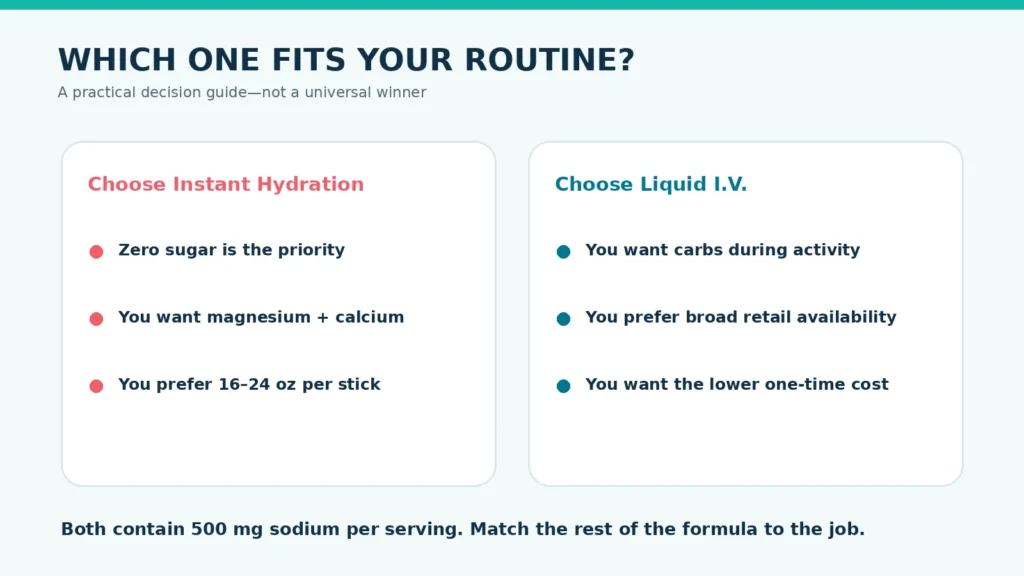
Choose Instant Hydration if:
- You want 0 g sugar and only 10 calories.
- You specifically want listed magnesium and calcium in addition to sodium and potassium.
- You prefer stevia and monk fruit over a sugar-and-dextrose formula.
- You want one stick designed for as much as 24 ounces of water.
Choose Liquid I.V. if:
- You want a carbohydrate-containing electrolyte drink for an active context.
- You prefer sugar to stevia or monk fruit.
- You prioritize broad retail availability and a smaller 16-stick purchase.
- You want the slightly lower observed one-time cost per serving.
For weight management, Instant Hydration has the simpler advantage because it has 35 fewer calories per serving, but neither product causes fat loss. Replacing a higher-calorie beverage may reduce intake; changes on the scale after sweating or drinking mostly reflect fluid, not immediate body-fat change.
Safety and Limitations
This article compares official labels, preparation directions, and listed prices. It is not a laboratory test or a personal taste review. Manufacturer phrases such as “faster hydration” or claims about energy, recovery, and focus should not be treated as proof that one finished product is clinically superior to the other.
People with kidney, heart, or blood-pressure conditions, or who take medicines affecting sodium, potassium, or fluid balance, should ask a qualified clinician whether either product fits their prescribed limits. Both have substantial sodium, and both contain hundreds of milligrams of potassium.
Final Verdict: Instant Hydration vs Liquid I.V.
Instant Hydration wins on sugar, calories, potassium, and disclosed mineral breadth. It is the stronger all-around label for readers seeking a zero-sugar electrolyte drink with magnesium and calcium. Liquid I.V. wins for consumers who intentionally want carbohydrate, prefer a sugar-sweetened taste, value mainstream availability, or want the slightly lower one-time price.
Because both products contain 500 mg sodium, the choice should not be framed as “high sodium versus low sodium.” The honest decision is mineral-rich and sugar-free versus carbohydrate-containing and vitamin-fortified. Choose the formula that matches the context in which you will actually drink it.
Frequently Asked Questions
Does Instant Hydration have more electrolytes than Liquid I.V.?
It has a broader listed profile: 500 mg sodium, 470 mg potassium, 100 mg magnesium, and 170 mg calcium. Liquid I.V. Lemon Lime lists 500 mg sodium and 370 mg potassium but no magnesium or calcium.
Which has less sugar?
Instant Hydration has 0 g sugar. Standard Liquid I.V. Lemon Lime has 11 g added sugar. Liquid I.V. also sells separate sugar-free products, but those are not the formula compared here.
Which has more sodium?
Neither. Both standard servings contain 500 mg sodium.
Is Instant Hydration cheaper than Liquid I.V.?
Not at the observed one-time prices: Instant Hydration was about $1.65 per stick and Liquid I.V. about $1.56. Promotional subscriptions can temporarily reverse that result.
Can either replace water every day?
Most people still obtain hydration from water and food. An electrolyte powder can be useful in specific circumstances, but daily need depends on activity, climate, diet, health, and medications.
This article contains affiliate links. If you purchase through our links, we may earn a commission at no extra cost to you. We only recommend products we genuinely believe in. Read our Affiliate Disclaimer for full details.