
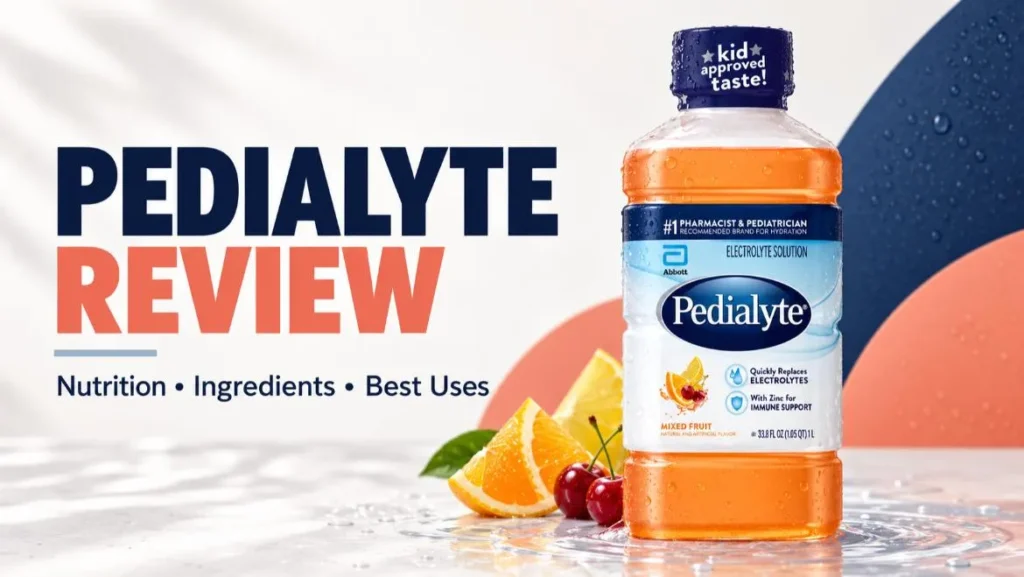
Pedialyte is familiar from pharmacy aisles, but is it a smart hydration purchase for adults as well as children? This Pedialyte Review examines the ready-to-drink Pedialyte Classic Mixed Fruit Electrolyte Solution, not Pedialyte Sport, AdvancedCare Plus, electrolyte water, powders, or freezer pops. That distinction matters because the formulas do not share identical sodium, sugar, calories, or ingredients.
Table of Contents
Quick verdict: Pedialyte Classic is a practical, ready-made oral rehydration drink with meaningful sodium and potassium plus a modest amount of glucose. Its main strengths are convenience, a clearly defined formula, and suitability for adults and children when used as directed. Its tradeoffs are a sweet-and-salty flavor, added sugar and nonnutritive sweeteners, a bulky bottle, and generally higher cost than water or a homemade everyday drink.
Pedialyte Review: What Exactly Are We Reviewing?
This Pedialyte Review focuses on the 1-liter Mixed Fruit bottle in the Classic range. The official Pedialyte Classic product page describes it as an electrolyte solution for children and adults and lists the bottle at 33.8 fluid ounces. It is intended for mild to moderate dehydration and carries directions to use it under medical supervision.
That wording is important. Pedialyte is not simply flavored water, yet it is also not a universal answer for every headache, workout, illness, or episode of fatigue. Serious dehydration, persistent vomiting or diarrhea, inability to keep fluids down, confusion, fainting, very low urine output, blood in stool, or symptoms in a vulnerable child or older adult warrant prompt medical guidance.
Pedialyte also sells several other formulas. AdvancedCare Plus contains more sodium than the original formula, while Pedialyte Sport is designed around exercise and includes additional electrolytes. Electrolyte Water and drink mixes have different sugar and calorie profiles. Numbers from those products should never be transferred into a Pedialyte Classic review.
Pedialyte Review: Nutrition Facts and Electrolyte Breakdown
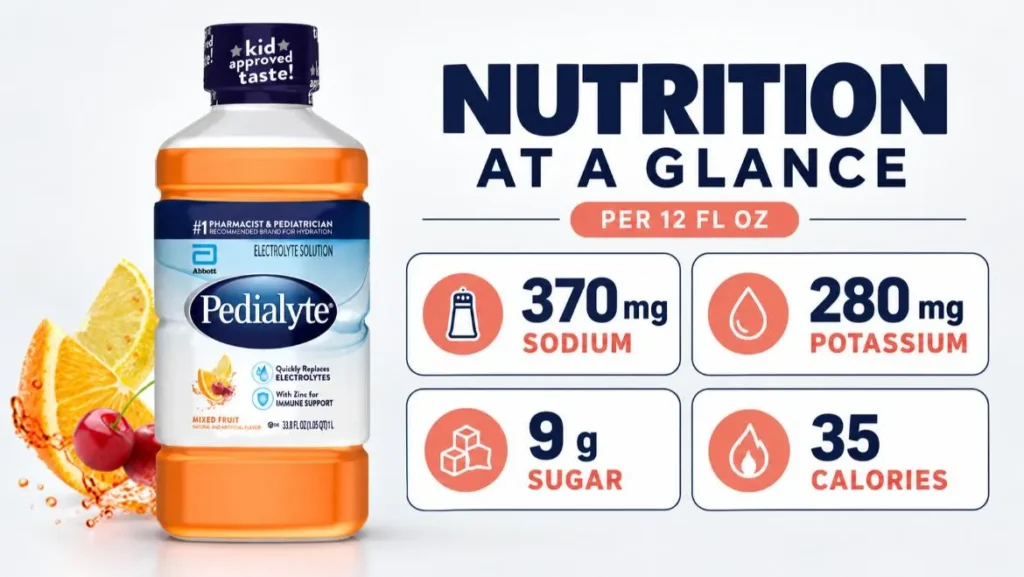
For this Pedialyte Review, the useful reference is a 12-fluid-ounce serving of Pedialyte Classic Mixed Fruit. A current label provides approximately 35 calories, 9 grams of carbohydrate, 9 grams of total sugar, 370 milligrams of sodium, and 280 milligrams of potassium per serving. It also supplies zinc. Check the bottle you buy because labels and flavors can change.
| Nutrient | Amount per 12 fl oz | What it means |
|---|---|---|
| Calories | 35 | Lower than many regular soft drinks and juices |
| Carbohydrate | 9 g | Primarily from the glucose-based formula |
| Total sugar | 9 g | Supports the sodium-glucose solution but may not suit every buyer |
| Sodium | 370 mg | A meaningful electrolyte dose, not a trivial amount |
| Potassium | 280 mg | Helps replace another electrolyte lost with fluids |
| Bottle size | 1 liter/33.8 fl oz | Roughly 2.8 servings of 12 fl oz |
Sodium: Useful, but Not Something to Ignore
The 370 milligrams of sodium per serving is central to the product. Sodium helps the body retain fluid and supports normal nerve and muscle function. The glucose and sodium combination also distinguishes an oral rehydration drink from plain electrolyte water.
Still, more sodium is not automatically better for routine sipping. The FDA’s sodium guidance uses a Daily Value of less than 2,300 milligrams for adults and children age four and older. One 12-ounce serving therefore contributes a noticeable share of a full day’s reference amount. People who have been told to limit sodium should ask their clinician before using it frequently.
If you are comparing products mainly for workouts, remember that sweat rate, session length, heat, and total diet matter more than choosing the product with the largest sodium number.
Potassium and Zinc
Pedialyte Classic provides 280 milligrams of potassium per 12 ounces. That is useful, but it should not be confused with treatment for a diagnosed potassium deficiency. People with kidney disease or medications that affect potassium balance need individualized advice before routinely adding electrolyte drinks.
Zinc is included as an additional nutrient. Its presence does not turn Pedialyte into a complete immune supplement, nor does it replace a balanced diet. In this Pedialyte Review, zinc is best viewed as a secondary feature rather than the main reason to buy the product.
Pedialyte Review: Ingredients Inside the Bottle
The Classic Mixed Fruit formula uses water, dextrose, sodium and potassium salts, flavoring, acidifying ingredients, zinc, and high-intensity sweeteners. Exact ingredient wording can be revised, so the physical bottle remains the final authority. The practical point is that Pedialyte is not sugar-free and is not sweetened only with sugar.
Dextrose supplies glucose. That small carbohydrate component is intentional rather than an accidental extra: glucose and sodium are paired in oral rehydration formulas to support fluid absorption. If you want more background on the distinction, is sugar an electrolyte? explains why sugar itself is not an electrolyte even though it can play a functional role in some hydration products.
The formula also uses nonnutritive sweeteners to create more sweetness without dramatically increasing the carbohydrate load. Buyers who prefer products without sucralose or acesulfame potassium may want another option. Those sweeteners can also affect the aftertaste, although taste perception varies widely.
Pedialyte Review: How It Differs From Sports Drinks
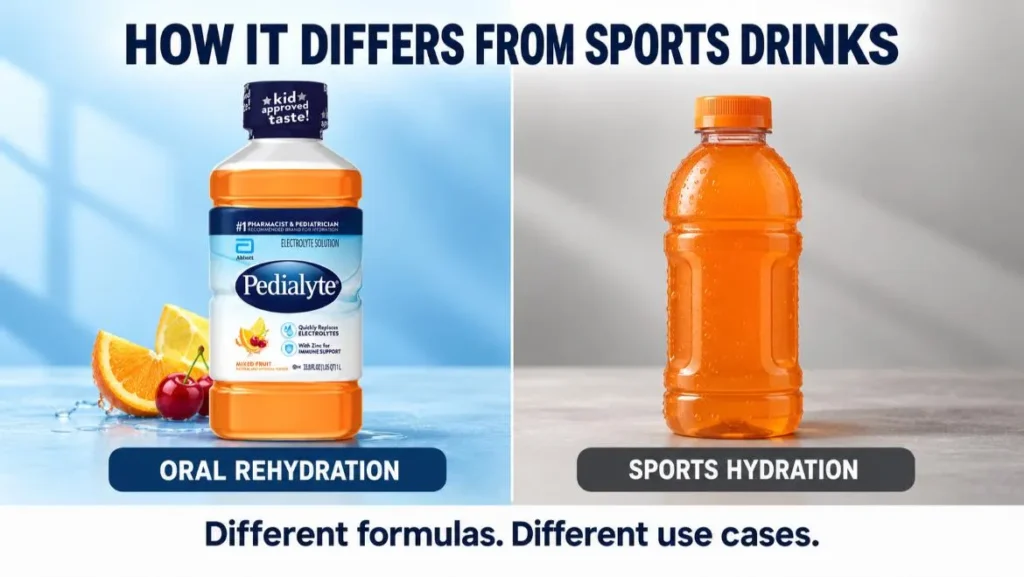
This Pedialyte Review would be incomplete without separating oral rehydration from ordinary sports hydration. Pedialyte Classic is formulated with a relatively high electrolyte concentration and less sugar than many full-sugar sports drinks. Traditional sports drinks are commonly designed to provide fluid, carbohydrate, and flavor during exercise, while an oral rehydration drink is built around a more deliberate sodium-glucose balance.
That does not mean every gym session requires Pedialyte. Water and regular meals may be enough after a short, easy workout, especially in mild conditions. Longer sessions, heavy sweating, heat exposure, travel, or fluid loss from illness create a different situation.
For illness-related fluid loss, the NIDDK’s diarrhea treatment guidance discusses replacing lost fluids and electrolytes and notes that doctors may recommend oral rehydration solutions in appropriate situations. Follow professional advice for children, older adults, pregnancy, chronic disease, or ongoing symptoms instead of assuming any consumer beverage can manage a medical problem.
Readers comparing the category should also see DripDrop vs Pedialyte, since powder packets and ready-to-drink bottles solve different convenience and portability problems.
Pedialyte Review: Taste and How to Use It
We did not conduct a firsthand taste test for this Pedialyte Review. Mixed Fruit is designed to taste sweeter and fruitier than unflavored oral rehydration solution, but the sodium and sweeteners can create a noticeable sweet-salty profile. Some people may find it easy to drink chilled, while others may prefer an unflavored or different flavored version.
Pedialyte Classic is ready to drink. Do not dilute the liquid unless a healthcare professional specifically instructs you to do so, because changing the water-to-electrolyte ratio changes the formula. Shake the bottle if the label directs, pour the desired amount, refrigerate after opening, and follow the storage and discard instructions printed on the container.
For flying, powder packets are easier to pack because airport liquid rules and bottle weight make a full liter inconvenient. Our best electrolyte packets for travel and long flights guide covers lighter options that can be mixed after security.
Pedialyte Review: Benefits and Drawbacks
Potential Advantages
- Ready to use: No measuring or mixing is required.
- Meaningful electrolyte content: Sodium and potassium are present in more than token amounts.
- Moderate carbohydrate level: It supplies glucose without the sugar load of many sodas or juices.
- Multiple formats: The broader Pedialyte range includes liters, half-liters, powders, and freezer pops.
- Adult and child positioning: Classic is sold for both groups, although child use should follow label or clinician directions.
Potential Drawbacks
- Added sugar and sweeteners: It may not fit buyers seeking an unsweetened or sugar-free formula.
- Noticeable sodium: Useful in context, but not automatically appropriate for unrestricted daily drinking.
- Bottle portability: A 1-liter container is heavy and less convenient than single-serve packets.
- Flavor may divide buyers: The sweet-salty taste and sweetener aftertaste will not suit everyone.
- Not a complete treatment plan: It cannot replace medical assessment when symptoms are severe or persistent.
The balance is straightforward: this Pedialyte Review finds the formula purposeful, but purpose does not mean everyone needs it every day.
Pedialyte Review: Price and Value
Pedialyte sells through pharmacies, supermarkets, mass retailers, and online sellers rather than presenting one stable nationwide price on its product page. Cost varies by flavor, bottle size, retailer, promotion, and whether you buy a multipack. Compare prices using the cost per prepared liter or cost per 12-ounce serving, not simply the shelf price.
For occasional use, the higher cost may be reasonable because the product is premixed and easy to find. For frequent exercise hydration, a powder or tablet may cost less per serving and take up less storage space. This Pedialyte Review therefore rates value as good for targeted use and average for everyday sipping.
Pedialyte Review: Who Should Consider Pedialyte Classic?

Pedialyte Classic may fit adults or children who need a convenient oral rehydration drink and can use it according to the label or professional guidance. It may also appeal to shoppers who prefer a ready-to-drink option with both sodium and potassium rather than a low-mineral flavored water.
It is less compelling for someone who simply wants a pleasant everyday beverage, needs strict sodium restriction, avoids added sugar or certain sweeteners, or wants a compact product for air travel. Our guide to the best electrolyte drink when sick provides additional context, but symptoms—not brand popularity—should guide when medical advice is needed.
Pedialyte Review FAQs
Is Pedialyte good for adults?
Yes, Pedialyte Classic is marketed for both adults and children. Adults should still follow the label and consider their total sodium, sugar, kidney health, medications, and reason for using it.
Can you drink Pedialyte every day?
Some people can, but routine daily use is not necessary for everyone. Water and food may cover ordinary hydration needs. Frequent use deserves more thought if you limit sodium or sugar or have kidney, heart, or blood-pressure concerns.
Is Pedialyte better than water?
Not for every situation. Water is often sufficient for normal daily hydration. Pedialyte supplies sodium, potassium, glucose, and zinc, which can be useful when fluid and electrolytes have been lost.
Does Pedialyte contain sugar?
Yes. Pedialyte Classic Mixed Fruit contains dextrose and provides about 9 grams of total sugar per 12-fluid-ounce serving. It also uses high-intensity sweeteners. Other Pedialyte product lines can differ.
Is Pedialyte an energy drink?
No. Pedialyte Classic is an electrolyte solution, not a caffeinated energy drink. Its calories come mainly from a modest amount of carbohydrate.
How long does an opened bottle last?
Follow the storage and discard directions on your bottle. Refrigerate after opening when the label instructs, and do not use the product beyond the stated period.
Final Pedialyte Review Verdict
Our final Pedialyte Review verdict is positive for the right situation. Pedialyte Classic delivers a purposeful combination of sodium, potassium, and glucose in a widely available ready-to-drink format. It is more specialized than water and generally lower in sugar than soda or many juices, but it also costs more, contains added sugar and sweeteners, and provides enough sodium to deserve attention.
Choose it for targeted, label-directed rehydration, not because every day or every workout requires a medical-style electrolyte solution. Check the current bottle, use the correct formula, and seek medical guidance when dehydration or gastrointestinal symptoms are significant, prolonged, or affecting a vulnerable person. That
This article contains affiliate links. If you purchase through our links, we may earn a commission at no extra cost to you. We only recommend products we genuinely believe in. Read our Affiliate Disclaimer for full details.