
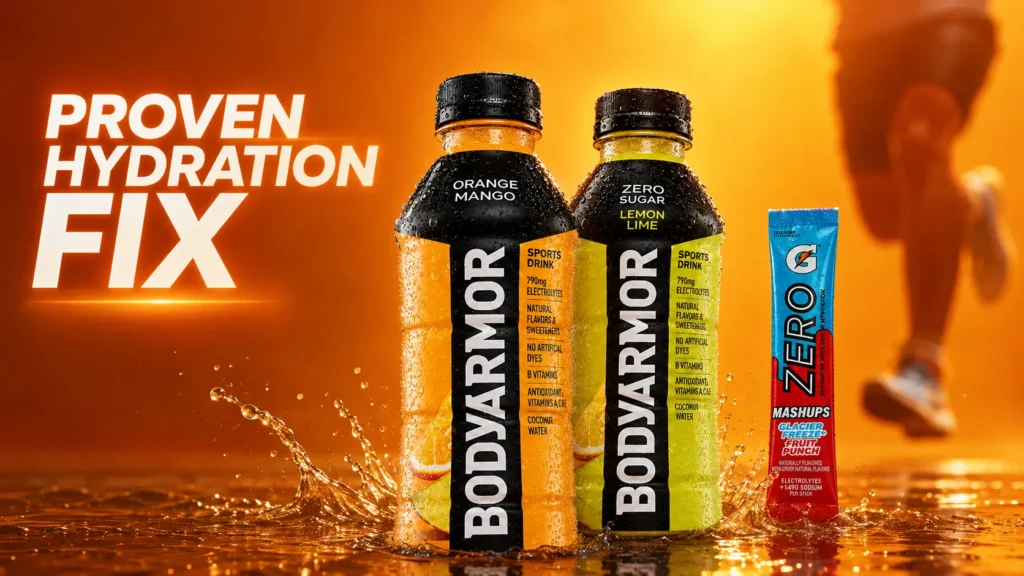
Electrolyte drinks for runners are most relevant during longer sessions, heavy sweating, hot conditions, or when plain water does not replace meaningful sodium losses. Short, easy runs often require only water and a normal diet. This guide explains how to compare sodium, carbohydrates, serving size, and stomach tolerance without assuming every runner needs the same formula.
Table of Contents
Whether you’re training for a 5K or chasing a marathon PR, you’ll walk away knowing exactly what to drink, when to drink it, and why your cousin’s “just drink more water” advice can occasionally backfire.
Electrolyte Drinks for Runners: Quick Takeaways
- Runs under 60 minutes rarely need electrolyte drinks; water covers most needs
- Past 90 minutes, sodium replacement becomes genuinely important, not optional
- Sweat sodium loss ranges from 500 to 2,000 mg per liter, varying enormously by person
- Overhydrating with plain water on long runs can cause exercise-associated hyponatremia
- Salt tablets and electrolyte drinks both work; the right choice depends on your stomach and your run
Why Runners Need Electrolytes, Not Just Water

Sweat isn’t just water leaving your body. It carries sodium, potassium, and smaller amounts of magnesium and calcium along with it. These minerals control fluid balance, nerve signaling, and the muscle contractions that keep you moving forward.
According to research summarized by NIH’s electrolyte physiology overview, sodium is the primary electrolyte responsible for maintaining extracellular fluid volume. When sweat losses go unreplaced, that balance starts to slip.
Replacing lost fluid with plain water alone can dilute the sodium that remains in your blood. On short runs, this barely registers. On long, hot, or hard efforts, it becomes a real physiological issue rather than a minor inconvenience.
How Much Sodium Do Runners Actually Lose?
Sweat sodium concentration varies wildly between individuals, roughly 500 to 2,000 mg per liter of sweat, depending on genetics, heat acclimatization, and diet. A two-hour run in warm weather can mean losing well over a liter of sweat, and with it, a meaningful chunk of your body’s sodium reserve.
The FDA’s sodium guidance recommends most adults stay under 2,300 mg of total sodium per day from food and drink combined. A single long run can burn through a substantial share of that number just through sweat.
| Run duration | What most runners need | Sodium target |
| Under 60 minutes | Plain water is usually enough | Not typically needed |
| 60-90 minutes | Light electrolyte drink helps in heat | 300-600 mg/L |
| Over 90 minutes | Dedicated electrolyte drink or salt tablets | 500-1,000 mg/hour |
| Marathon / hot weather | Structured sodium plan plus water | 700-1,000+ mg/hour |
These figures are general starting points, not rigid rules. Heavy sweaters, runners training in humidity, and anyone who’s noticed white salt stains on a dark shirt after a run likely sit toward the higher end of these ranges.
Exercise-Associated Hyponatremia: The Real Danger
Hyponatremia happens when blood sodium drops too low, usually because a runner drinks more plain water than their body can process alongside ongoing sweat losses. It’s a dilution problem, not strictly a dehydration one.
Research published via the National Institutes of Health found hyponatremia can affect up to 13% of marathon finishers, with slower runners at higher risk since they spend more time drinking and sweating on the course.
Mild symptoms include headache, nausea, confusion, and bloating, easy to mistake for normal race fatigue. Severe cases are medical emergencies. The practical fix is simple: match your fluid intake with electrolyte intake, especially past the 90-minute mark.
When Do You Actually Need Electrolyte Drinks for Runners?

Runs Under 60 Minutes
Water does the job here for most people. Your body holds enough sodium reserve to cover an easy run or a quick lunchtime jog without any special drink mix involved.
Runs Between 60 and 90 Minutes
This is a gray zone. Hot weather, heavy sweaters, or an aggressive pace can push sodium needs up even on a moderate-length run. A light electrolyte drink is a reasonable, low-risk choice here.
Runs Over 90 Minutes
This is where electrolyte drinks for runners genuinely earn their place. Once you cross the 90-minute mark, your body shifts from using stored sodium to depleting what’s actively circulating, making replacement a real performance factor.
What to Look for in Electrolyte Drinks for Runners
Sodium Content
Look for drinks providing roughly 300 to 700 mg of sodium per serving for moderate efforts, and closer to 700 to 1,000 mg per hour for marathons or hot-weather training. Many mainstream sports drinks fall well below this, often around 150 to 200 mg per serving.
Cleanest Electrolyte Powder Options
A cleanest electrolyte powder pick generally means minimal ingredients, no artificial dyes, and clear labeling of sodium, potassium, and magnesium amounts. Skip anything vague about its actual mineral content, since that’s the entire point of the product.
Carbohydrate Balance
Some sugar helps sodium absorption and provides fuel on longer runs, but too much can slow gastric emptying and trigger GI distress. A moderate carbohydrate load, roughly 15 to 30 grams per serving, tends to sit better than a syrupy, high-sugar mix.
Electrolyte Drinks for Stomach Flu vs Electrolyte Drinks for Running
These two categories overlap more than people expect, but the goals differ. Electrolyte drinks for stomach flu prioritize gentle rehydration in small sips for a body that’s already nauseated, while running formulas need to support ongoing sweat losses during activity.
If you’ve dealt with either situation, our guide on electrolyte drinks for stomach flu covers gentler formulas, and our best electrolyte drink when sick breakdown applies the same logic to recovery days after a hard race.
Sports Drinks for Nausea During Long Runs
Nausea mid-run usually comes from a combination of high sugar concentration, warm drink temperature, and jostling on a full stomach. Sports drinks for nausea tend to work better when they’re diluted slightly, served cold, and sipped rather than gulped.
High-osmolality drinks, meaning a heavy concentration of sugar and electrolytes relative to water, pull fluid into the gut and can worsen queasiness. If nausea is a recurring issue, try a lower-concentration mix and smaller, more frequent sips instead of large gulps.
Best Sports Drink for Marathon Day

Race day isn’t the time to experiment. The best sports drink for marathon performance is whatever you’ve already tested during training long runs, since a new formula on race morning is a classic way to trigger stomach trouble.
- Pre-load 500-1,000 mg sodium about 30-45 minutes before the start
- Aim for 700-1,000 mg sodium per hour once you’re past 90 minutes
- Combine sips of water with your electrolyte source at aid stations
- Practice your exact race-day plan on at least two long training runs first
Salt Tablets for Runners: Do You Need Them?
Salt tablets for runners are concentrated sodium capsules, often delivering 150 to 250 mg of sodium each, sometimes paired with potassium and magnesium. They’re popular with runners who want precise dosing without carrying a full bottle of drink mix.
They work well for long runs and hot-weather races, particularly for heavy sweaters. The tradeoff is that a capsule needs to dissolve in your stomach before it helps, and swallowing one without enough water alongside it can cause its own discomfort.
Electrolyte drinks, by contrast, arrive already dissolved and tend to be gentler on the stomach during activity. Many runners combine both: a steady electrolyte drink for baseline hydration, plus a salt tablet during unusually hot or long efforts.
Drinks That Hydrate the Most: What the Science Says
Not all fluids hydrate equally. Oral rehydration research generally points to solutions with roughly 500 to 700 mg of sodium per liter, close to typical sweat concentration, as the most effective at helping your body actually retain fluid rather than passing it straight through.
The NIH Office of Dietary Supplements confirms sodium’s central role in fluid retention and nerve function, which explains why plain water alone often falls short during long, sweaty efforts.
Overly sugary drinks don’t necessarily hydrate better, and can sometimes hydrate worse if the sugar concentration is too high. Balance, not maximum sweetness or maximum sodium, is what actually helps your body hold onto fluid.
Popular Electrolyte Drink Options Worth Comparing
Plenty of brands compete in this space, and the right pick depends on your sodium needs, taste preference, and budget. Before settling on one, it helps to see how the major options actually differ on paper rather than in marketing language.
Our breakdown of Body Armor vs Gatorade compares two mainstream options, while our 10 Best LMNT Flavors guide and Ultima vs LMNT comparison both dig into higher-sodium formulas built for exactly the kind of long runs covered in this guide.
Pros and Cons of Electrolyte Drinks for Runners
Pros
- Replace sodium, potassium, and magnesium lost through sweat
- Help prevent cramping, fatigue, and exercise-associated hyponatremia
- Many formulas double as a mild carbohydrate source for energy
- Available in low-sugar and zero-sugar formulas for different diets
Cons
- Unnecessary and sometimes wasteful for runs under an hour
- Some formulas contain more sugar or sodium than a given runner needs
- New formulas tested on race day can trigger stomach issues
- Cost adds up for runners training multiple times per week
How to Build Your Own Running Hydration Plan
Before the Run
Drink normally throughout the day rather than chugging water right before you head out. For runs over 90 minutes in heat, a small pre-load of sodium 30 to 45 minutes beforehand can help.
During the Run
Sip consistently rather than drinking large volumes at once. Match your electrolyte intake to run duration using the sodium targets outlined earlier in this guide, adjusting up in heat and down in cool weather.
After the Run
Replace fluid and sodium together, especially after a long or hot effort. A normal meal with some salt usually covers this, though a recovery electrolyte drink can help if your appetite is low post-race.
Frequently Asked Questions
How much sodium do runners need per hour?
Most runners need roughly 300 to 700 mg per hour on moderate runs, rising to 700-1,000 mg per hour for marathons or hot-weather training, depending on individual sweat rate.
Do I need electrolyte drinks for a 5K or short run?
Usually not. Runs under 60 minutes rarely deplete enough sodium to require a dedicated electrolyte drink. Plain water is typically sufficient for shorter efforts.
What is the best sports drink for marathon runners?
The best option is whatever formula you’ve already tested during training long runs. Consistency matters more than any specific brand on race day.
Can electrolyte drinks help with nausea during a run?
A diluted, cold, lower-sugar electrolyte drink can ease nausea better than a concentrated, warm, high-sugar option, since heavy concentrations can worsen stomach discomfort.
Are salt tablets better than electrolyte drinks for runners?
Neither is universally better. Salt tablets offer precise, portable dosing, while electrolyte drinks arrive pre-dissolved and are often gentler on the stomach during activity.
What counts as the cleanest electrolyte powder?
Look for a short ingredient list, no artificial dyes, and clearly labeled sodium, potassium, and magnesium amounts rather than vague proprietary blend claims.
Can I use electrolyte drinks made for stomach flu during a run?
Some overlap exists, but stomach flu formulas are built for sipping while nauseated, not sustained sweat replacement, so a running-specific formula usually performs better.
What drink hydrates the most for long-distance running?
Solutions with roughly 500 to 700 mg of sodium per liter, close to natural sweat concentration, tend to help the body retain fluid most effectively.
Can too many electrolytes be harmful for runners?
Excess sodium intake without enough water can cause hypernatremia and stomach upset. Balance intake with your actual sweat losses rather than maximizing sodium intake.
Should I drink electrolytes before a run or only during?
For runs over 90 minutes in heat, a small sodium pre-load 30 to 45 minutes beforehand can help. Shorter or cooler runs typically only need electrolytes during activity, if at all.
This article contains affiliate links. If you purchase through our links, we may earn a commission at no extra cost to you. We only recommend products we genuinely believe in. Read our Affiliate Disclaimer for full details.