

Quick answer: Best Electrolytes for muscle cramps may help when cramping follows prolonged exercise, heavy sweating, heat exposure, vomiting, diarrhea, or another clear source of fluid and mineral loss. They are less likely to solve a cramp caused mainly by muscle fatigue, overuse, nerve irritation, reduced circulation, medication, pregnancy, or an underlying condition.
When a cramp is happening, stop the activity and gently stretch the contracted muscle first. A drink takes time to be absorbed, so it is better for replacing losses and reducing further problems than for stopping pain instantly.
That distinction matters. If your calf locks near the end of a hot two-hour run and your clothing is marked with salt, electrolytes for muscle cramps may be reasonable. If the same calf cramps every night despite no major sweating, repeatedly adding electrolyte powder may miss the real cause.
This guide explains which electrolytes matter, how to get rid of a cramp safely, when salt in water makes sense, and when recurring muscle cramping deserves medical attention.
Table of Contents
Do Electrolytes for Muscle Cramps Actually Work?
Sometimes – but not for every type of cramp. Electrolytes for muscle cramps are most defensible when a person has lost a meaningful amount of sweat or another body fluid. Sodium and chloride are the main electrolytes lost through sweat, while potassium, magnesium, and calcium are generally lost in smaller amounts.
Research does not support the old idea that every exercise cramp is simply dehydration or “low electrolytes.” A modern evidence review describes exercise-associated cramps as multifactorial. Muscle fatigue, altered nerve signals, previous cramp history, pace, heat, sweat loss, and individual susceptibility can overlap.
In one controlled study, using electrolytes for muscle cramps reduced experimentally measured cramp susceptibility after exercise-related dehydration compared with plain water. That is useful evidence, but it does not prove that an electrolyte drink prevents or treats every real-world cramp.
The practical answer is to match your response to the situation:
| Situation | Possible contributor | What to do first | Likely role of electrolytes |
| Cramp late in a hard workout | Local muscle fatigue | Stop, gently stretch and reduce intensity | Supportive, especially after heavy sweating |
| Cramp during long exercise in heat | Fatigue plus fluid and sodium loss | Rest, cool down, stretch and drink gradually | Often reasonable |
| Cramp after vomiting or diarrhea | Fluid and electrolyte loss | Follow an appropriate rehydration plan | Potentially important; severe illness needs care |
| Nighttime calf cramp without sweating | Often not an acute electrolyte loss | Stretch and review patterns or triggers | Uncertain; not an automatic fix |
| Repeated cramps with weakness or numbness | Possible nerve, circulation, medication or medical cause | Seek medical assessment | Do not self-treat with repeated packets |
The key point is that electrolytes for muscle cramps are one tool, not a universal muscle cramps treatment.
What Really Causes Muscle Cramping?
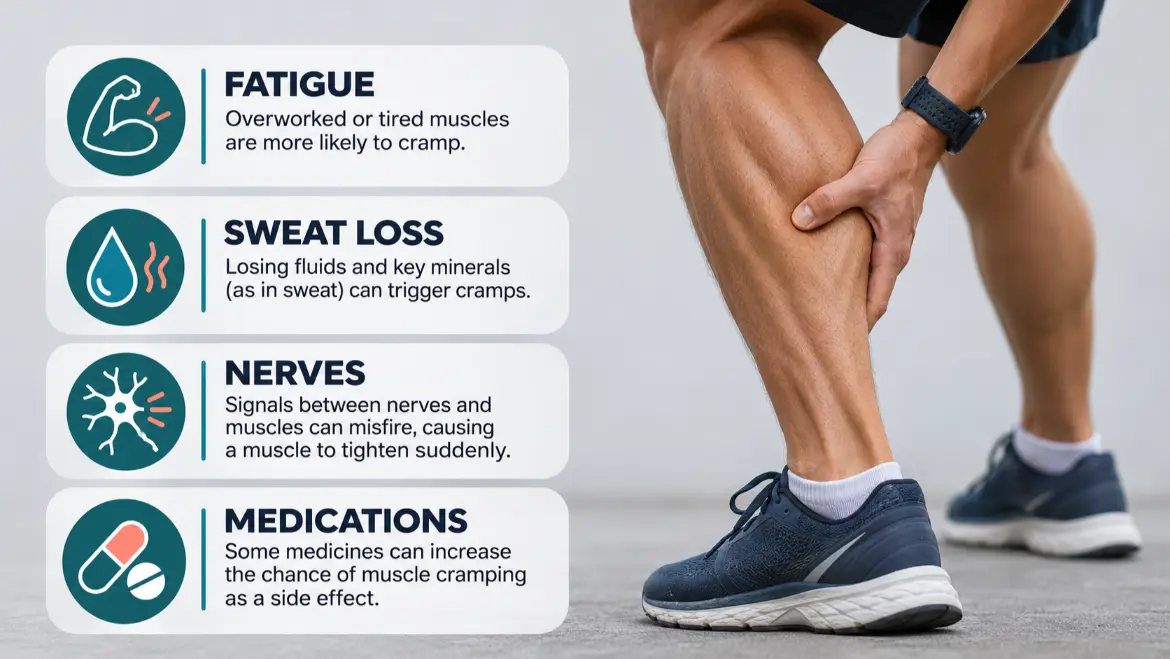
A muscle cramp is a sudden, painful, involuntary contraction. Calves, feet, hamstrings, quadriceps, hands, and abdominal muscles can all cramp. The sensation may be similar, but the cause can differ. That is why advice about electrolytes for muscle cramps must start with context.
Fatigue and Altered Nerve Signals
Exercise cramps often occur in a muscle that has worked harder or longer than it was prepared to handle. A runner may cramp after increasing pace, a cyclist near the end of a long climb, or a gym user after completing an unfamiliar number of repetitions.
Fatigue can disturb the balance between nerve signals that excite and relax a muscle, leaving it stuck in a shortened contraction.
This explains why a fully hydrated athlete can still cramp. It also explains why electrolytes for muscle cramps cannot replace suitable training, pacing, recovery, strength, and conditioning. Previous cramping during the same activity is one of the clearest clues that the problem may recur.
Sweat, Heat, and Fluid Loss
Some cramps occur in a clear fluid-loss setting. Long activity, hot or humid weather, heavy protective clothing, and naturally salty sweat can all increase losses.
White salt marks on clothing, stinging sweat in the eyes, strong thirst, declining performance, and a noticeable reduction in body weight across a session make this explanation more plausible.
In this situation, electrolytes for muscle cramps can help replace part of what was lost. Sodium deserves the most attention because it is the main electrolyte in sweat. Fluid still matters: dry electrolyte powder or salt cannot rehydrate the body by itself.
If you want to understand the relationship between salt, sodium, and chloride, read Is Salt an Electrolyte?.
Causes Unrelated to Exercise
Recurring cramps can also be associated with pregnancy, aging, nerve compression, reduced blood flow, dialysis, thyroid or metabolic conditions, and medicines such as certain diuretics.
Long periods of sitting or standing may contribute for some people. Nighttime leg cramps frequently have no single identifiable cause, so electrolytes for muscle cramps should not automatically be assumed to be the answer.
Muscle cramping without a clear sweat loss should not automatically trigger daily electrolyte supplementation. A pattern that keeps returning deserves a broader look at activity, sleep position, footwear, medications, medical history, and accompanying symptoms.
How to Get Rid of a Cramp Right Now
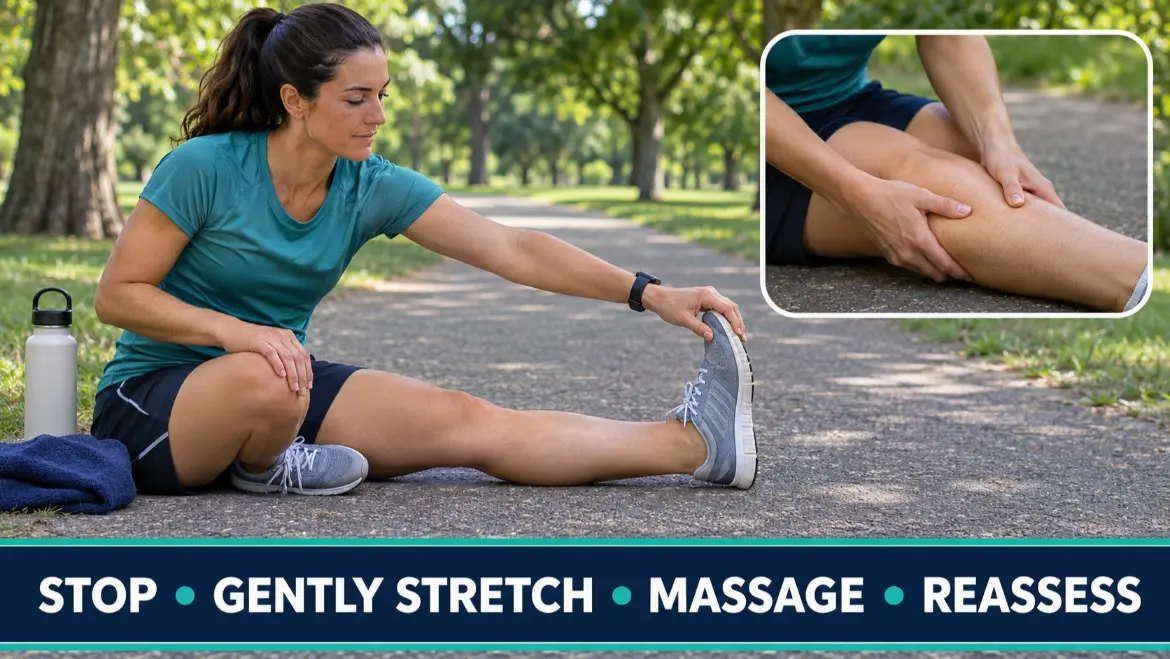
When people search how to get rid of a cramp, they often want a drink that works in seconds. The faster first step is mechanical: stop the activity and slowly lengthen the contracted muscle.
Think of electrolytes for muscle cramps as recovery support rather than an instant muscle relaxer.
A Simple 60-Second Response
- Stop moving and get into a safe, stable position.
- Gently stretch the contracted muscle without bouncing.
- Hold the stretch while breathing slowly.
- Ease off if the pain becomes sharp or worsens.
- Massage the area gently once the contraction starts releasing.
- If you are hot, move to shade and remove excess clothing.
- Sip fluid instead of rapidly forcing down a large volume.
For a calf cramp, straighten the knee and gently pull the toes toward the shin. For a front-thigh cramp, bend the knee and move the heel toward the buttock while holding a stable support. Never force a joint beyond its comfortable range.
The Mayo Clinic recommends stretching and gently rubbing the affected muscle. Heat may relax a tense muscle, while cold may help lingering soreness. Read Mayo Clinic’s muscle-cramp self-care guidance.
Electrolytes for muscle cramps do not reach the bloodstream instantly. An evidence review notes that oral fluid takes time to be absorbed, so stretching usually relieves an acute exercise cramp faster than rehydration.
Drink to replace a plausible loss and support recovery – not because swallowing a packet will immediately unlock a contracted muscle.
Which Electrolyte Matters Most for Muscle Cramps?
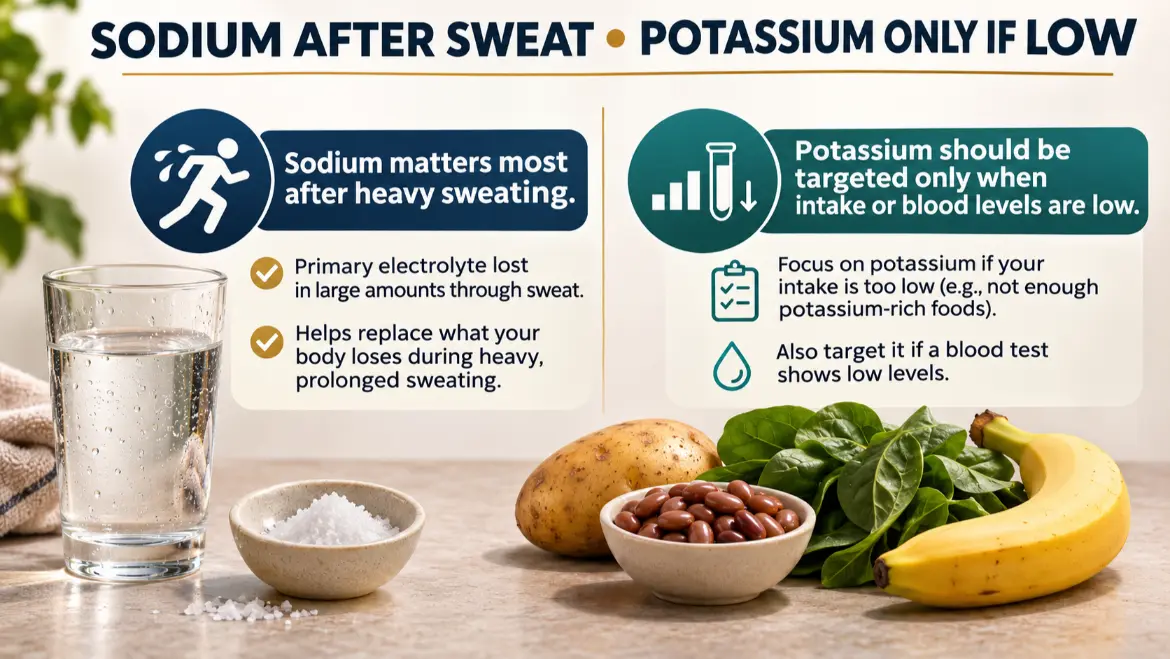
There is no single best mineral for every cramp. The most relevant electrolyte depends on what was lost and why the cramp occurred.
Comparing electrolytes for muscle cramps therefore requires more than counting how many minerals a formula contains.
Sodium: Most Relevant After Heavy Sweating
For long, hot, sweaty activity, sodium is usually the first number to check on a product label. It supports fluid balance and replaces the primary mineral lost in sweat.
A drink that advertises “five electrolytes” but contains only a token amount of sodium may not provide meaningful replacement for a heavy sweater.
That does not mean everyone needs a high-sodium packet. A short walk, an ordinary desk day, or a light workout in cool conditions usually does not create the same losses as hours of endurance exercise.
When choosing electrolytes for muscle cramps, people with sodium restrictions, high blood pressure, heart failure, kidney disease, or other relevant conditions should follow individualized medical advice.
Electrolytes for muscle cramps should be chosen according to sweat exposure, not the largest number displayed on the package.
Potassium for Leg Cramps: Useful Nutrient, Weak Quick-Fix Evidence
Potassium is essential for normal nerve transmission and muscle contraction. A true low blood potassium level can cause weakness, twitching, or cramps.
However, that does not mean routine potassium for leg cramps is proven to help people whose potassium level is normal.
Most potassium comes from food, including potatoes, beans, lentils, dairy products, leafy greens, squash, bananas, and other fruits. A banana can be a nutritious recovery food, but it is not an instant antidote to a contracted calf or a substitute for properly chosen electrolytes for muscle cramps after heavy sweat loss.
Do not use high-dose potassium supplements or potassium-based salt substitutes casually. The NIH potassium fact sheet warns that kidney disease and medicines such as ACE inhibitors, angiotensin receptor blockers, and potassium-sparing diuretics can allow potassium to rise dangerously high.
Potassium for leg cramps makes the most sense when a clinician has identified low potassium or a relevant dietary shortfall – not as a reflex treatment for every cramp.
Magnesium and Calcium: Important but Frequently Overpromised
Magnesium and calcium are involved in normal muscle and nerve function. A deficiency can cause symptoms, but additional supplementation does not automatically improve cramps when levels and dietary intake are adequate.
Research on magnesium for ordinary nocturnal cramps in adults is mixed and often disappointing. Evidence appears more favorable in some pregnancy-related cramp studies, but supplements during pregnancy should be discussed with a qualified clinician.
Calcium and potassium also lack strong evidence as routine standalone treatments for common cramps.
Electrolytes for muscle cramps work best when they correct a plausible loss or deficiency. They are much less convincing when used as a blanket solution.
Is Salt in Water Good for Muscle Cramps?
Salt in water supplies sodium and chloride. It may be useful after substantial sweat loss, particularly when regular food will not be available soon.
However, it is not a complete or precisely controlled muscle cramps treatment. When mixing electrolytes for muscle cramps, a stronger-tasting drink is not necessarily a better one.
Adding too much salt can cause nausea, worsen thirst, and deliver far more sodium than intended. Drinking excessive plain water can also be unsafe during prolonged endurance activity because it may dilute blood sodium.
The goal is not to consume the maximum amount of water or salt. It is to replace losses at a sensible rate.
For a measured discussion of salt in water, read How Much Salt to Add to Water for Electrolytes.
Do not use an improvised homemade mixture to treat significant dehydration from persistent vomiting or diarrhea. A proper oral rehydration solution uses controlled amounts of water, glucose, sodium, and other ingredients.
Salt tablets are also easy to misuse. Concentrated sodium without an appropriate fluid plan can irritate the stomach and does not solve fatigue-driven cramping.
For most recreational activity, a normal meal, water, and a labeled electrolyte drink when losses are substantial are easier to dose responsibly.
How to Choose Electrolytes for Muscle Cramps
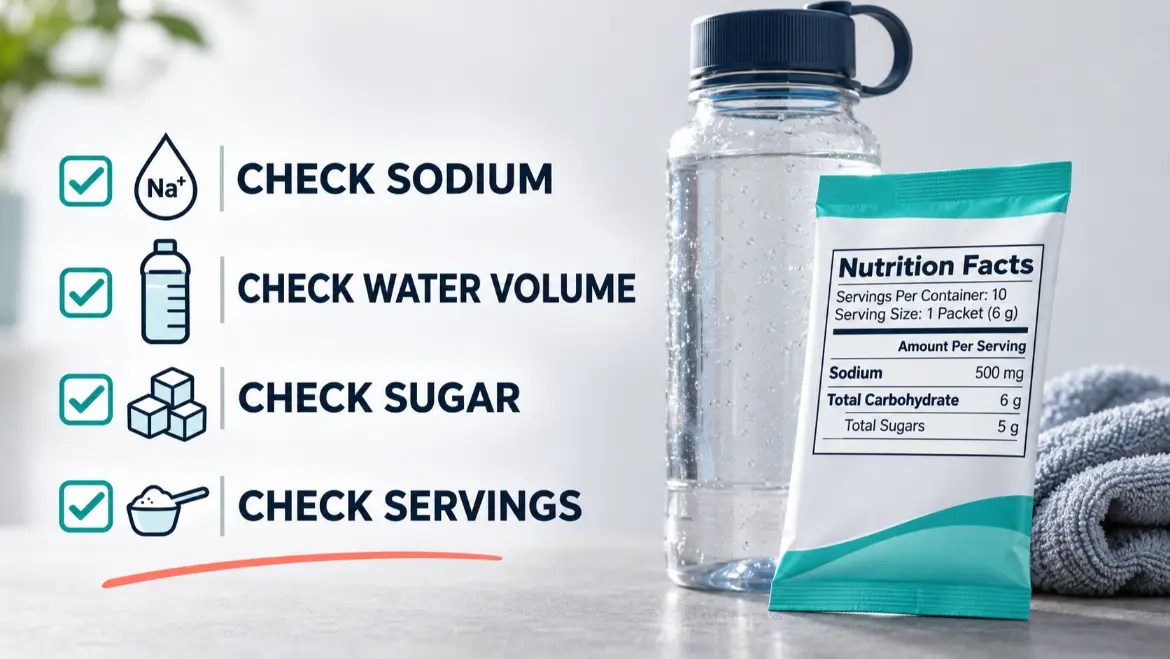
Ignore broad claims such as “maximum hydration” and read the nutrition panel. The best electrolytes for muscle cramps are the ones that fit the event, the person, and the likely losses.
| Label feature | Why it matters |
| Sodium per serving | Usually the most relevant mineral after prolonged, salty sweating |
| Serving water volume | Changes the final concentration, taste, and tolerability |
| Carbohydrate | May support prolonged exercise and sodium-water absorption but is not always needed |
| Potassium and magnesium | Useful nutrients, but large amounts do not guarantee cramp relief |
| Number of servings | Helps prevent accidental double- or triple-dosing |
| Sweeteners and acidity | Can affect taste and stomach tolerance during activity |
For a short session in mild weather, water and normal meals may be enough.
For extended exercise, outdoor labor, heat exposure, or repeated sessions with heavy sweating, electrolytes for muscle cramps in a sodium-containing drink become more reasonable.
During illness, a medically appropriate oral rehydration product may be more suitable than a standard sports hydration powder.
Do not stack multiple packets simply because one cramp occurred. Excess electrolyte intake can create its own problems, particularly for people with reduced kidney function or medicines that affect sodium or potassium.
Our guide to high electrolyte symptoms explains why more is not always safer.
Electrolytes for muscle cramps should complement a sensible hydration and training plan, not replace one.
Do Electrolytes Help Nighttime Leg Cramps?
Electrolytes for muscle cramps are less predictable when cramps occur at night without a clear fluid-loss event.
Night cramps are common and frequently idiopathic, meaning no single cause is found. Muscle fatigue, inactivity, nerve problems, circulation issues, pregnancy, age, and medications may all be involved.
Try a gentle calf stretch before bed and note whether cramps follow hard training, long periods of standing, alcohol intake, a medication change, or unusually low fluid intake.
If you experienced heavy sweating that day, replacing fluid and eating a normal meal may be reasonable. Taking a high-dose mineral “just in case” is a weaker strategy.
Routine potassium for leg cramps at night is not well supported unless low potassium has been identified. Magnesium is also not a reliable universal treatment for nonpregnant adults.
If cramps regularly interrupt sleep, become more frequent, or start after a new medicine, discuss the pattern with a healthcare professional.
How to Prevent Exercise-Related Muscle Cramps
No single drink can guarantee prevention. A better plan combines appropriate electrolytes for muscle cramps with training, pacing, cooling, and fluid strategies that match your activity.
Train for the Demands of the Event
Sudden increases in distance, intensity, hills, heat, or competition pace can overload a muscle. Build gradually and include activity-specific strength and conditioning.
If you always cramp at the same point in a race, pacing and fatigue resistance may deserve more attention than another supplement.
Start Normally Hydrated
Drink regularly across the day rather than trying to catch up immediately before exercise.
Pale-yellow urine can be a rough day-to-day clue, although urine color is not a perfect hydration test. Avoid starting a long session already thirsty after alcohol, illness, travel, or a hot day.
Replace Losses Without Overdrinking
If you routinely train for a long time in heat, compare your body weight before and after a representative session.
A large reduction may suggest under-replacement. Weight gain during exercise can indicate overdrinking. Individual sweat rates vary considerably, so a fixed rule may not fit everyone.
Electrolytes for muscle cramps are most rational when your history shows heavy or salty sweating. They are less likely to compensate for poor pacing or inadequate conditioning.
Record the Pattern
Write down:
- The muscle involved
- Weather and temperature
- Exercise duration and intensity
- Fluid and food intake
- The point at which the cramp started
- Whether stretching provided relief
- Any recent medication or training changes
Patterns are more useful than guessing whether you need electrolytes for muscle cramps. If the same muscle repeatedly cramps under the same workload, adjust your training or seek sports-medicine guidance.
When Muscle Cramps Need Medical Care
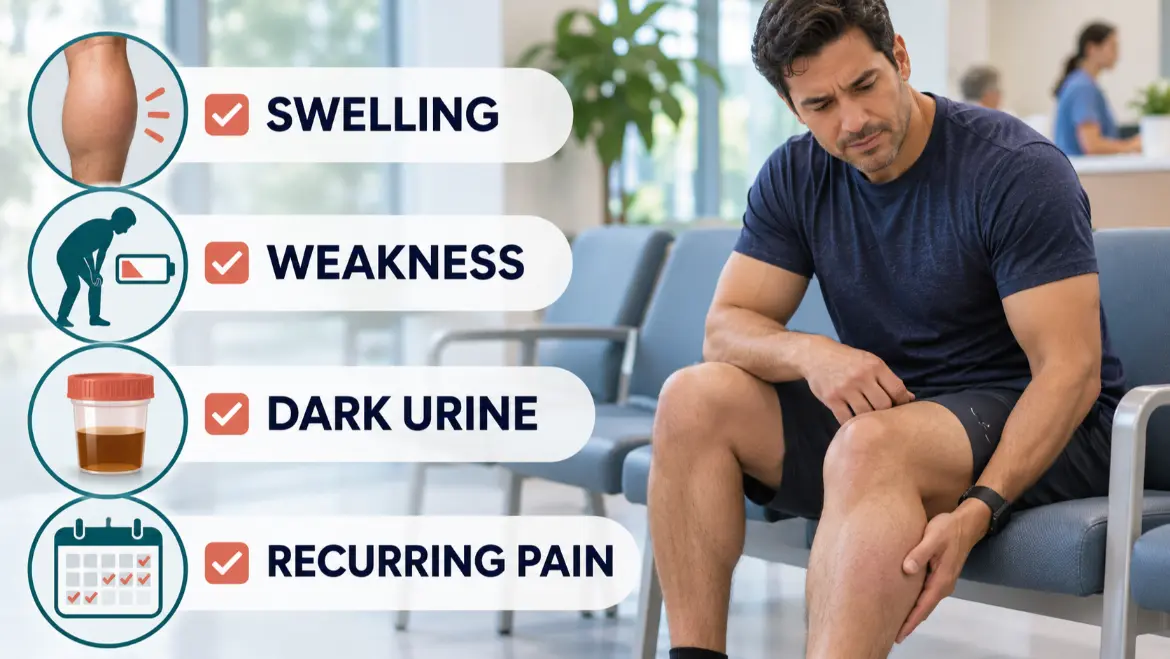
Most brief cramps are harmless, but some patterns should not be managed only with electrolytes for muscle cramps.
Arrange medical advice if cramps:
- Are severe or unusually painful
- Happen frequently
- Last longer than expected
- Repeatedly wake you from sleep
- Occur without a clear trigger
- Begin after a medication change
- Appear with muscle weakness or numbness
- Are accompanied by swelling or skin changes
Seek urgent help for:
- One-sided calf swelling, warmth, redness, and persistent pain, especially when blood-clot risk factors are present
- Chest pain, shortness of breath, fainting, or a new irregular heartbeat
- Confusion, collapse, severe headache, vomiting, or inability to cool down in the heat
- Very dark urine, marked weakness, or severe muscle pain after intense exercise
- Severe dehydration or an inability to keep fluids down
Do not try to correct a suspected electrolyte disorder by repeatedly taking salt, potassium, or magnesium. Symptoms cannot reliably identify which mineral is high or low. Blood testing and clinical context may be needed.
The Bottom Line
Electrolytes for muscle cramps can be useful when cramps follow prolonged exercise, heat, heavy sweating, or another clear source of fluid and mineral loss.
Sodium is usually the most relevant electrolyte after sweat loss. Potassium and magnesium are essential nutrients, but routine high-dose supplementation is not a proven answer for every leg cramp.
For an active cramp, stop, gently stretch, and massage the muscle. Cool down if heat is involved, then replace fluid and electrolytes gradually when the situation supports it.
If cramps are recurrent, unexplained, nighttime-only, or accompanied by weakness, swelling, numbness, chest symptoms, or dark urine, investigate the cause instead of reaching for a stronger packet.
The most effective muscle cramps treatment is not always a drink. It is the response that matches why the cramp happened.
Frequently Asked Questions
What are the best electrolytes for muscle cramps?
After prolonged heavy sweating, sodium and chloride are usually the main losses to replace, along with water. Potassium and magnesium support normal muscle function, but larger doses do not guarantee better relief.
The best choice depends on the cause, duration of activity, weather, personal sweat rate, and amount of fluid lost.
How quickly do electrolytes for muscle cramps work?
They do not usually stop a cramp instantly because fluid must move through the digestive system before it can support rehydration.
Gentle stretching generally works faster for an active exercise cramp. Electrolytes can help replace losses and support continued recovery.
Does potassium for leg cramps work?
Potassium may help when a person truly has low potassium, but routine potassium supplements are not a proven fix for ordinary leg cramps.
People with kidney disease or medicines that raise potassium should not self-supplement without medical guidance.
Is drinking salt in water a good muscle cramps treatment?
Salt in water can replace sodium and chloride after heavy sweating, but it is easy to make the drink too salty. It is not a complete treatment for every cramp.
Use a measured recipe or labeled product, drink gradually, and do not use homemade salt water for severe illness-related dehydration.
Can dehydration cause muscle cramping?
Dehydration and sweat loss can contribute, especially during prolonged exercise or heat exposure, but they are not the only causes.
Muscle fatigue, altered nerve control, medications, circulation problems, and medical conditions can also produce cramps.
Should I take magnesium every day for cramps?
Not automatically. Evidence for ordinary nighttime cramps in nonpregnant adults is mixed, and supplemental magnesium can cause diarrhea or interact with certain health conditions.
Discuss persistent cramps and supplement use with a qualified healthcare professional.
Can too many electrolytes make cramps worse?
Excess or imbalanced electrolyte intake can cause weakness, twitching, nausea, heart-rhythm changes, or other symptoms.
The risk is higher for people with kidney disease or medicines that affect electrolyte levels. Follow the product directions and avoid stacking servings without a clear reason.
This article contains affiliate links. If you purchase through our links, we may earn a commission at no extra cost to you. We only recommend products we genuinely believe in. Read our Affiliate Disclaimer for full details.