

Quick answer: Yes, dehydration may contribute to temporary blurry or fluctuating vision, mainly by worsening dry eyes or causing dizziness and lightheadedness. However, sudden blurry vision—especially in one eye—is not something to blame on dehydration without medical assessment. New vision loss, eye pain, flashes, a curtain-like shadow, weakness, or trouble speaking requires urgent or emergency care.
If you are asking can dehydration cause vision problems, look at the whole symptom pattern. Thirst, dry mouth, dark urine, reduced urination, and recent fluid loss make dehydration more plausible. A sudden or one-sided change points toward other causes that may need prompt treatment.
The practical answer to can dehydration cause vision problems depends on the onset, duration, affected eye, and accompanying symptoms.
Table of Contents
How Can Dehydration Cause Vision Problems?
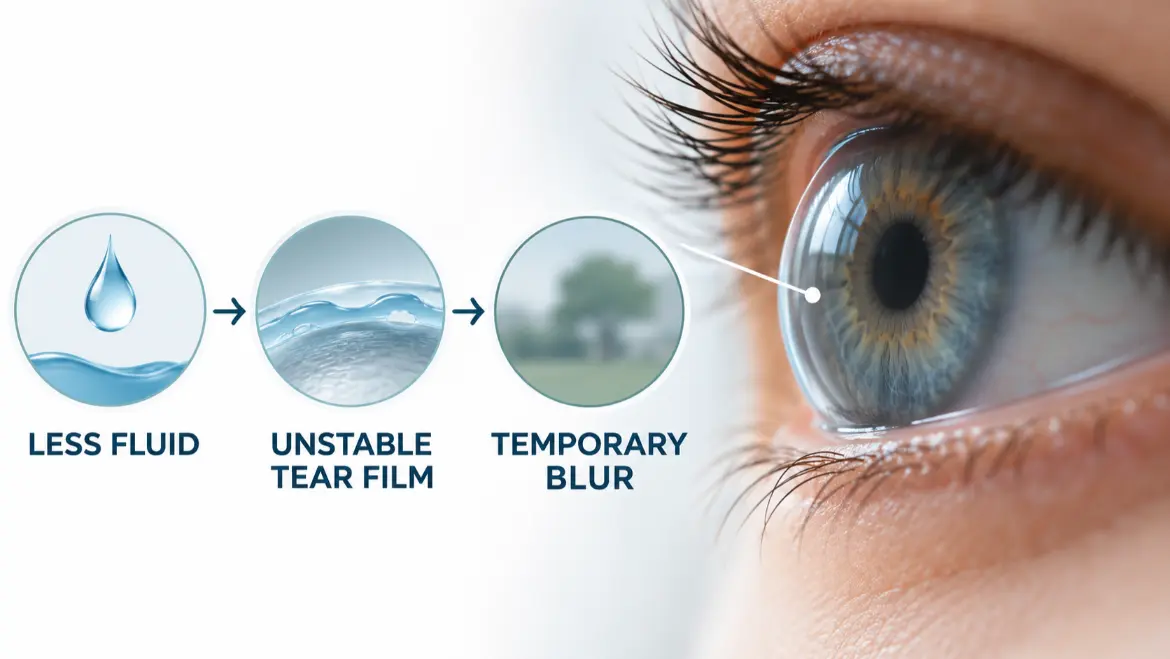
Dehydration reduces the fluid available throughout the body. The eyes rely on a stable tear film to keep their surface smooth, comfortable, and optically clear. When that film becomes unstable, vision may briefly blur and then improve after blinking.
So, can dehydration cause vision problems without causing eye disease? Yes. It may alter the tear surface or make you lightheaded even when the eye’s internal structures are healthy.
This is the main reason the answer to can dehydration cause vision problems can be yes. Fluid loss may also lower blood volume enough to cause lightheadedness, particularly when you stand up. That can make vision dim, unfocused, or briefly gray out.
These effects are usually temporary and occur with other dehydration clues. They should improve as the cause is corrected. Persistent blur, worsening symptoms, or a change affecting only one eye needs a broader explanation.
Tear Film and Temporary Blur
The tear film is not simply water. It contains oily, watery, and mucus-like layers that keep tears from evaporating too quickly and create a smooth surface for light to enter the eye. If tears evaporate rapidly or the eye does not produce enough, the surface becomes irregular.
That irregularity can cause fluctuating blur, burning, grittiness, redness, or sensitivity to light. The National Eye Institute’s dry-eye guide lists blurry vision among the possible symptoms of dry eye.
Blur caused by an unstable tear film often changes after blinking. It may be more noticeable after long screen sessions, in air conditioning, on an airplane, or while wearing contact lenses. Dehydration can add to those stresses, but it may not be the only cause.
This pattern is why people often ask can dehydration cause vision problems after travel, illness, or a demanding day outdoors. The circumstances support the possibility, but the visual pattern still determines how urgently it should be checked.
Dizziness, Blood Pressure, and Visual Disturbance
Fluid loss can reduce circulating blood volume. Some people then feel dizzy or faint when moving from sitting or lying down to standing. Vision may temporarily dim because the brain and eyes are not receiving their usual blood flow for a moment.
This helps explain can dehydration cause vision problems during illness, heavy sweating, heat exposure, or inadequate drinking. It does not mean dehydration commonly damages the eye itself. The symptom is more often related to dry eye or a temporary circulation change.
If can dehydration cause vision problems is the question after standing up quickly, note whether the dimming lasts only seconds or whether true blur continues. Ongoing visual change deserves medical advice.
Headache can accompany the same fluid deficit. Our guide to whether electrolytes help with headaches explains why fluids may help when dehydration is genuinely involved, without treating every headache as an electrolyte problem.
Can Dehydration Cause Dry Eyes?

Yes, dehydration may contribute to dry-eye symptoms by leaving less fluid available for normal tear production. You might notice scratchiness, burning, tired eyes, redness, or blur that clears after blinking. Dry environments and prolonged screen use can make the effect more obvious.
Still, the question can dehydration cause dry eyes has a more nuanced answer than “drink more water.” Dry eye can also result from poor oil-gland function in the eyelids, contact lenses, aging, medications, autoimmune conditions, smoke, wind, or reduced blinking.
If you wonder can dehydration cause vision problems because your eyes feel dry, try addressing both sides of the problem: restore normal fluid intake and reduce surface irritation. Take screen breaks, blink deliberately, avoid direct airflow, and use artificial tears if an eye-care professional or pharmacist says they are suitable for you.
Dryness that continues despite these steps deserves an eye examination. Persistent dry eye can affect comfort and vision, and the most useful treatment depends on why the tear film is failing.
In short, can dehydration cause vision problems through dryness? It can contribute, but drinking water alone will not correct every form of dry-eye disease.
What Causes Blurred Vision Besides Dehydration?
The phrase what causes blurred vision covers everything from a changed glasses prescription to an eye or neurological emergency. Dehydration is only one possible contributor and should not become the default explanation.
Common possibilities include refractive error, dry eye, eye strain, migraine, contact-lens irritation, medication effects, and changing blood glucose. Cataracts often cause gradual clouding, while retinal, corneal, or optic-nerve problems may produce more specific patterns.
The table below is a guide to urgency, not a diagnosis.
| Vision pattern | Possible explanations | Sensible next step |
|---|---|---|
| Blur that fluctuates and improves after blinking | Dry eye or tear-film instability | Rest the eyes, address dryness, and arrange care if it persists |
| Gradual difficulty seeing near or far | Prescription change, cataract, or another progressive condition | Book a routine eye examination |
| Shimmering or zigzag shapes followed by headache | Migraine aura, although first-time symptoms need assessment | Seek medical advice, urgently if the pattern is new or unusual |
| Sudden painless blur or loss in one eye | Retinal or blood-flow problem | Seek emergency assessment |
| Blur with a red, painful eye or halos | Corneal problem or acute pressure rise | Seek urgent eye care |
| Blur with weakness, facial droop, or speech trouble | Possible stroke | Call emergency services immediately |
When considering can dehydration cause vision problems, timing matters. A gradual dry sensation after a long flight is different from an abrupt dark patch or missing section of vision. Do not let a recent workout, hot day, or missed bottle of water distract from a dangerous pattern.
The more abrupt or localized the symptom, the less useful it is to keep asking can dehydration cause vision problems instead of arranging an appropriate examination.
Sudden Blurry Vision: When It Is an Emergency
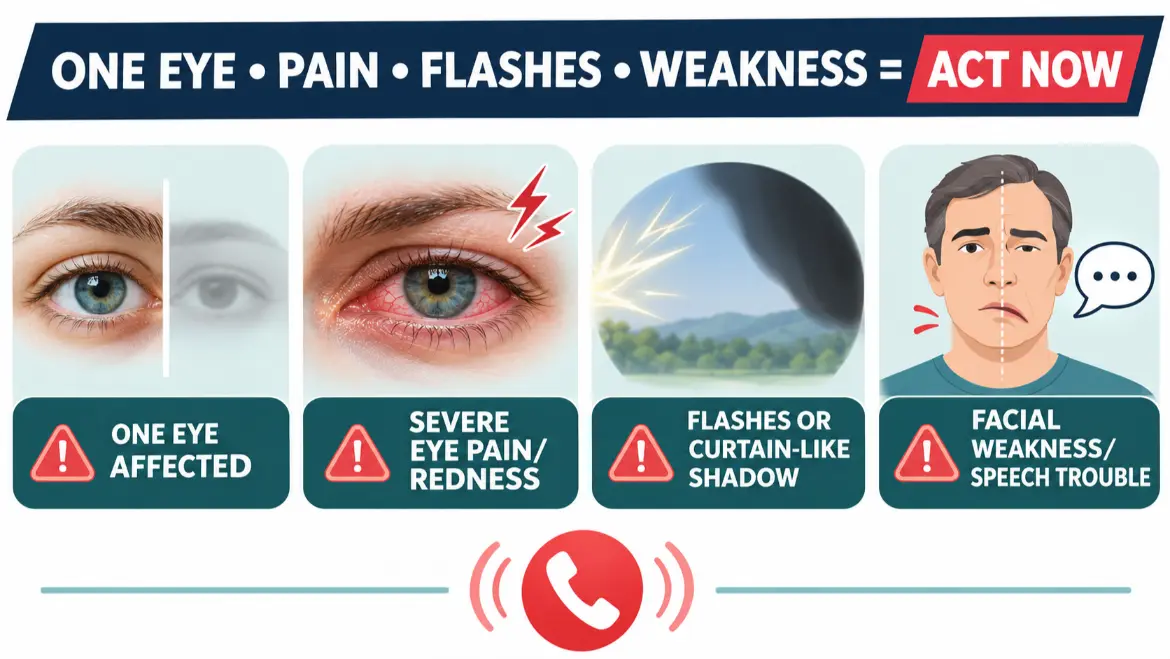
Sudden blurry vision is a warning sign, not a hydration test. The MedlinePlus guide to vision problems advises urgent help for sudden blurred vision with eye pain or redness, as well as sudden double vision, temporary blindness, halos, or distorted vision.
Call emergency services or go to an emergency department for:
- Sudden loss of all or part of the vision in either eye
- New facial droop, arm weakness, confusion, or trouble speaking
- A dark curtain, shadow, or missing area of vision
- New flashes and many floaters, especially with a shadow
- Severe eye pain, a very red eye, nausea, or halos around lights
- Vision changes after an eye or head injury
- Fainting, severe confusion, or inability to stay awake
If sudden blurry vision occurs with one-sided weakness or speech difficulty, use emergency services even if the symptoms improve. The NHS stroke-symptom guidance includes blurred vision or loss of sight among possible stroke symptoms.
The safe answer to can dehydration cause vision problems does not include assuming a sudden change will resolve after a sports drink. Time matters in several eye and neurological conditions.
Even when you know you have not been drinking enough, can dehydration cause vision problems should never be used to dismiss an emergency warning sign.
What Does Blurry Vision in the Left Eye Mean?
Blurry vision in the left eye means the change is unilateral, or limited to one side. The same reasoning applies if only the right eye is affected. Dehydration acts throughout the body, so it is less convincing as the sole cause of a distinctly one-eye symptom.
One-sided blur may come from something relatively minor, such as a smudged contact lens, dry patch, or prescription difference. It can also involve the cornea, retina, optic nerve, or blood supply to the eye.
Cover one eye and then the other only to confirm which side is affected; do not use that check to postpone care. Sudden blurry vision in the left eye, a missing visual area, flashes, a curtain-like shadow, eye pain, or new neurological symptoms requires urgent assessment.
If the blur developed gradually, is painless, and has remained stable, schedule a comprehensive eye examination. Asking can dehydration cause vision problems is reasonable, but a persistent one-eye difference should not be self-diagnosed from hydration status.
The key distinction is that can dehydration cause vision problems is a whole-body hydration question, while unilateral blur may point to a problem located in one eye or its visual pathway.
Dizziness and Blurred Vision Together

Dizziness and blurred vision can occur when dehydration makes you lightheaded, particularly after sweating, fever, vomiting, diarrhea, or a long period without fluids. Supporting clues include thirst, dry mouth, darker urine, reduced urination, fatigue, and symptoms that appear after standing.
Here, can dehydration cause vision problems is plausible only when the surrounding history also supports meaningful fluid loss.
However, dizziness and blurred vision also occur with low blood sugar, medication effects, migraine, inner-ear disorders, abnormal heart rhythm, severe blood-pressure changes, and stroke. The combination does not prove dehydration.
Sit or lie down if you feel faint, avoid driving, and ask someone to stay with you if symptoms are significant. Emergency help is appropriate for new weakness, facial droop, trouble speaking, severe headache, chest pain, fainting, confusion, or an inability to walk normally.
If fluid and salt loss followed prolonged sweating, a measured electrolyte drink may sometimes be appropriate. First understand why salt supplies electrolytes; adding excessive salt is not a safer or faster solution.
Seven Signs Dehydration May Be Contributing
No single symptom proves the cause, but a cluster can make dehydration more likely. Consider whether several of these are present:
- You have been drinking less than usual.
- You recently had heavy sweating, fever, vomiting, or diarrhea.
- Your mouth feels dry and you are noticeably thirsty.
- You are urinating less often, and the urine is darker than usual.
- Your eyes feel gritty or dry, and the blur changes after blinking.
- You feel lightheaded when standing up.
- The symptoms are mild, affect both eyes similarly, and improve as normal hydration returns.
This checklist explains when can dehydration cause vision problems is a plausible question, not when it is a confirmed diagnosis. Urine color can be influenced by food, vitamins, and medicine. Likewise, dry eyes can exist even when the rest of the body is adequately hydrated.
Use several clues together when deciding whether can dehydration cause vision problems fits your situation. One dry mouth or one blurry moment is not enough to establish the cause.
Symptoms that are sudden, severe, painful, one-sided, or accompanied by neurological changes do not fit a simple home-hydration approach.
How to Rehydrate Safely

For mild dehydration, start with water and normal meals. Sip steadily rather than forcing a large volume at once, especially if you feel nauseated. Move to a cool place, rest, and avoid alcohol until you feel well.
An electrolyte drink may be useful after prolonged heavy sweating or meaningful fluid and salt loss. For an everyday explanation of when minerals matter, see our guide to electrolyte drinks for muscle cramps. More sodium is not automatically better, and ordinary water may be enough after a routine day.
Do not drive while your vision is blurred or you feel dizzy. If you wear contact lenses and the eyes are irritated, remove them if you can do so safely and use your glasses. Avoid rubbing the eyes.
People with heart failure, kidney disease, severe liver disease, or prescribed fluid or sodium limits should follow their clinician’s plan rather than generic rehydration advice. Repeated vomiting, severe diarrhea, confusion, fainting, or inability to keep fluids down may require medical care.
If you are testing whether can dehydration cause vision problems in a mild situation, improvement should involve the whole pattern: thirst eases, urination returns toward normal, dizziness settles, and vision becomes stable. A glass of water should never be used to “clear” an emergency symptom.
When can dehydration cause vision problems remains unanswered after rehydration, stop treating fluid intake as the only variable and arrange an eye or medical assessment.
When to See an Eye Doctor
Arrange an eye examination if blurred vision persists after you have returned to normal hydration, recurs frequently, affects reading or driving, or is noticeably different between the eyes. Also book an appointment for ongoing dryness, redness, contact-lens discomfort, headaches with visual changes, or a suspected prescription change.
Seek same-day urgent care for new vision changes, significant eye pain, a red painful eye, light sensitivity, new flashes or floaters, or symptoms after injury. Sudden vision loss or stroke signs require emergency services.
An eye professional can examine the cornea and tear film, measure vision and eye pressure, and inspect the retina and optic nerve. Those findings are much more reliable than trying to answer can dehydration cause vision problems from symptoms alone.
Bring a short timeline of when the symptom began, whether one or both eyes were involved, and what other symptoms occurred. That helps a clinician assess can dehydration cause vision problems alongside more important alternatives.
The Bottom Line
So, can dehydration cause vision problems? It can contribute to temporary blurry vision by worsening dry eye or causing lightheadedness, especially when thirst, dark urine, low urine output, and recent fluid loss are present.
But dehydration is not a safe explanation for sudden blurry vision, vision loss, eye pain, flashes, a curtain-like shadow, or blur isolated to one eye. Those symptoms may have an eye, circulation, or neurological cause that needs prompt assessment.
Use hydration as one piece of context—not as a diagnosis. If vision does not normalize as mild dehydration resolves, or if any warning sign appears, seek professional care.
Frequently Asked Questions
Can dehydration cause blurry vision in both eyes?
Yes, dehydration may contribute to temporary blur in both eyes through dry-eye symptoms or lightheadedness. Blur that persists after normal hydration returns needs an eye examination.
This is one context in which the answer to can dehydration cause vision problems may be yes, provided no emergency warning signs are present.
Can dehydration cause sudden blurry vision?
Dehydration can cause lightheadedness and brief dimming, but sudden blurry vision may signal an eye or neurological emergency. Seek urgent care, particularly if one eye is affected or pain, flashes, weakness, or speech trouble occurs.
Therefore, never let can dehydration cause vision problems delay urgent assessment for an abrupt change.
Can dehydration cause dry eyes even if I am not thirsty?
It may contribute, but dry eye has many causes. Screens, contact lenses, wind, low humidity, medications, eyelid-gland problems, and health conditions can all affect the tear film.
Why do I have dizziness and blurred vision after standing?
Dehydration may reduce blood volume and contribute to a temporary blood-pressure drop on standing. Medication effects, heart problems, and other conditions can cause a similar pattern, so recurrent or severe episodes need medical advice.
What causes blurred vision in only one eye?
Possibilities range from dry eye and contact-lens problems to conditions involving the cornea, retina, optic nerve, or eye circulation. Sudden one-eye blur or vision loss requires emergency assessment.
Will an electrolyte drink fix dehydration-related blurry vision?
Not necessarily. Water and food may be sufficient for mild dehydration, while an electrolyte drink may help after substantial sweat or gastrointestinal losses. Persistent or sudden blur needs assessment rather than repeated electrolyte servings.
How long should dehydration-related blurry vision last?
There is no reliable universal time. Mild symptoms should improve as normal hydration and circulation return. If the vision change is persistent, recurrent, worsening, painful, or one-sided, seek care.
This article contains affiliate links. If you purchase through our links, we may earn a commission at no extra cost to you. We only recommend products we genuinely believe in. Read our Affiliate Disclaimer for full details.