
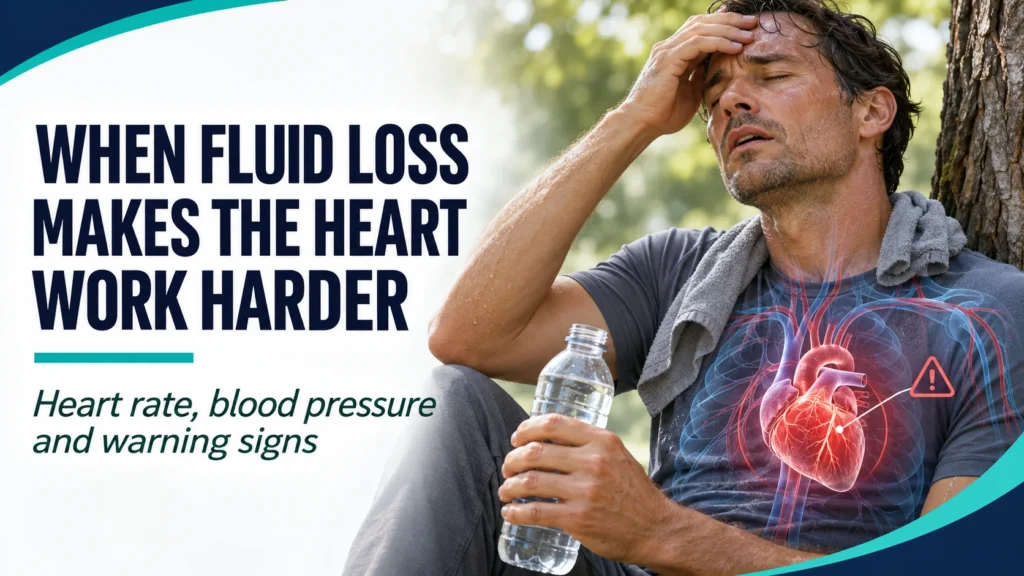
Quick answer: Yes, dehydration can temporarily affect the heart and circulation. Losing too much fluid reduces blood volume, so the heart may beat faster to keep blood moving. Blood pressure can fall, dizziness may develop, and severe dehydration can contribute to shock. Dehydration does not automatically mean heart disease, but chest pain, fainting, breathlessness, or a very fast heartbeat needs prompt medical attention.
If you are wondering can dehydration cause heart problems, the answer depends on the severity of fluid loss and your underlying health. Mild dehydration may cause thirst, fatigue, a headache, or a slightly faster pulse. More serious dehydration can strain circulation, disturb electrolytes, and make the heart work harder.
The symptoms can also overlap with anxiety, heat illness, medication effects, an abnormal heart rhythm, or an existing heart condition. That is why it is unsafe to assume every racing heartbeat or chest sensation is “just dehydration.”
Table of Contents
How Can Dehydration Cause Heart Problems?
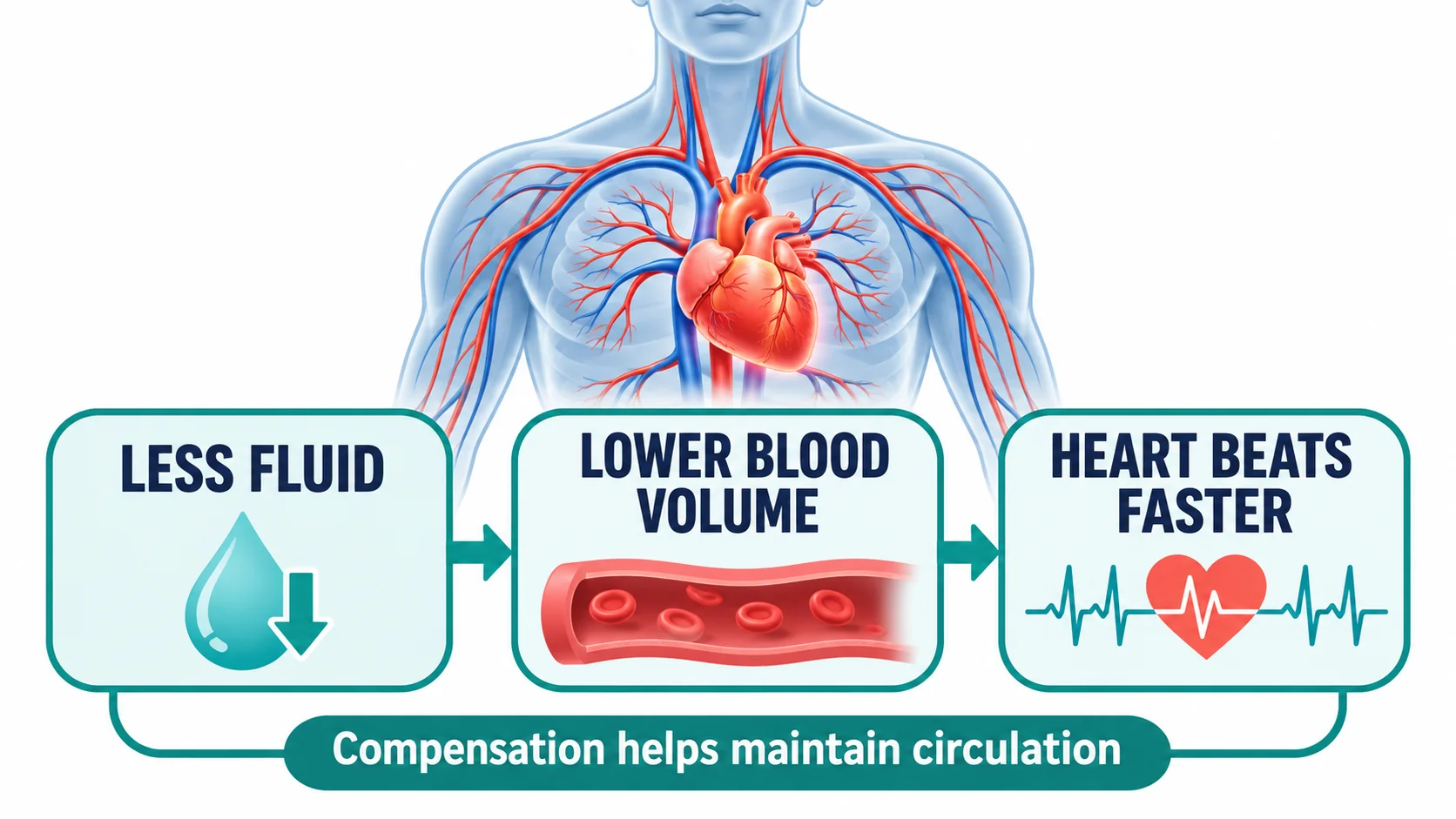
Your blood contains a large amount of water. When the body loses more fluid than it takes in, the amount of blood circulating through the blood vessels can decrease. The heart may compensate by beating faster, while blood vessels tighten to help maintain blood flow to the brain and other organs.
This explains why the question can dehydration cause heart problems often begins with a noticeable pulse. The sensation may feel like a fast heartbeat, pounding, fluttering, or palpitations—especially after exercise, fever, vomiting, diarrhea, alcohol use, or time in hot weather.
The MedlinePlus dehydration guide lists rapid heartbeat and rapid breathing among signs that can accompany serious dehydration. It also explains that clinicians may check kidney function and electrolyte levels when dehydration is suspected.
Can Dehydration Cause Heart Problems Through a Faster Heart Rate?
The connection between dehydration and heart rate is largely about compensation. With less circulating fluid, the heart may increase its rate to preserve cardiac output—the amount of blood pumped each minute.
A faster pulse during or after a hot workout can therefore be consistent with fluid loss. However, your pulse should be considered alongside temperature, activity, symptoms, medications, caffeine intake, and your normal resting rate.
If your heart rate remains unusually fast after resting and drinking, or it occurs with chest pain, shortness of breath, fainting, or severe dizziness, seek medical care.
The American Heart Association’s heart-rate guidance advises emergency help for a suddenly very high or low heart rate accompanied by concerning symptoms.
Does Dehydration Cause High Blood Pressure?
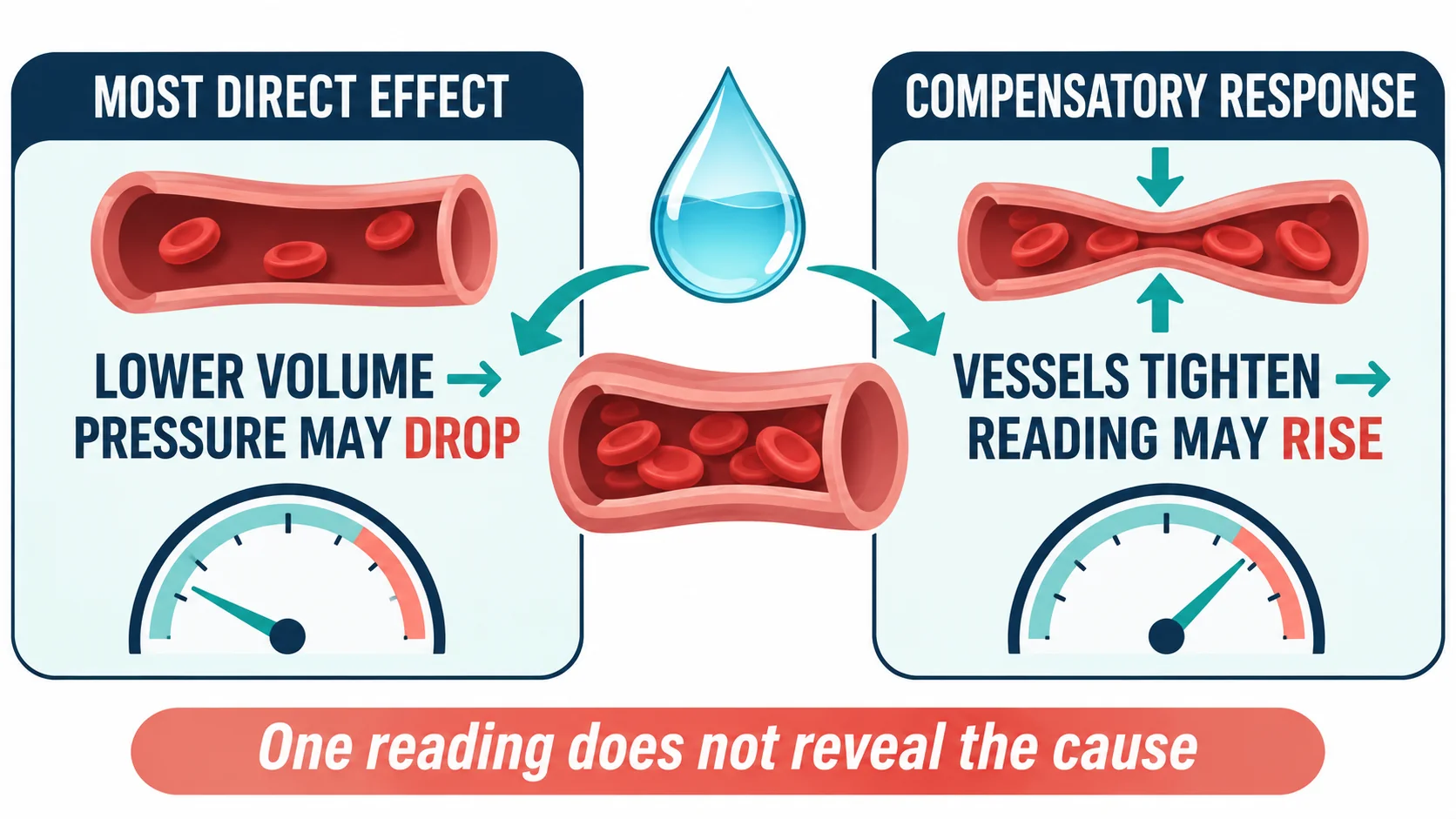
Usually, significant fluid loss is more directly associated with lower blood volume and low blood pressure. Dehydration may also cause blood pressure to drop when you stand, producing lightheadedness or a near-fainting sensation.
For readers asking can dehydration cause heart problems because of an unusual blood-pressure reading, one isolated result cannot show whether fluid loss is the cause.
So, does dehydration cause high blood pressure? It can sometimes contribute to a temporary increase because the body releases hormones and tightens blood vessels to preserve circulation. This compensatory response does not mean dehydration is a typical cause of chronic hypertension.
The answer to can dehydration cause heart problems is therefore not as simple as “dehydration raises blood pressure.” The same person might experience a faster pulse, vessel constriction, or a fall in pressure depending on severity, body position, heat exposure, medications, and underlying health.
Can Dehydration Cause High Blood Pressure Temporarily?
Yes, can dehydration cause high blood pressure temporarily? It is possible when the body responds to reduced fluid volume by constricting blood vessels. Stress hormones can also affect a single reading.
However, a high reading should not automatically be blamed on dehydration. Pain, anxiety, caffeine, exercise, illness, missed medication, and measurement errors can all influence blood pressure.
If repeated readings remain high after you have rested and recovered, contact a healthcare professional. Do not repeatedly consume salty electrolyte drinks in an attempt to “correct” blood pressure without medical guidance.
For additional context about sodium’s role in body fluids, read Is Salt an Electrolyte?. Sodium is essential, but extra sodium is not suitable for everyone, particularly people following a heart, kidney, or blood-pressure treatment plan.
Can Dehydration Cause Chest Pain?
Dehydration can accompany sensations such as a pounding heart, tightness, muscle discomfort, dizziness, or shortness of breath. Severe fluid loss may reduce circulation and increase cardiovascular strain. Electrolyte disturbances may also affect normal electrical activity in the heart.
The concern behind can dehydration cause heart problems becomes especially important when chest discomfort is new, unexplained, or different from anything you have experienced before.
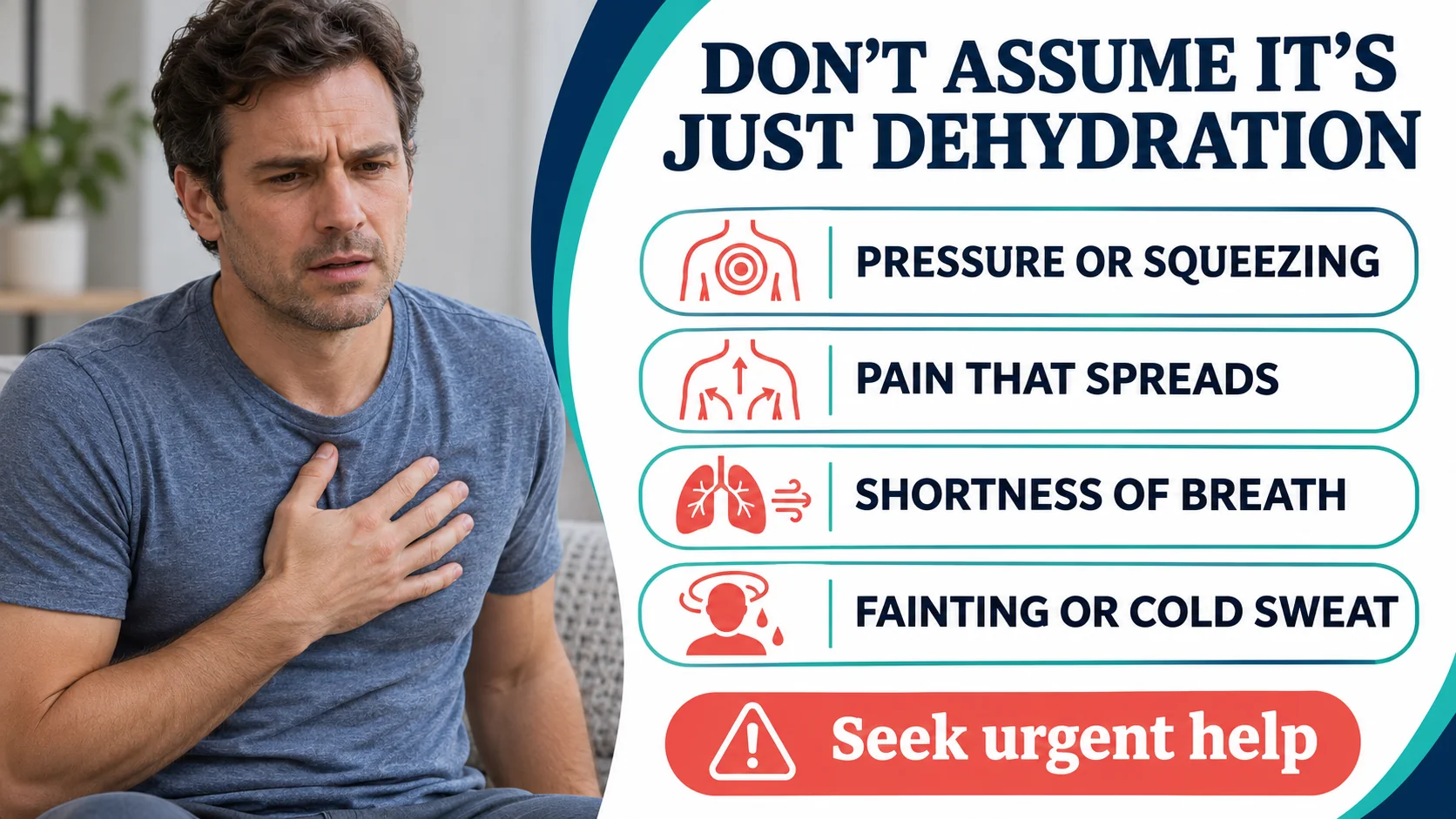
But does dehydration cause chest pain often enough that you can safely dismiss it? No. Chest pain has many possible causes, including potentially life-threatening heart and lung conditions. You cannot confirm the cause from hydration status alone.
This is one of the most important limits when answering can dehydration cause heart problems. Even if you have been sweating or have not had enough to drink, new chest pain should not be self-diagnosed as dehydration.
Call emergency services for pressure, squeezing, fullness, or pain in the center of the chest—especially if it persists, returns, spreads to the arm, jaw, back, neck, or stomach, or occurs with breathlessness, sweating, nausea, or lightheadedness.
These are among the American Heart Association’s heart-attack warning signs.
Seven Signs of Dehydration That May Affect Circulation
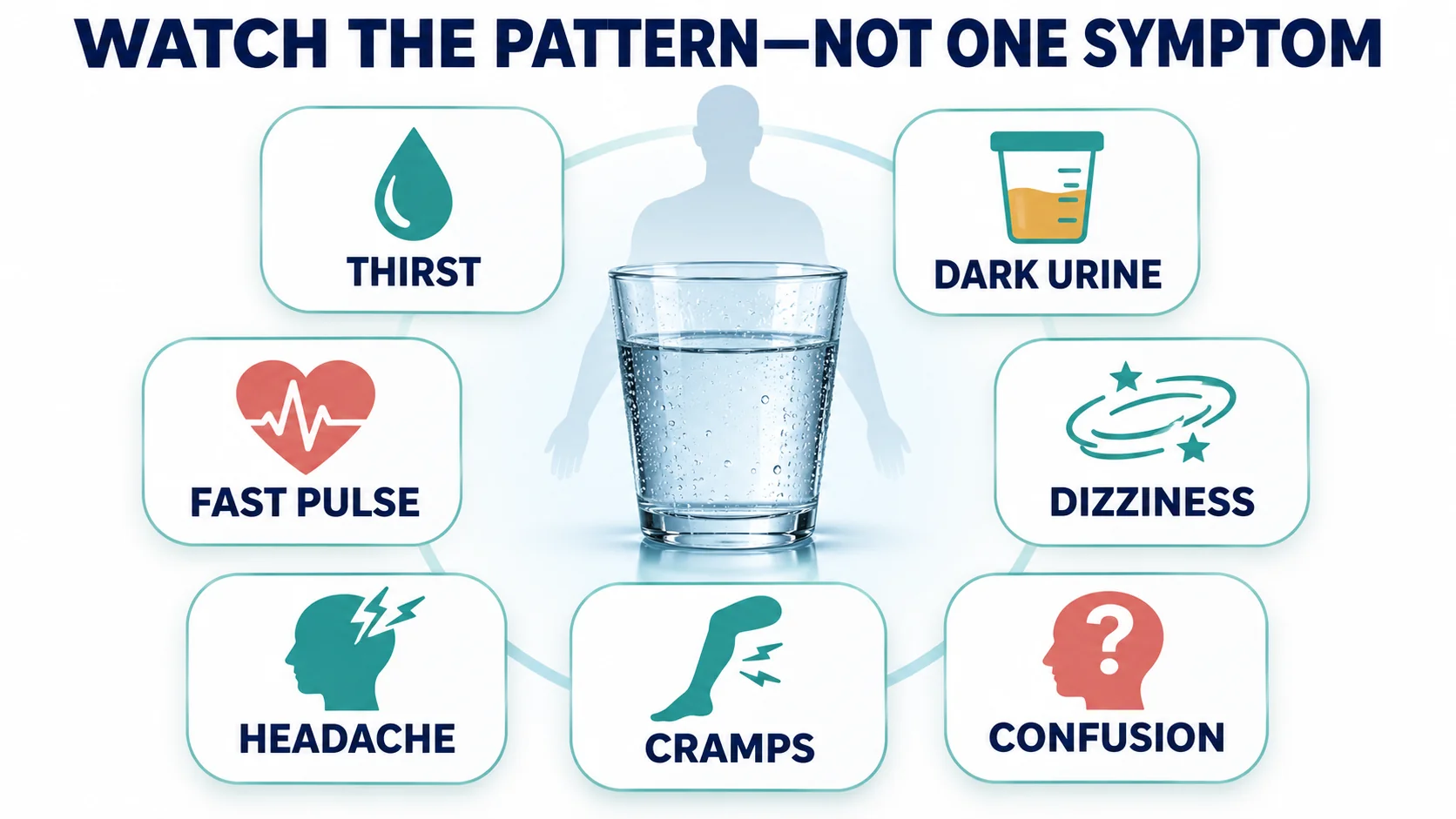
The signs of dehydration vary with age, cause, temperature, and severity. No single symptom proves dehydration, but a cluster of symptoms following fluid loss is more informative.
Looking at the full symptom pattern provides a safer answer to can dehydration cause heart problems than focusing on thirst or heart rate alone.
1. Thirst and Dry Mouth
Thirst is an early signal to drink. Dry lips, a sticky mouth, and reduced saliva can appear as fluid loss progresses.
Older adults may have a weaker thirst response, so waiting for strong thirst is not always reliable.
2. Dark Urine or Urinating Less
When the body tries to conserve water, urine may become darker and less frequent. Certain foods, supplements, and medicines can also change urine color, so consider the full pattern.
3. Faster Heart Rate
A rapid pulse is one reason people ask can dehydration cause heart problems. It may reflect the heart compensating for lower circulating volume.
However, infection, anemia, thyroid problems, arrhythmias, stimulants, and other conditions can also raise heart rate.
4. Dizziness When Standing
Dehydration can contribute to a blood-pressure drop when you stand. Sit or lie down to avoid falling.
Persistent dizziness, fainting, weakness, or confusion requires medical assessment.
5. Headache and Fatigue
Fluid loss may contribute to headache, poor concentration, and tiredness.
Our guide Do Electrolytes Help With Headaches? explains when replacing water and minerals may help and why not every headache is caused by dehydration.
6. Muscle Cramps or Weakness
Sweating can reduce both water and electrolytes. Cramps can occur after heat exposure or prolonged exercise, although fatigue, overuse, nerve problems, circulation issues, and medications are also possible causes.
If cramping follows heavy sweating, our electrolyte drink for muscle cramps guide explains what to look for without presenting electrolytes as a cure for every cramp.
7. Confusion, Fainting, or Very Little Urine
These can indicate severe dehydration or another medical emergency.
Confusion, collapse, inability to drink, no urination, rapid breathing, cool or blotchy skin, or worsening symptoms should not be managed with a hydration powder alone.
Can Dehydration Trigger Palpitations?
Palpitations describe an awareness of the heartbeat. They may feel like pounding, racing, fluttering, or skipped beats.
Dehydration may contribute through reduced blood volume, increased heart rate, heat stress, or changes in sodium and potassium balance.
When palpitations lead you to ask can dehydration cause heart problems, note how long they last and whether they occur with pain, dizziness, breathlessness, or fainting.
Still, palpitations have many possible causes. When evaluating can dehydration cause heart problems, it is important to separate a temporary compensatory increase in pulse from a true rhythm disorder.
Seek medical advice for new, recurrent, or prolonged palpitations. Seek urgent care when they occur with chest pain, breathlessness, fainting, severe weakness, or neurological symptoms.
Who Has a Higher Risk of Complications?
Some people can become dehydrated more quickly or tolerate circulatory changes less easily.
In these groups, the answer to can dehydration cause heart problems may depend heavily on prescribed medicines, fluid restrictions, and existing heart or kidney function.
Higher-risk groups include:
- Infants and young children
- Older adults
- People working or exercising in heat
- Anyone with repeated vomiting, diarrhea, or fever
- People taking diuretics or medicines affecting blood pressure
- People with kidney disease, diabetes, heart failure, or another heart condition
- People who need help accessing or drinking fluids
For these groups, can dehydration cause heart problems may have greater practical importance because even modest changes in fluid or electrolytes can interact with medications and medical conditions.
People with heart failure may be instructed to limit fluids, while others may be encouraged to drink more. Follow the individualized plan from your healthcare team rather than general internet targets.
How to Rehydrate Safely
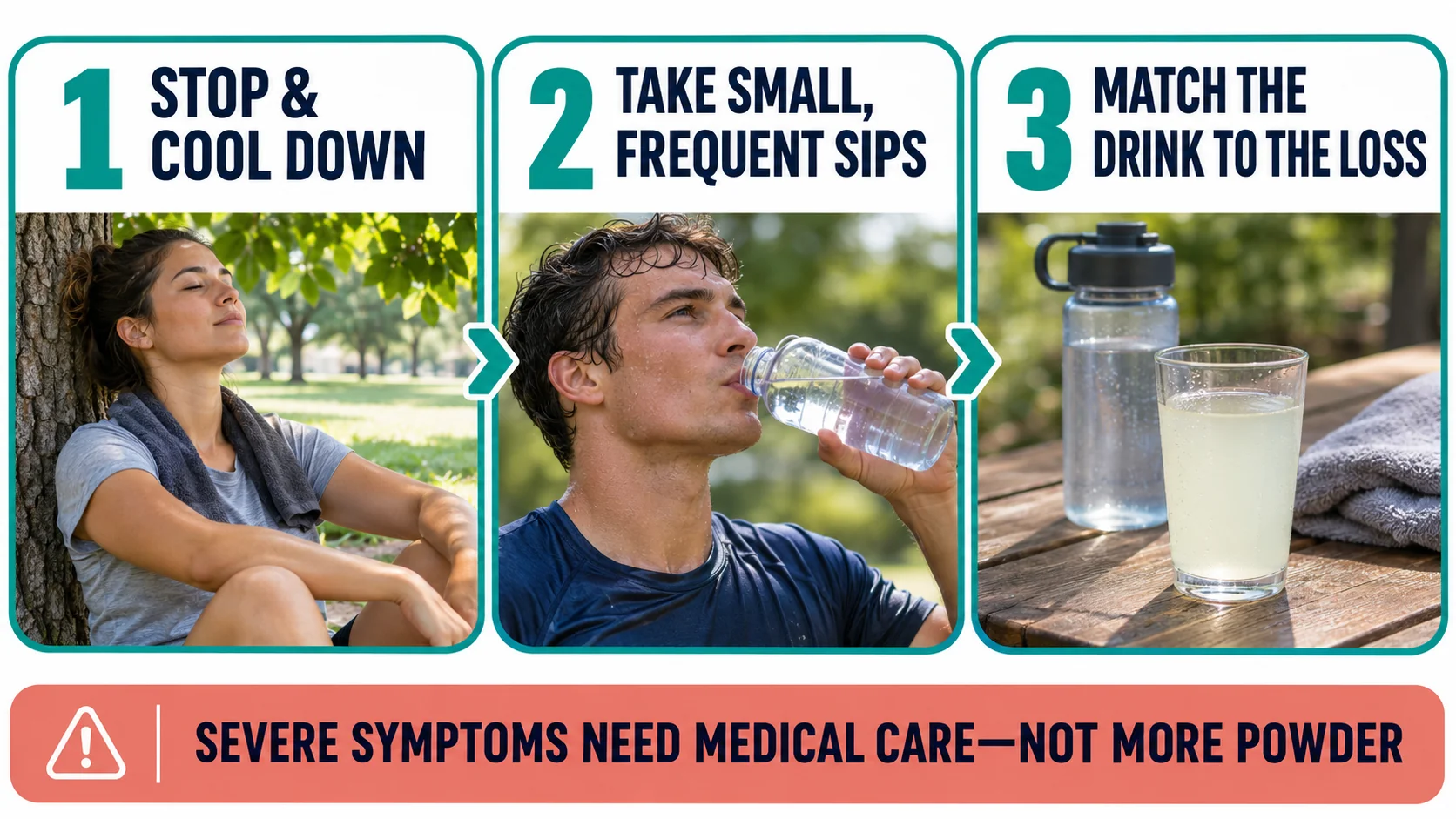
For mild dehydration, stop strenuous activity, move to a cool place, and drink gradually. Small, frequent sips may be easier to tolerate than quickly drinking a large volume, especially after nausea or heat exposure.
Safe rehydration matters because can dehydration cause heart problems is partly a question of severity: mild fluid loss and circulatory collapse are not the same situation.
Plain water is usually appropriate for routine thirst and short periods of light activity. A drink containing electrolytes may be useful after substantial sweating or fluid loss from vomiting or diarrhea.
A medical oral rehydration solution is different from a typical sports drink because its water, sodium, and glucose proportions are designed for intestinal absorption.
Our guide to the best electrolyte drink when sick explains why the severity and cause of fluid loss should guide the drink—not the popularity of a brand.
Avoid forcing excessive plain water or concentrated electrolyte drinks. Too much water too quickly can dilute blood sodium, while unnecessary sodium or potassium may be unsuitable for people with heart or kidney conditions.
When Home Rehydration Is Not Enough
Home fluids are not appropriate when you cannot keep liquids down, are confused, faint, have very little or no urine, have a rapid heartbeat that does not settle, or show signs of shock or heatstroke.
At that point, searching can dehydration cause heart problems should not delay professional assessment.
When symptoms are severe, the question can dehydration cause heart problems should give way to immediate assessment.
Clinicians can check vital signs, kidney function, electrolytes, and heart rhythm and provide intravenous fluids when appropriate.
How to Help Prevent Dehydration
Drink regularly, particularly before and during heat exposure or prolonged activity. Increase fluids when sweating, fever, vomiting, or diarrhea raises losses.
Check urine frequency and color, but do not rely on color alone.
Prevention is the simplest response to can dehydration cause heart problems, especially when heat, illness, or long exercise makes fluid loss predictable.
Other practical steps include:
- Carrying water during travel, work, or exercise
- Taking breaks in shade or air conditioning
- Beginning long workouts well hydrated
- Following medicine instructions carefully
- Using an appropriate electrolyte or oral rehydration product when losses justify it
- Checking on older adults and people who depend on others for fluids
Prevention also means knowing your personal limits. Someone with a prescribed fluid restriction should not follow the same hydration advice as a healthy endurance athlete.
The Bottom Line
So, can dehydration cause heart problems? Dehydration can temporarily affect heart rate, blood pressure, circulation, and electrolyte balance.
The heart may beat faster as blood volume falls, while blood pressure may drop or occasionally rise temporarily through compensation.
Mild symptoms often improve with rest and gradual fluid replacement. But dehydration should never be used as a reassuring explanation for chest pain, fainting, breathlessness, confusion, or a persistent abnormal heartbeat.
If symptoms feel severe, unusual, or are getting worse, seek medical help rather than trying to solve the problem with more water, salt, or electrolyte powder.
Frequently Asked Questions
Can dehydration damage the heart permanently?
Mild, short-lived dehydration usually does not permanently damage a healthy heart. Severe or prolonged dehydration can reduce circulation, disturb electrolytes, affect kidney function, and contribute to dangerous complications. This is why can dehydration cause heart problems cannot be answered from thirst alone; duration, severity, symptoms, and underlying health all change the risk.
How does dehydration affect resting heart rate?
Dehydration may raise resting heart rate because the heart compensates for reduced circulating fluid. A persistently abnormal rate should be evaluated rather than assumed to be caused by dehydration. If you ask can dehydration cause heart problems after noticing a faster resting pulse, rest, cool down, and consider whether other concerning symptoms are present.
Can dehydration cause heart problems after exercise?
Heavy sweating can lower fluid volume and increase heart rate, particularly during long exercise or hot conditions. Persistent chest pain, fainting, severe breathlessness, or an abnormal heartbeat after exercise requires medical evaluation.
Can dehydration cause heart problems in older adults?
Older adults may have a reduced thirst response and may use medicines that affect fluid balance or blood pressure. New confusion, fainting, very little urine, or a rapid heartbeat needs prompt attention.
Does dehydration cause high blood pressure or low blood pressure?
Fluid loss is more directly associated with low blood volume and potentially low blood pressure. Compensatory vessel tightening and stress hormones can sometimes cause a temporary rise. Dehydration is not a simple explanation for chronic high blood pressure.
Does dehydration cause chest pain that goes away after drinking water?
Some symptoms related to heat, muscle tension, or a fast heartbeat may improve after rest and fluids. However, chest pain should not be diagnosed by whether water helps. New, severe, persistent, or spreading pain requires urgent evaluation.
Can dehydration cause an irregular heartbeat?
Dehydration may contribute to palpitations and electrolyte disturbances, but an irregular heartbeat has many possible causes. Seek medical advice for recurrent symptoms and urgent help when they accompany pain, breathlessness, or fainting.
How quickly should heart rate improve after drinking water?
There is no universal timeline. It depends on dehydration severity, the cause of fluid loss, temperature, activity, medications, and health. A very fast or worsening heart rate needs assessment rather than repeated self-treatment.
Can an electrolyte drink prevent heart problems from dehydration?
An appropriate drink can help replace fluid and minerals after meaningful losses, but it cannot prevent or treat every cardiac problem. Severe symptoms and people with heart, kidney, or blood-pressure conditions need individualized medical guidance. An electrolyte label alone cannot answer can dehydration cause heart problems or confirm that a drink is the correct treatment.