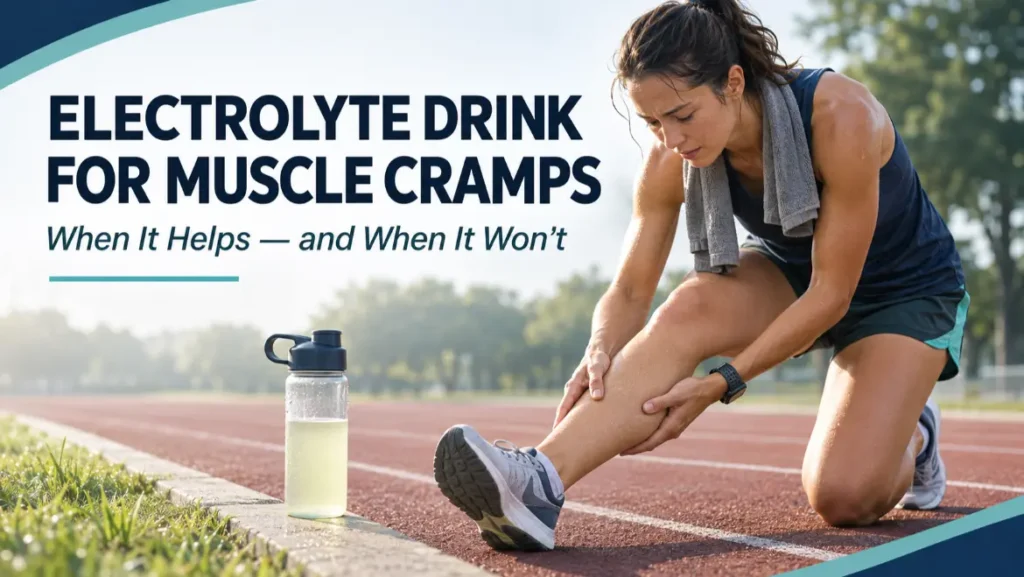
An electrolyte drink for muscle cramps may help when the cramp follows heavy sweating, prolonged exercise, heat exposure, vomiting, or another clear source of fluid and mineral loss. It will not reliably fix every cramp. Muscle fatigue, overuse, medications, nerve problems, circulation issues, pregnancy, and other conditions can also cause cramping.
Table of Contents
If you cramped near the end of a long, hot workout and finished with salt marks on your clothes, a sodium-containing drink is a reasonable choice. If cramps happen at night, recur without exercise, or come with swelling, weakness, numbness, or severe pain, choosing a stronger drink is not the answer. The pattern matters more than the marketing on the bottle.
Can an Electrolyte Drink Help Muscle Cramps?
An electrolyte drink for muscle cramps can replace some of the water and minerals lost through sweat. Sodium is the main electrolyte lost in sweat, while smaller amounts of potassium, magnesium, and calcium are also lost. Replacing those losses may be useful during long exercise, hot conditions, outdoor work, or repeated training sessions.
However, cramps are not a simple “low electrolytes” alarm. A recent systematic review found that the known risk factors for exercise-associated cramps remain uncertain and that a previous history of cramping was the clearest predictor of another episode. A separate evidence review describes exercise-associated muscle cramps as multifactorial rather than the result of one universal deficiency.
That means the best electrolyte drink for cramps is the one that matches an actual loss. A high-sodium packet can make sense for a heavy sweater after a long run. The same packet may be unnecessary for someone whose calf cramps after sitting at a desk or while sleeping.
Why Muscle Cramps Happen
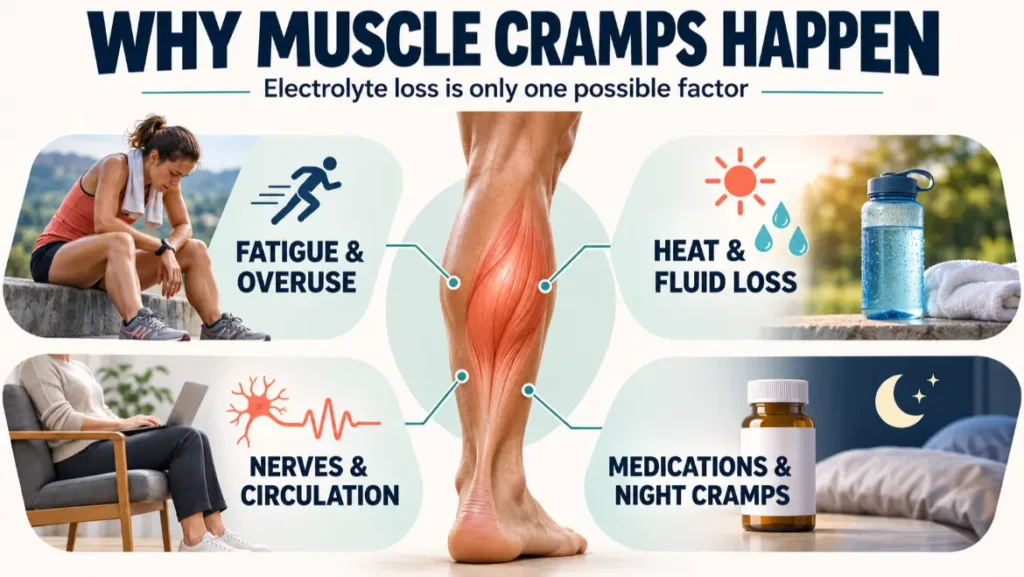
Muscle cramps are sudden, painful, involuntary contractions. They commonly affect the calves, feet, thighs, and hands, but the trigger can differ from one person to another.
Fatigue and Overuse
Exercise cramps often appear when a working muscle becomes fatigued. A runner may cramp late in a race, a cyclist during a long climb, or a gym user after doing more repetitions than usual. In these situations, altered nerve signals within a tired muscle may matter as much as hydration.
An electrolyte drink for muscle cramps cannot instantly reverse muscle fatigue. Reducing intensity, resting, and gently stretching the shortened muscle usually provides faster relief than waiting for a beverage to be absorbed.
Dehydration and Sweat Losses
Dehydration and electrolyte loss can increase the likelihood of cramping for some people, especially when exercise is long, hot, or sweaty. The clue is the full situation: substantial sweat, thirst, declining performance, heat exposure, and inadequate fluid intake are more meaningful than the cramp alone.
Our guide to electrolyte drinks for runners explains why workout duration, weather, and personal sweat rate should influence sodium intake instead of relying on one fixed number.
Causes Unrelated to Exercise
According to MedlinePlus guidance on muscle cramps, cramps can also be associated with muscle strain, nerve compression, reduced blood flow, pregnancy, dialysis, certain medicines, and medical conditions. Dehydration or low electrolyte levels are only part of that list.
Recurring nighttime cramps therefore should not automatically lead to daily electrolyte supplementation. If there is no obvious fluid loss, an electrolyte drink for muscle cramps may add sodium, sugar, or minerals without addressing the real trigger.
What to Look For in an Electrolyte Drink for Muscle Cramps
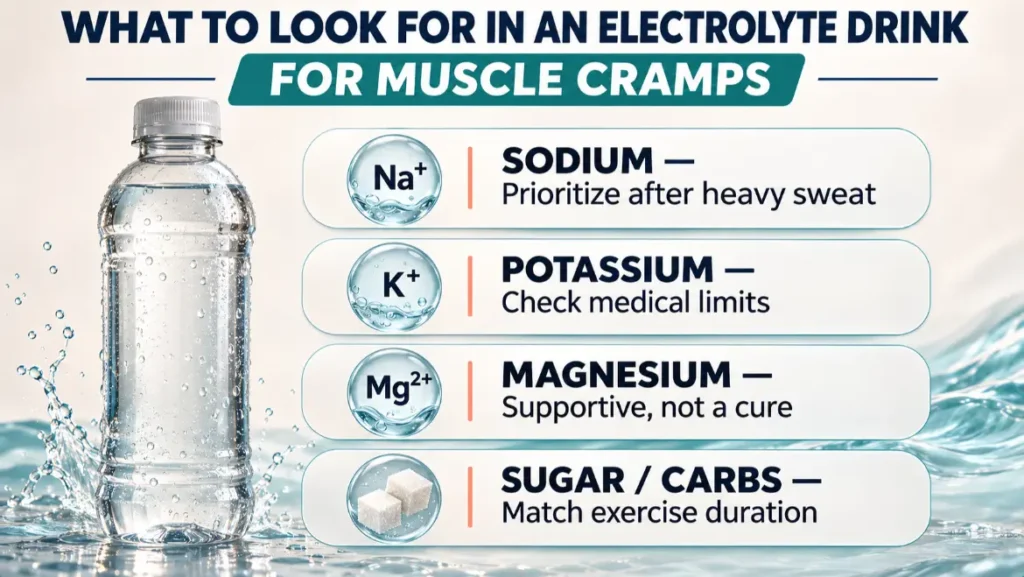
Do not choose an electrolyte drink for muscle cramps because the front label displays a large “total electrolytes” number. Turn the package around and compare the individual amounts, serving size, water volume, sugar, and directions.
Start With Sodium After Heavy Sweating
For exercise-related losses, sodium usually deserves the most attention. It helps retain fluid and replaces the main mineral lost in sweat. A drink with only a token amount of sodium may taste refreshing but provide limited replacement after a long, hot session.
Needs vary widely. A modest formula may suit a recreational workout, while a heavy sweater training for hours may need a more deliberate plan. The American College of Sports Medicine notes that most people exercising for less than about 60 to 90 minutes in normal conditions are unlikely to become significantly depleted of electrolytes.
For context, our LMNT review examines a high-sodium packet. Its 1,000 milligrams of sodium may fit prolonged sweating for some users but can be excessive for casual sipping or sodium-restricted diets.
Potassium Supports Normal Muscle Function but Is Not a Quick Cure
Potassium helps nerves and muscles function normally, but more potassium is not automatically better. Most people receive potassium through foods such as potatoes, beans, dairy products, fruit, and vegetables.
An electrolyte drink for muscle cramps does not need an unusually large potassium dose to be useful. People with kidney disease, high blood potassium, heart conditions, or medicines that affect potassium should use individualized medical guidance rather than selecting the highest number on a label.
Our comparison of low-potassium electrolyte drinks can help readers who have been told to monitor potassium, but a clinician-directed restriction should always guide the final choice.
Magnesium Is Often Overmarketed
Magnesium supports normal nerve and muscle function, and a true magnesium deficiency can contribute to cramping. That does not mean magnesium is the missing answer for most people.
The NIH Office of Dietary Supplements explains that getting more magnesium might help when intake is inadequate, but most cramps have other causes. A Cochrane review also found magnesium unlikely to meaningfully reduce ordinary muscle cramps in older adults, with insufficient evidence for exercise-related cramps.
Choose magnesium as part of a balanced formula, not because a label promises that magnesium for muscle cramps will stop every episode. High supplemental amounts may also cause diarrhea, which can worsen fluid loss.
Sugar Depends on the Job
Sugar is not an electrolyte. Still, carbohydrates can supply exercise fuel and support fluid absorption in certain sports or oral rehydration formulas. During a long endurance session, a drink containing both sodium and carbohydrates may be more useful than zero-calorie flavored water.
For short activity or everyday hydration, a high-sugar drink may add calories without providing a meaningful advantage. Compare total sugar, added sugar, serving size, and how much you will actually drink.
How to Match an Electrolyte Drink for Muscle Cramps to the Situation
The right electrolyte drink for muscle cramps depends on when the cramp occurs and what happened beforehand.
Short Workouts in Normal Conditions
For a typical workout lasting less than an hour, water and normal meals are often enough. If you cramp repeatedly during short sessions, review training load, technique, conditioning, footwear, recovery, and medications rather than assuming you need a stronger electrolyte powder.
A moderate product such as the one discussed in our Nuun review may be convenient when you prefer flavored water, but convenience should not be mistaken for cramp prevention.
Long Exercise, Heat, and Heavy Sweating
An electrolyte drink for muscle cramps is more relevant when exercise lasts well beyond an hour, the weather is hot, clothing shows salt stains, or your body weight drops noticeably during training. Look for clearly listed sodium per serving and follow the product’s mixing directions.
Do not pour several packets into one bottle without calculating the total. More sodium can be appropriate after large sweat losses, but excessive intake can cause stomach upset and may be unsuitable for people managing blood pressure, kidney disease, heart disease, or fluid restrictions.
Nighttime or Unexplained Cramps
An electrolyte drink for muscle cramps is less convincing when cramps appear during sleep, while resting, or without heavy sweating. Gentle stretching, reviewing medications, and discussing frequent symptoms with a healthcare professional are more useful starting points.
The same caution applies to cramps during pregnancy, dialysis, or in people with thyroid, nerve, circulation, kidney, or metabolic conditions. These situations need cause-specific advice, not a generic hydration recommendation.
What to Do When a Cramp Starts
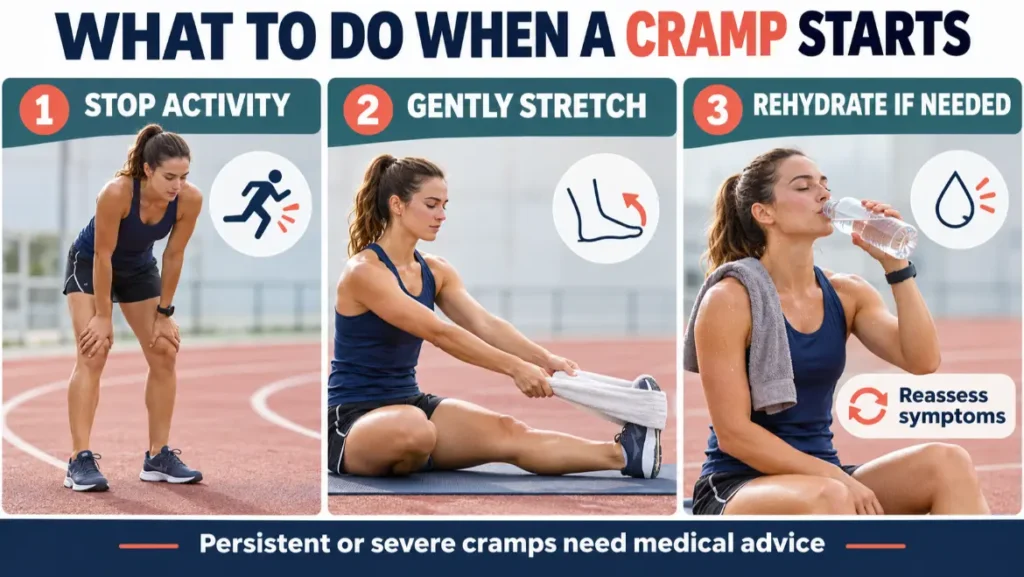
Stop the activity and gently lengthen the cramped muscle. For a calf cramp, keep the knee straight and slowly pull the toes toward the shin. Do not bounce or force the stretch through sharp pain.
Massage may help the muscle relax. Heat can feel soothing while the muscle remains tight, while ice may be more comfortable later if the area feels sore.
If heavy sweating or inadequate drinking clearly preceded the episode, sip water or an electrolyte drink for muscle cramps. Rehydration is useful, but it works more slowly than stretching. A peer-reviewed evidence review notes that gentle static stretching remains the immediate treatment of choice for exercise-associated cramps.
After the cramp settles, do not immediately return to maximum effort. Walk, move gently, and assess whether fatigue, pace, heat, or an aggressive increase in training contributed.
Common Mistakes When Choosing an Electrolyte Drink for Muscle Cramps
- Assuming every cramp means dehydration: Fatigue, nerve irritation, medications, circulation problems, and other causes may be responsible.
- Choosing by total electrolytes: A large total can hide a formula with little sodium, the mineral most relevant to sweat replacement.
- Taking magnesium automatically: Magnesium may help a deficiency, but evidence does not support it as a universal cramp remedy.
- Using the strongest formula for every workout: High-sodium drinks are designed for specific losses, not necessarily quiet days or short sessions.
- Ignoring the water directions: Mixing a packet with too little water increases concentration and may upset the stomach.
- Treating a sports drink like medical care: Severe dehydration, repeated vomiting, and significant illness may require a clinically appropriate oral rehydration solution or medical treatment.
When to Seek Medical Advice
Most brief cramps are harmless. Contact a healthcare professional when cramps are severe, happen frequently, last a long time, do not improve with stretching and adequate fluids, or repeatedly interrupt sleep or exercise.
Seek prompt assessment when cramping occurs with swelling, redness, warmth, muscle weakness, numbness, a new medication, dark urine after extreme exercise, or symptoms of heat illness. Chest pain, confusion, fainting, difficulty breathing, or a hot altered mental state requires urgent help.
Do not keep increasing an electrolyte drink for muscle cramps when symptoms persist. Repeated cramps can be useful information about training, circulation, nerves, medication effects, or an underlying health problem.
Frequently Asked Questions
What Is the Best Electrolyte Drink for Muscle Cramps?
The best electrolyte drink for muscle cramps after heavy sweating should clearly list sodium and provide an amount appropriate for your sweat loss, workout length, climate, diet, and medical needs. No single product is best for every person or every cause of cramping.
Is Sodium or Magnesium More Important for Exercise Cramps?
Sodium is usually the primary mineral lost through sweat, so it deserves more attention after prolonged sweaty exercise. Magnesium supports normal muscle function, but supplementation has not been shown to prevent most cramps reliably.
Can an Electrolyte Drink Stop a Cramp Immediately?
Usually not. Gentle stretching works faster because the drink must first move through the digestive system. Rehydration can still support recovery when fluid or mineral loss contributed.
Are Electrolytes for Leg Cramps Helpful at Night?
Not necessarily. Nighttime cramps often occur without major sweat loss. Stretching and medical review of frequent episodes are more appropriate than assuming an electrolyte deficiency.
Should I Drink Electrolytes Before Exercise to Prevent Cramps?
It may be reasonable before long exercise in heat or when you know you are a heavy sweater. For short workouts in normal conditions, a balanced diet and ordinary hydration are often sufficient. Cramp prevention also requires sensible pacing, conditioning, and recovery.
Can I Drink Several Electrolyte Packets After a Severe Cramp?
Do not stack packets without checking the total sodium, potassium, magnesium, sugar, and fluid volume. One cramp does not prove a severe deficiency, and repeatedly using an electrolyte drink for muscle cramps may cause side effects or conflict with medical restrictions.
Bottom Line
An electrolyte drink for muscle cramps is most likely to help when the cramp follows a believable loss of fluid and sodium: prolonged exercise, heavy sweating, heat, or inadequate drinking. Choose by the actual sodium amount, serving size, water directions, sugar, and your personal health needs.
It is not a universal cure. Fatigue, overuse, medications, nerve problems, circulation issues, pregnancy, and medical conditions can all cause cramps. Stretch first, replace verified losses sensibly, and seek medical advice when symptoms are frequent, severe, unexplained, or accompanied by other warning signs.
This article contains affiliate links. If you purchase through our links, we may earn a commission at no extra cost to you. We only recommend products we genuinely believe in. Read our Affiliate Disclaimer for full details.