
Quick answer: High electrolyte levels can cause weakness, nausea, confusion, muscle twitching, abnormal heartbeat, numbness, constipation, intense thirst, or changes in urination. However, high electrolytes symptoms depend on which mineral is elevated and how quickly the level changed. Some serious imbalances—especially high potassium—may cause few warning signs before affecting the heart. A blood test is the reliable way to identify the problem.
If you are searching for high electrolytes symptoms after using hydration powders or supplements, do not assume every uncomfortable feeling means you consumed too many minerals. Kidney function, medications, dehydration, illness, and hormone disorders can all change electrolyte levels.
The safest way to interpret high electrolytes symptoms is to combine the symptom pattern with medical history and laboratory results.
Table of Contents
What Does “High Electrolytes” Mean?
Electrolytes are electrically charged minerals found in blood and other body fluids. The main ones include sodium, potassium, chloride, calcium, magnesium, phosphate, and bicarbonate.
“High electrolytes” is not one diagnosis. It means that a blood test has found an excessive level of one or more individual electrolytes. High sodium is called hypernatremia, high potassium is hyperkalemia, high calcium is hypercalcemia, and high magnesium is hypermagnesemia.
This distinction matters because high electrolytes symptoms are not identical across these conditions. High sodium may cause intense thirst and neurological changes, while high potassium may disturb the heartbeat without producing obvious early symptoms.
The concentration can also rise because the body has lost water—not necessarily because someone consumed a huge amount of the mineral. For example, dehydration can leave sodium more concentrated relative to the amount of water in the blood.
That is why high electrolytes symptoms may sometimes begin during fluid loss rather than after excessive electrolyte intake.
Why Are Electrolytes Important?
If excessive levels can be dangerous, why are electrolytes important in the first place? The body needs them within controlled ranges. They support fluid balance, acid-base balance, nerve signaling, muscle contraction, blood pressure, and normal heart rhythm.
The MedlinePlus fluid and electrolyte balance guide explains that electrolytes help move nutrients into cells, move waste out, support nerves and muscles, and keep the heart’s rate and rhythm steady.
Normal function depends on balance rather than the highest possible intake. This is why the phrase high electrolytes symptoms should not be interpreted as meaning electrolytes are unhealthy. Water, sodium, potassium, calcium, and other minerals can all be essential while still causing problems when their levels move too far in either direction.
Our guide explaining whether salt is an electrolyte shows why sodium and chloride have useful roles but should not be added indiscriminately to every drink.
What Do Electrolytes Do in the Body?
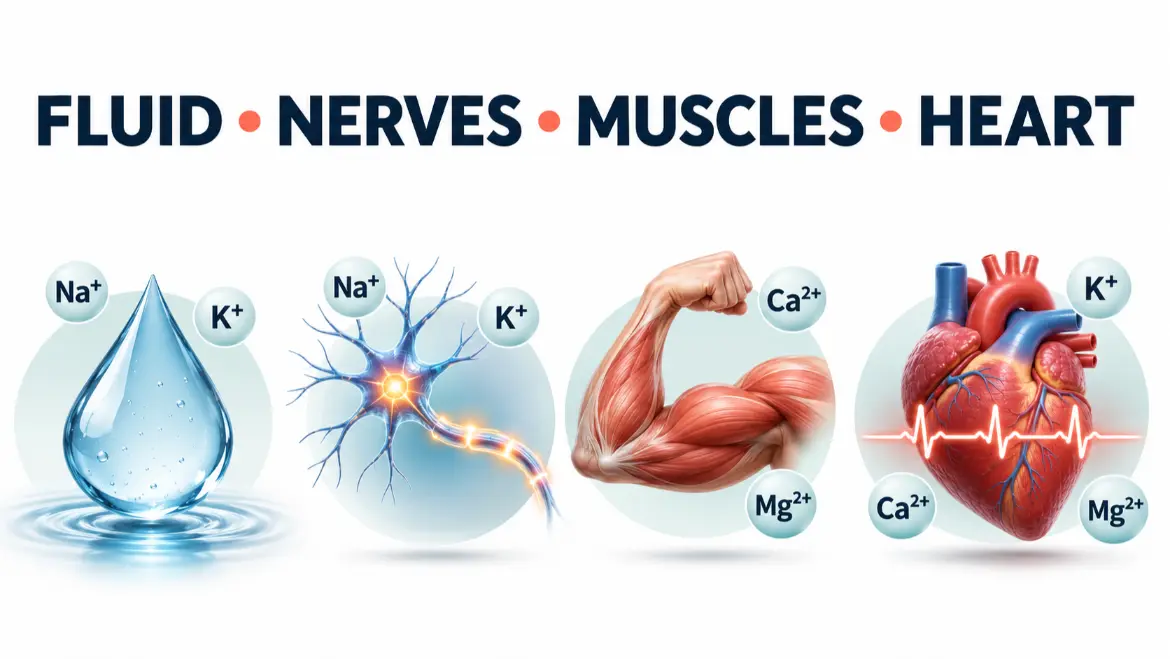
The question what do electrolytes do is easiest to answer by looking at their different jobs:
- Sodium helps control fluid balance and supports nerve and muscle function.
- Potassium is important for cells, muscles, and normal heart activity.
- Chloride helps regulate fluid, blood volume, and acid-base balance.
- Calcium supports bones, muscle contraction, nerve signaling, and other cellular functions.
- Magnesium contributes to normal nerve, muscle, heart, blood-pressure, and blood-glucose function.
- Bicarbonate and phosphate help regulate acid-base balance and other metabolic processes.
These jobs overlap, but the minerals are not interchangeable. Taking extra magnesium does not correct every cramp, and adding sodium does not correct every type of dehydration or electrolyte imbalance.
Because each mineral has a different role, high electrolytes symptoms must be interpreted electrolyte by electrolyte.
Understanding what do electrolytes do also explains why high electrolytes symptoms may affect the heart, muscles, brain, digestion, and fluid balance. The same systems that need these minerals can malfunction when their concentrations become abnormal.
Nine Possible High Electrolytes Symptoms
The following signs can occur with an electrolyte imbalance, but none proves that a level is high. Low electrolytes and unrelated conditions can cause many of the same symptoms.
1. Muscle Weakness or Unusual Fatigue
Potassium, magnesium, sodium, and calcium influence nerve signals and muscle contraction. An abnormal level may leave muscles weak, heavy, or difficult to control.
Muscle weakness is among the more important high electrolytes symptoms, particularly when it appears suddenly, progresses, or occurs with heartbeat changes. Fatigue alone is too nonspecific to diagnose an imbalance.
2. Irregular, Fast, or Slow Heartbeat
High potassium can interfere with the electrical activity that coordinates the heartbeat. Some people experience palpitations, a slow or weak pulse, chest discomfort, or collapse; others have no clear symptoms before an abnormality appears on testing.
Because of this risk, high electrolytes symptoms involving a new irregular heartbeat should not be managed by simply drinking more water. Chest pain, breathing difficulty, fainting, or severe palpitations requires emergency assessment.
3. Nausea, Vomiting, or Abdominal Discomfort
Nausea and vomiting can accompany several electrolyte disorders. High magnesium may also cause diarrhea or abdominal cramping, while high calcium can contribute to constipation.
Digestive symptoms can both result from and cause an imbalance. Repeated vomiting or diarrhea changes fluid and mineral losses, making symptoms alone especially difficult to interpret.
4. Confusion, Irritability, or Drowsiness
Sodium and calcium abnormalities can affect brain function. Confusion, unusual sleepiness, agitation, difficulty concentrating, or altered behavior may appear as the imbalance becomes more severe.
Neurological high electrolytes symptoms are particularly concerning when they develop quickly. New confusion, inability to stay awake, or abnormal behavior warrants urgent medical attention.
5. Muscle Twitching, Spasms, or Seizures
Electrolytes help nerves communicate with muscles. When concentrations become severely abnormal, twitching, involuntary contractions, spasms, or seizures can occur.
These are not symptoms to treat with another electrolyte serving. A seizure is an emergency, regardless of whether a hydration product, medication, illness, or another cause may be involved.
6. Numbness or Tingling
High potassium and abnormal magnesium or calcium levels may cause tingling, numbness, or unusual sensations. These symptoms can also come from nerve compression, diabetes, vitamin deficiencies, anxiety, or circulation problems.
Tingling becomes more concerning when it appears with weakness, heartbeat changes, shortness of breath, or rapidly worsening high electrolytes symptoms.
7. Intense Thirst or Reduced Urination
High blood sodium often reflects too little body water relative to sodium. Intense thirst may occur, while severe dehydration or kidney problems can reduce urine output.
Do not interpret thirst as proof that you need more electrolyte powder. If water loss is already concentrating sodium, another high-sodium serving may not address the underlying problem.
8. Frequent Urination and Constipation
High calcium may cause frequent urination, increased thirst, constipation, weakness, or confusion. The exact pattern depends on the degree and duration of elevation.
Digestive changes alone rarely identify high electrolytes symptoms. Our article on whether electrolytes can cause constipation explains how hydration, calcium, magnesium, mixing directions, and the rest of the diet can alter bowel habits.
9. Headache or General Malaise
Headache, low energy, and a general feeling of being unwell may occur with fluid or electrolyte disturbances. These symptoms are common in many other conditions and cannot reveal which electrolyte is affected.
The context is more useful: recent illness, heavy fluid loss, kidney disease, medication changes, supplement use, or abnormal laboratory results make an imbalance more plausible.
High Electrolytes Symptoms by Mineral

Different minerals produce different patterns. This table provides orientation, not a self-diagnosis.
| Elevated electrolyte | Possible symptoms | Important note |
|---|---|---|
| Sodium | Intense thirst, little urination, weakness, confusion, twitching, seizures | Often reflects water loss relative to sodium |
| Potassium | Weakness, fatigue, nausea, tingling, palpitations, abnormal pulse | May cause no symptoms before affecting the heart |
| Calcium | Thirst, frequent urination, constipation, weakness, confusion | Causes include more than dietary calcium intake |
| Magnesium | Nausea, weakness, diarrhea, cramping, low blood pressure, abnormal heart function | Severe excess is more likely with impaired kidney function or high supplemental exposure |
| Chloride or bicarbonate | Weakness, fatigue, breathing or pH-related symptoms | Usually interpreted with sodium, kidney function, and acid-base testing |
This variation is why a generic list of high electrolytes symptoms cannot replace laboratory testing. The same person may have one electrolyte high while another is low, and the treatment for one imbalance may be inappropriate for another.
Can You Get Too Many Electrolytes From Drinks or Supplements?

Yes, it is possible to consume too many electrolytes, particularly when several concentrated servings, supplements, antacids, laxatives, salt products, or mineral-containing medications are combined. However, a serious blood-level elevation is often more complicated than simply drinking one electrolyte beverage.
Healthy kidneys help regulate and remove excess minerals. Risk increases when kidney function is impaired, a person has certain heart or endocrine conditions, or medications change how the body retains sodium, potassium, or magnesium.
People may also accidentally use too many electrolytes by doubling powder scoops, mixing a packet into too little water, or stacking a sports drink with separate mineral tablets. Check the serving size and total daily intake from all sources.
The question is not whether an electrolyte drink contains a large number on the front label. Compare each mineral separately. One product may be high in sodium but contain little potassium, while another may include several minerals at smaller doses.
If you are worried about high electrolytes symptoms, stop taking unnecessary extra servings until you can review the product, medication, and supplement list with a qualified professional. Do not stop a prescribed medicine without instructions from its prescriber.
Who Has a Higher Risk of an Electrolyte Imbalance?
Anyone can develop an imbalance, but risk is higher with:
- Kidney disease or reduced kidney function
- Heart failure or significant liver disease
- Adrenal, parathyroid, or other hormone disorders
- Diabetes that is poorly controlled
- Severe dehydration or overhydration
- Persistent vomiting or diarrhea
- Heavy sweating without an appropriate replacement plan
- Eating disorders or severe malnutrition
- Diuretics, blood-pressure medicines, steroids, antacids, laxatives, or certain antibiotics
- Multiple electrolyte powders or mineral supplements used together
In these situations, high electrolytes symptoms may overlap with symptoms of the underlying condition or medication side effects. Personalized advice is more appropriate than choosing a drink based on a generic “more hydration” claim.
High Electrolytes vs. Symptoms of Low Electrolytes

The symptoms of low electrolytes can look surprisingly similar to those of excessive levels. Weakness, fatigue, nausea, cramps, tingling, confusion, and heartbeat changes may occur on either side of the normal range.
| Symptom | Can occur when high? | Can occur when low? |
|---|---|---|
| Weakness or fatigue | Yes | Yes |
| Muscle cramps or spasms | Yes | Yes |
| Nausea or vomiting | Yes | Yes |
| Confusion | Yes | Yes |
| Tingling or numbness | Yes | Yes |
| Abnormal heartbeat | Yes | Yes |
| Seizures in severe cases | Yes | Yes |
This overlap is the central problem with using high electrolytes symptoms to diagnose yourself. Drinking another high-dose product could worsen an excess, while avoiding all minerals could be inappropriate if a level is low.
The symptoms of low electrolytes also depend on which mineral is deficient and why. Muscle cramps after a long workout, for example, are not automatic proof of low magnesium. Our guide to electrolyte drinks for muscle cramps explains why fatigue, heat, nerves, circulation, medications, and fluid loss must also be considered.
How Are Electrolyte Imbalances Diagnosed?
A clinician may order an electrolyte panel, basic metabolic panel, or individual mineral tests. These blood tests commonly measure sodium, potassium, chloride, and bicarbonate; calcium, magnesium, phosphate, kidney function, glucose, and other values may also be checked.
Testing is especially important when high electrolytes symptoms appear alongside kidney disease, medication changes, or abnormal heart sensations.
The MedlinePlus electrolyte-panel guide notes that testing may be considered for nausea, confusion, weakness, irregular heartbeat, digestive changes, fatigue, headache, cramps, spasms, numbness, or tingling.
Test results need context. Reference ranges can vary between laboratories, and a sample problem can occasionally make a potassium result appear falsely high. A healthcare professional may repeat testing or order an electrocardiogram when necessary.
Do not try to confirm high electrolytes symptoms through taste, thirst, urine color, salt cravings, or a wearable device. None measures blood sodium, potassium, calcium, or magnesium.
What to Do if You Suspect High Electrolytes
Start by checking what you have consumed. Write down electrolyte drinks, serving sizes, water volumes, vitamins, mineral supplements, antacids, laxatives, salt tablets, and medications. Include recent vomiting, diarrhea, sweating, fever, and changes in urination.
For mild, nonspecific symptoms, contact a healthcare professional or pharmacist for guidance—especially if you have kidney, heart, liver, blood-pressure, or hormone problems. They can decide whether laboratory testing is appropriate.
Do not attempt to flush out suspected high electrolytes symptoms by rapidly drinking a huge volume of water. Excessive water intake can itself cause a dangerous low-sodium state. Likewise, do not counter one mineral by taking a different supplement.
If an electrolyte product was mixed too strongly, follow the label correctly in the future. Our explanation of why sugar is not an electrolyte can also help you distinguish carbohydrate content from the minerals listed on a hydration label.
When High Electrolytes Symptoms Need Emergency Care
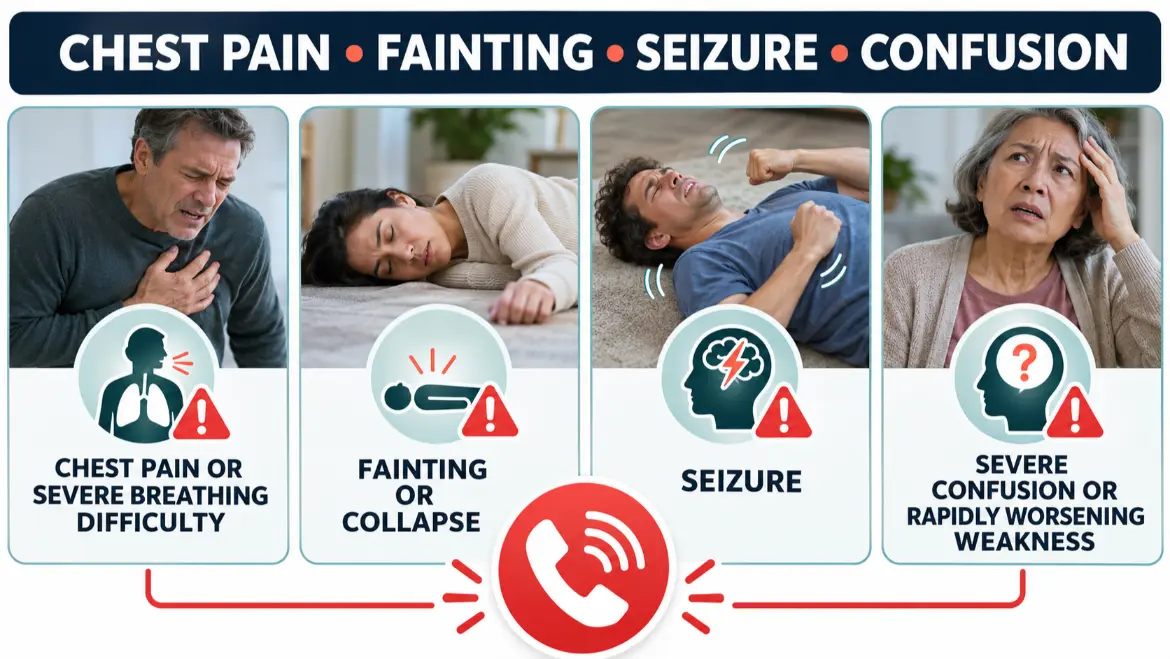
Call emergency services for:
- Chest pain or severe breathing difficulty
- Fainting, collapse, or an extremely abnormal pulse
- A seizure
- New severe confusion or inability to stay awake
- Rapidly worsening muscle weakness or paralysis
- Severe palpitations with dizziness
- Suspected overdose of a supplement or mineral-containing medication
These severe high electrolytes symptoms can also signal heart, neurological, metabolic, or toxicological emergencies unrelated to electrolytes. Do not wait for a drink, meal, or home remedy to correct them.
If you have an abnormal laboratory result, follow the clinician’s instructions. Treatment depends on which electrolyte is high, the severity, the cause, kidney function, and whether the heart or nervous system is affected.
The Bottom Line
High electrolytes symptoms may include weakness, nausea, confusion, twitching, tingling, constipation, thirst, urination changes, seizures, or an abnormal heartbeat. The pattern changes according to whether sodium, potassium, calcium, magnesium, or another electrolyte is elevated.
Symptoms cannot reliably distinguish an excess from a deficiency. Blood testing and clinical context are needed, particularly when kidney disease, medication use, dehydration, or multiple supplements may be involved.
Electrolytes are essential, but balance matters more than maximum intake. Follow product mixing directions, avoid stacking unnecessary mineral products, and seek urgent help for chest pain, fainting, seizures, severe confusion, or rapidly worsening weakness.
Frequently Asked Questions
What Are the First Signs of Too Many Electrolytes?
There is no universal first sign. Depending on the mineral, early symptoms may include nausea, weakness, fatigue, thirst, tingling, constipation, diarrhea, or palpitations. Some people—especially those with high potassium—may have few noticeable warning signs.
Can Too Many Electrolytes Make You Feel Dizzy?
An electrolyte imbalance may contribute to dizziness, but dizziness has many possible causes. Severe dizziness with fainting, chest pain, heartbeat changes, weakness, or confusion needs urgent assessment.
Can Electrolyte Drinks Raise Potassium Too High?
They can add to potassium intake, but serious hyperkalemia is more likely when kidney function is reduced, certain medications are involved, or several potassium sources are combined. Check the label and ask a clinician if you have risk factors.
Do High Electrolytes Symptoms Always Appear?
No. Some imbalances may produce mild, nonspecific, or no obvious symptoms. High potassium can be discovered on a blood test before a person recognizes a problem.
What Are Common Electrolyte Imbalance Symptoms?
Common electrolyte imbalance symptoms include weakness, fatigue, nausea, confusion, cramps, spasms, tingling, bowel changes, headache, and an abnormal heartbeat. These signs do not reveal whether a level is high or low.
Can Drinking Too Much Water Cause an Electrolyte Imbalance?
Yes. Drinking water much faster than the kidneys can remove it may dilute blood sodium and cause hyponatremia. More fluid is not always safer, particularly during prolonged exercise or when a medical condition affects fluid handling.
Should I Stop Electrolytes if I Think My Levels Are High?
Avoid taking unnecessary additional servings while seeking professional advice, but do not stop prescribed medicines without speaking to the prescriber. A blood test may be needed to identify the actual problem.
This article contains affiliate links. If you purchase through our links, we may earn a commission at no extra cost to you. We only recommend products we genuinely believe in. Read our Affiliate Disclaimer for full details.